I spent three summers of my undergraduate degree standing in a damp, wind-whipped hedgerow, clutching a clipboard and trying to convince myself that a single Bombus terrestris—the common buff-tailed bumblebee—wasn’t just a trick of the light. Most people think a complete guide to recording wildlife involves buying a £500 spotting scope or mastering the art of the cinematic slow-motion video, but that’s mostly just expensive hobbyism. If you’re just capturing pretty pictures without understanding the messy, repetitive reality of what you’re actually seeing, you aren’t really recording anything; you’re just taking a digital souvenir.
I’m not here to sell you on the romanticism of nature, nor am I going to bury you in impenetrable academic jargon. Instead, I want to give you the actual toolkit I use when I’m out in the field: the stuff about why your sightings might be biased, how to actually use a transect without losing your mind, and how to make your data actually useful for conservation. This is a guide built on mud, mistakes, and the quiet realization that the best data usually comes from the smallest, most boring details.
Table of Contents
Why Citizen Science Wildlife Monitoring Demands More Than Just Photos
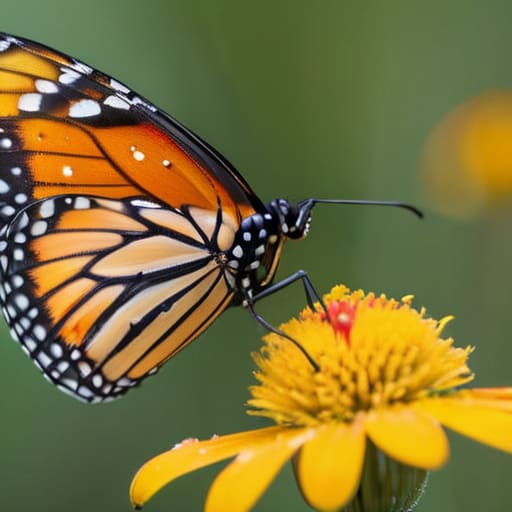
I see it every weekend on my WhatsApp group: someone posts a stunning, macro-lit photo of a butterfly, and the chat erupts. It’s a beautiful shot, don’t get me wrong, but if we’re talking about actual citizen science wildlife monitoring, a pretty picture is only about ten percent of the job. A photo tells us a species was there, but it rarely tells us what it was doing, how many others were nearby, or even if it was the right time of year for that specific life stage.
When we move from casual observation to meaningful environmental data logging, we have to shift our focus from aesthetics to context. A photo of a Bombus terrestris—the common bumblebee—is lovely, but without recording the weather, the specific floral resources available, or the exact time of day, that data point is essentially floating in a vacuum. To make our contributions useful to researchers, we need to move past the “look what I found” phase and start embracing more rigorous wildlife observation protocols. It’s about the metadata, not just the megapixels.
Mastering Biodiversity Data Collection Methods Without the Fluff
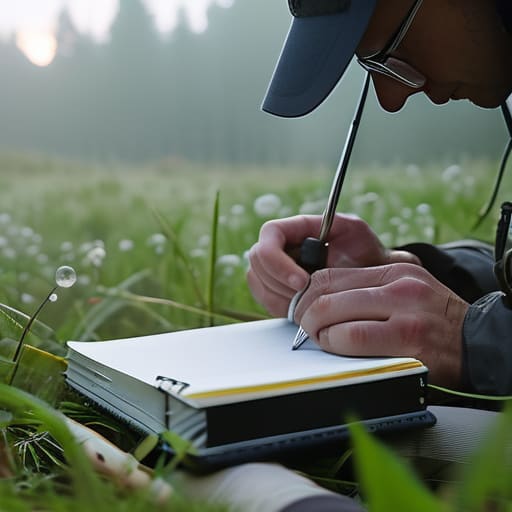
If you want to move past the “I saw a cool bug” stage and into actual biodiversity data collection methods, you have to embrace the boring stuff. It sounds unappealing, I know, but the difference between a hobbyist’s scrapbook and a dataset that a conservation biologist can actually use is consistency. It’s not enough to just wander through a meadow when the sun is out; you need to decide if you’re doing a fixed-point count or a transect walk, and you need to do it at the same time, in the same way, every single time.
When it comes to your kit, don’t go out and buy a thousand pounds’ worth of professional field recording equipment for nature just yet. Most of the heavy lifting is done with a decent macro lens, a reliable field notebook, and a lot of patience. The real skill lies in your species identification techniques. It’s easy to misidentify a Bombus terrestris (the common buff-tailed bumblebee) as something more specialist if you aren’t looking at the specific hair patterns or wing venation. Precision beats quantity every single day.
The Reality Check: 5 Ways to Stop Guessing and Start Recording
- Bombus terrestris is a common bumblebee, but if you just log “bee” in your app, you’ve essentially recorded nothing. If you can’t get to the species level, record the morphology—size, color patterns, or even the shape of the antennae. A “fuzzy insect” is a lovely observation, but it’s useless for a longitudinal study on population shifts.
- Stop ignoring the weather. I have spent more hours than I care to admit standing in a downpour because the transect schedule said it was time to count. If you record a sighting on a scorching, windless July afternoon, that data point is fundamentally different from one taken during a cool, damp morning. The context of the environment is just as important as the organism itself.
- Learn to love the “null result.” In my PhD, some of my most important days are the ones where I walk a three-kilometer transect and see absolutely nothing. Don’t feel like you’ve failed if you don’t find a rare orchid or a stag beetle; recording the absence of a species is a vital piece of the ecological puzzle, provided you are consistent about where and when you looked.
- Beware of the “charismatic megafauna” bias. It is very easy to get excited about a butterfly or a bird and forget the things that actually hold an ecosystem together. If you want your data to matter, spend some time looking at the “boring” stuff—the beetles in the leaf litter or the hoverflies on the weeds. The biodiversity that keeps a hedgerow functioning isn’t always pretty.
- Precision over passion. It’s tempting to say a species is “everywhere” because you saw ten of them in one garden, but that’s an anecdotal observation, not a trend. Be careful with your certainties. Distinguish between “I saw this today” and “this species is thriving in this area.” One is a snapshot; the other is a claim that requires much more rigorous, repeated evidence.
The Reality Check: Three Things to Remember Before Your Next Survey
Precision beats volume every single time; a single, well-documented transect where you actually recorded the weather and the exact plant species present is worth more to a researcher than a thousand blurry photos of “a bee” tagged with a generic location.
Learn to embrace the “I don’t know”—the most valuable data point you can provide is an honest identification struggle rather than a confident guess that ends up polluting a dataset with misidentified species.
Context is the invisible backbone of ecology; if you aren’t noting the habitat state—like whether a hedgerow is freshly trimmed or overgrown—you aren’t actually recording the life cycle of the insect, you’re just taking a snapshot of a moment that can’t be replicated.
Moving Beyond the Lens
At the end of the day, recording wildlife isn’t about building a curated digital gallery; it’s about the grit of the data. We’ve talked about why a blurry photo of a bee doesn’t tell us much if we don’t know the exact species or the specific flowering plant it was visiting. Whether you are using transects, timed counts, or even just a well-placed moth trap, the goal is to move from “I saw something pretty” to “I observed this specific organism in this specific context.” If we want our observations to actually matter to the people writing the policy papers, we have to be disciplined about our methods and honest about what we didn’t see.
It can feel incredibly small—standing in a damp field margin at dusk, notebook in hand, wondering if anyone will ever care about your tally of Agrotis exclamationis. But that meticulous, slightly tedious work is the only way we build a map of what is actually happening on the ground. We aren’t just hobbyists; we are the eyes of an ecosystem that is currently losing its voice. Don’t let the complexity of the science intimidate you into silence. Just start counting, start recording, and remember that precision is a form of advocacy. The more accurate our data, the harder it is for anyone to ignore the reality of what we are losing.
