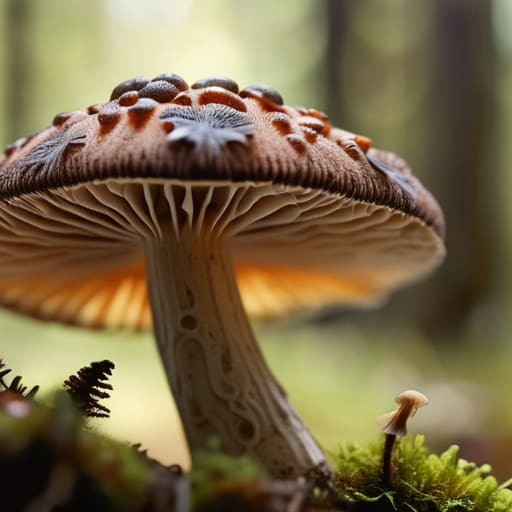
I once spent forty minutes crouched in a damp thicket, squinting at a specimen through a hand lens while my boots slowly filled with freezing rainwater, all because a glossy field guide promised that “visual cues” were enough. It wasn’t. I was looking for a specific gill structure, but the reality of the forest floor is much messier than a printed diagram. Most people think learning how to identify fungi safely is about memorising a list of bright colors or “danger” shapes you see in movies, but that’s a recipe for a very bad afternoon. In reality, it’s about understanding the subtle, often boring, morphological details that a single photograph can never quite capture.
I’m not here to sell you a premium subscription to a foraging app or tell you that you’ll be an expert by next Tuesday. What I am going to do is lay out the actual framework used in the field—the kind of methodical, evidence-based checking that separates a successful find from a dangerous mistake. We are going to look at why certain features matter, when the evidence is too thin to make a call, and how to build a process that relies on observation rather than guesswork.
Table of Contents
Mastering Mycology Field Guide Basics Without Overconfidence
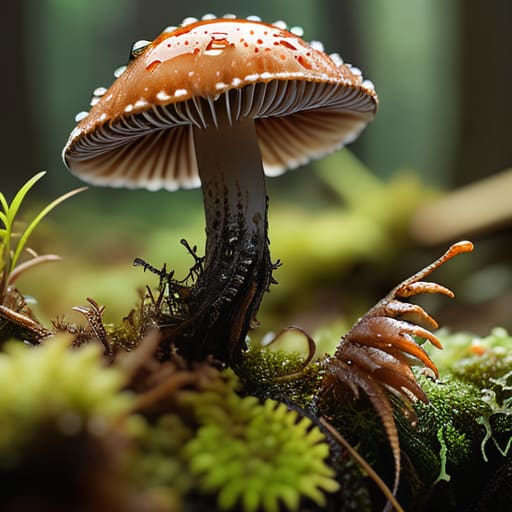
If you think a single, glossy guidebook is going to turn you into a master mycologist by next Tuesday, I have some bad news for you. Learning the mycology field guide basics is less about memorizing pretty pictures and more about developing a sort of obsessive, almost annoying attention to detail. You can’t just look at a mushroom and say, “Yeah, that looks like a Chanterelle.” You have to check the stem, the texture, the smell, and the way it interacts with the substrate. Most beginners fail because they look for what a mushroom is, rather than meticulously documenting what it isn’t.
The real danger lies in the gap between seeing a shape and understanding its biology. When you’re out in the field, you need to focus on specific cap and gill characteristics with a level of scrutiny that feels overkill. I’ve seen people get far too comfortable, skipping the hard parts of the identification process because they felt “sure.” But “feeling sure” is exactly how you end up with a mouthful of toxic mushroom lookalikes. In mycology, certainty is a luxury you earn through repetition and, frankly, a healthy amount of skepticism.
Why Cap and Gill Characteristics Are Never Enough
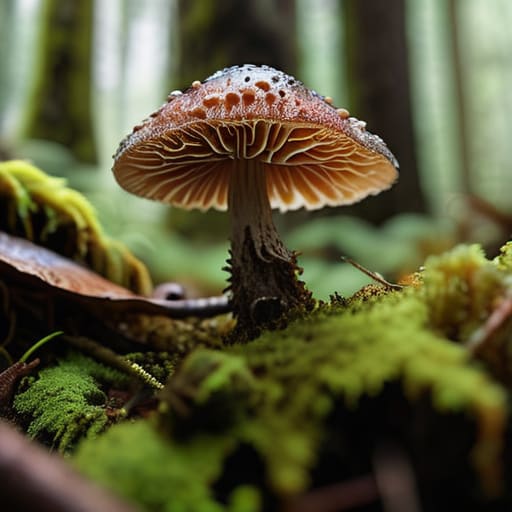
The problem with most beginner tutorials is that they teach you to look for a checklist: “Is the cap convex? Are the gills attached?” This approach is dangerous because it treats fungi like a static math equation. In reality, a single species can look radically different depending on whether it grew in a damp hollow or under a scorching canopy. If you rely solely on cap and gill characteristics, you are essentially trying to identify a person based only on their height and hair colour—it’s a start, but it’s nowhere near enough to prevent a mistake.
This is where things get messy. Nature is incredibly efficient at mimicry, and toxic mushroom lookalikes have evolved to occupy the exact same ecological niches as the ones we want to eat. You might find a specimen that ticks every box in your guide, only to realize too late that the spore print or the scent of the stem tells a completely different story. Relying on a single visual cue isn’t just optimistic; it’s a failure of rigorous observation. You have to look at the whole organism, the substrate, and the context, or you’re just guessing.
Beyond the Visuals: Five Reality Checks for the Field
- Context is everything, and I don’t just mean the weather. You need to look at the substrate—is it growing directly out of decaying oak, or is it emerging from a pine needle carpet? Many species look identical in isolation but occupy completely different ecological niches, and knowing the host is often the only way to rule out a lookalike.
- Stop relying on the “smell test” as a primary diagnostic. I know, it sounds intuitive, but some of the most dangerous species have scents that are deceptively pleasant or entirely neutral. Use smell as a secondary confirmation to narrow things down, never as the reason you decide a mushroom is safe to touch, let alone eat.
- Spore prints are non-negotiable. If you think you’ve identified a specimen just because the cap looks right, you’re playing a dangerous game. A spore print provides a physiological fingerprint that a quick glance at a gill structure simply cannot. If you haven’t seen the color of the spore mass, you haven’t actually identified the fungus.
- Learn the “lookalikes,” not just the targets. Most beginners spend all their time memorizing the one mushroom they actually want to find, but the real work is in studying the toxic species that mimic it. You haven’t mastered a genus until you can confidently point to a specimen and say, “That looks like a Boletus edulis, but the reticulation on the stem proves it’s something else entirely.”
- Accept the limits of your own eyes. Even with a high-end macro lens and a decent field guide, there is a threshold of certainty you simply won’t cross in the field. If you find yourself saying “it’s probably a…” or “it looks mostly like…”, that is your signal to stop, take photos, and leave it alone. In mycology, “probably” is just another word for a mistake you can’t undo.
The Non-Negotiables of Field Safety
Stop relying on a single visual cue; if your identification depends solely on the color of a cap or the shape of a gill, you haven’t actually identified anything yet.
Context is everything, which means you need to look at the substrate—is it growing on decaying oak, or is it emerging from soil?—and the surrounding microclimate, not just the specimen itself.
Accept the limits of your own eyes and your gear; if you can’t find a definitive characteristic in your guide, the only safe answer is “unknown,” because a guess is just a dangerous way of being wrong.
The Reality Check
At the end of the day, safe identification isn’t about memorizing a list of features; it’s about accepting that context is everything. We’ve talked about why you can’t rely on cap shape alone, why spore prints are non-negotiable, and why a single guidebook is a starting point rather than a final authority. If you aren’t checking the substrate, the scent, and the specific habitat where the specimen is emerging, you aren’t identifying it—you’re just guessing. My advice remains the same: if you find yourself staring at a mushroom and thinking, “It looks mostly like the picture,” put it back. The gap between a confident ID and a fatal mistake is often much smaller than it feels when you’re standing in a damp woodland.
That said, please don’t let the weight of caution stop you from looking closer at the forest floor. There is a massive, intricate world happening under our feet that most people walk right past, and learning to see it is a genuine privilege. Once you move past the initial fear and start building a rigorous, evidence-based approach to what you’re seeing, the landscape changes. You stop seeing “mushrooms” and start seeing complex, interconnected biological systems. It takes time, and it takes a lot of staring at things that look remarkably similar, but that’s exactly where the real magic of mycology lives.
