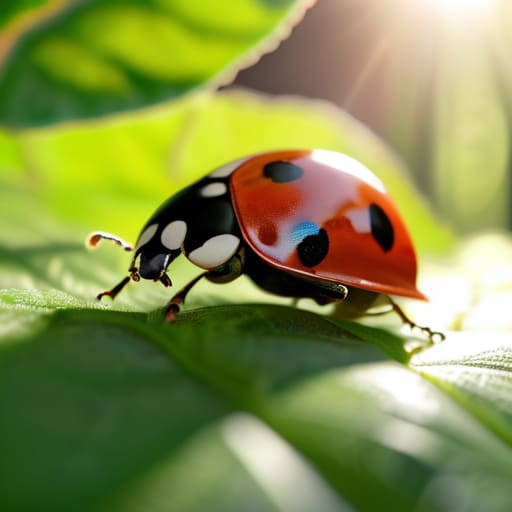
I spent three weeks last summer staring at a patch of aphid-ridden rosebushes, clutching a manual that promised a “total solution” through sheer chemical force, only to realize the book had completely ignored the ladybirds already doing the work for free. Most people think a complete guide to integrated pest management is just a fancy, academic way of saying “spray less,” but that’s a massive oversimplification that does a disservice to anyone actually trying to manage a landscape. We’ve been sold this idea that pest management is a war to be won with better weaponry, when in reality, it’s more like trying to balance a very temperamental checkbook where every entry affects the next.
I’m not here to give you a glossy, sanitized version of ecology that works in a laboratory but fails in a muddy garden. Instead, I want to walk you through what actually happens when you stop chasing every single bug and start looking at the data of the ecosystem. This is my attempt at a complete guide to integrated pest management that prioritizes observation over impulse, telling you exactly when to step in and, more importantly, when to leave the heavy lifting to the insects already on your payroll.
Table of Contents
Why Monitoring and Identification Outperform Alarming Headlines

The problem with most news coverage of “pest outbreaks” is that it treats every single bug as a crisis. You’ll see a headline claiming a species is “invading” a crop, which triggers an immediate, panicked response to spray everything in sight. But in my experience—and this is what the data actually shows—there is a massive difference between a few stray insects and a population that has actually crossed the economic injury levels required to cause real damage. When we skip the step of rigorous monitoring and identification, we end up treating symptoms rather than the actual ecological shift.
I’ve spent enough mornings in muddy transects to know that a sudden spike in numbers doesn’t always mean a catastrophe; sometimes, it’s just a seasonal fluctuation or a shift in local weather. If we jump straight to heavy-handed interventions, we risk destroying the very beneficial insects that were keeping the system in check. We need to prioritize precision over panic. By focusing on what the counts are actually telling us, we can move toward more stable, long-term outcomes instead of just chasing the latest headline.
Calculating Economic Injury Levels Before You Act
The problem with most people’s approach to garden or crop management is that they see a single beetle and immediately reach for the spray. In ecology, we call this a knee-jerk reaction, and in farming, it’s a massive waste of money. Before you decide on any specific pest control strategies, you have to understand the concept of economic injury levels. This isn’t just a fancy term; it is the specific threshold where the cost of the damage caused by the insects actually exceeds the cost of controlling them. If you have ten aphids on a rosebush, the “cost” of that damage is essentially zero, meaning any intervention is actually an ecological and financial net loss.
Determining this threshold requires moving away from “zero tolerance” and toward actual data. We need to distinguish between a population that is merely present and one that is actively causing harm. If you can prove that a population is below that injury level, the most effective move is often to do absolutely nothing. This allows for natural predator introduction to happen organically—letting the ladybirds and hoverflies do the heavy lifting for you. It’s about waiting for the math to make sense before you disrupt the system.
Moving Beyond the Spray: Five Ways to Actually Use IPM
- Focus on the life cycle, not just the presence. Lepidoptera—that’s your moths and butterflies—don’t all cause damage at the same stage. If you’re seeing a few adults fluttering around in July, it doesn’t mean your crops are under siege; it just means they’ve arrived. You need to know if they are actually laying eggs that will impact your yield, or if they’re just passing through.
- Prioritize habitat over eradication. Instead of trying to wipe a species off the map, look at your field margins. Providing a messy, diverse edge with native flowering plants can host the very predators—like carabid beetles—that keep your “pest” numbers in check naturally. It’s about managing a system, not winning a war.
- Use the right tools for the specific data you have. A single pheromone trap is a snapshot, not a census. If you’re going to use monitoring, you need a consistent schedule so you can actually see a trend. One high count in a single week might just be a localized spike, not a population explosion that requires a heavy-handed response.
- Learn to distinguish between “noise” and “signals.” In my field surveys, I see plenty of insects that look like pests but are actually part of a healthy, balanced ecosystem. Before you reach for a chemical intervention, ask if the insects you’re seeing are actually crossing that economic injury threshold we talked about, or if they’re just part of the background hum of a working landscape.
- Accept a little bit of imperfection. The goal of IPM isn’t a sterile environment; it’s a manageable one. If you try to aim for zero insects, you’ll end up destroying the very beneficial species that help you do the work. Aim for stability and threshold management, not total elimination.
The IPM Reality Check
Stop treating every insect sighting as an emergency; true Integrated Pest Management is about using actual population counts to decide if an intervention is even necessary.
Before you reach for a spray, you need to know the difference between a few stray bugs and a population that has actually crossed the threshold of economic damage.
Precise identification matters more than speed—misidentifying a beneficial predator as a pest is the quickest way to accidentally sabotage your own ecological balance.
Moving Beyond the Panic
At the end of the day, Integrated Pest Management isn’t about achieving a sterile, bug-free environment—that’s not how ecology works, and frankly, it’s impossible. It’s about moving away from the knee-jerk reaction of spraying at the first sign of a nibbled leaf and instead leaning into the data. We have to prioritize accurate identification and rigorous monitoring so we aren’t treating a minor nuisance like a full-scale invasion. By understanding the actual economic injury levels, we stop chasing ghosts and start making decisions based on what the counts are actually telling us, rather than what a scary headline suggests.
I know it’s tempting to want a quick, chemical fix, but real conservation and sustainable management require a bit more patience and a lot more observation. When we stop viewing every insect as an enemy to be eradicated and start seeing them as part of a complex, fluctuating system, our approach changes. If we can shift our focus from total elimination to strategic management, we create space for the beneficial species that actually keep the ecosystem in check. It’s about being precise rather than reactive, and that is where the real work—and the real results—actually begin.
