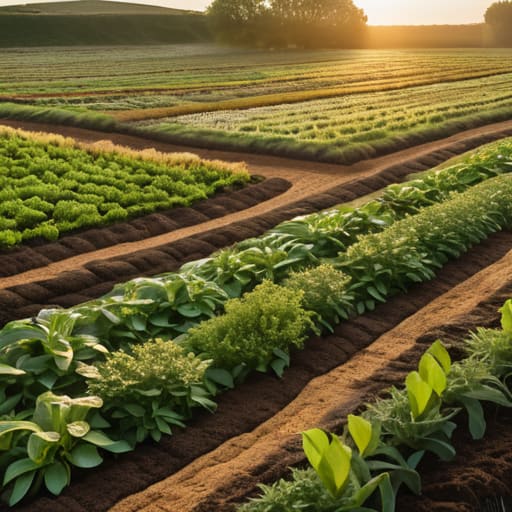
I was standing in a muddy field in Oxfordshire last Tuesday, trying to explain to a local farmer why his “regenerative” cover crop wasn’t actually doing much for the local Bombus terrestris population, when I realized we were both talking past each other. Everyone seems to have a different version of the truth depending on whether they’re selling a carbon credit or a new brand of organic fertilizer, which makes the question of how regenerative agriculture is defined feel less like a scientific inquiry and more like a marketing skirmish. We’ve reached a point where the term is being stretched so thin that it’s losing its structural integrity, becoming a catch-all for anything that sounds vaguely “green” without actually requiring a change in soil biology.
I’m not here to sell you a lifestyle or a specific brand of seed; I want to look at what’s actually happening beneath the surface. In this piece, I’m going to strip away the buzzwords and look at the metrics that actually matter—the ones that track soil organic matter and biodiversity rather than just PR sentiment. I’ll tell you where the consensus is solid and where the science is still, frankly, a bit of a mess, so you can decide for yourself what counts as real progress.
Table of Contents
Sustainable vs Regenerative Agriculture Why the Distinction Matters
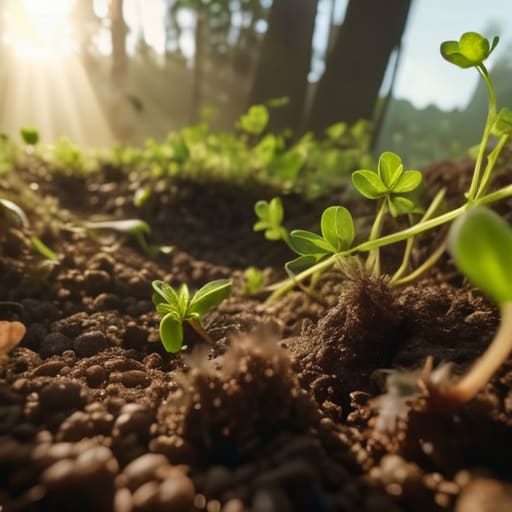
The easiest way to think about it is a difference in direction. When people talk about sustainable agriculture, they are usually talking about a “steady state”—the idea of maintaining current levels of production without degrading the resources we rely on. It’s about harm reduction and staying within certain planetary boundaries. It is a vital baseline, don’t get me wrong, but from an ecological perspective, “sustainable” can sometimes feel like we are just trying to stop the bleeding rather than actually healing the wound.
Regenerative agriculture, however, shifts the goalpost from maintenance to active improvement. It isn’t just about doing less damage; it is about using specific regenerative farming practices explained through the lens of ecosystem recovery. While sustainability seeks to keep the system from collapsing, regeneration aims for soil health restoration principles that actually rebuild the biological engine of the land. For someone like me, who spends far too much time looking at the microscopic life in a handful of dirt, the distinction is massive. It is the difference between a garden that is merely “not dying” and one that is actively fostering the biodiversity and ecosystem services required to thrive.
Measuring Soil Organic Matter Without the Marketing Hype

If you look at any marketing pamphlet for regenerative farming, you’ll see a promise that we can just “fix” the planet by pumping carbon back into the dirt. It sounds great in a pitch deck, but measuring soil organic matter in the real world is a lot messier than a sleek infographic suggests. In my fieldwork, I’ve learned that a single soil sample taken from a single field on a Tuesday doesn’t tell you the whole story. You can’t just point to a percentage increase in organic carbon and claim victory; you have to account for soil temperature, moisture levels, and the sheer complexity of the microbial life living down there.
The truth is that while carbon sequestration in farming is a legitimate scientific goal, it’s often used as a shorthand to avoid talking about the actual, slower work of soil health restoration principles. We tend to treat soil like a static sponge that just soaks up carbon, but it’s a living, breathing system. If we want to move past the hype, we need to stop looking for a single “magic number” and start looking at how biological activity actually shifts over years, not just fiscal quarters.
Moving Beyond the Buzzwords: How to Spot Real Regenerative Practice
- Look for functional diversity, not just a checklist. Anyone can plant a cover crop to tick a box, but true regenerative systems aim for a complex web of interactions—much like how a single flower species won’t save a meadow, but a diverse mix of nectar sources and nesting sites will actually support a pollinator population.
- Demand measurable metrics over vague promises. If a farm claims to be “regenerative” but can’t tell you how their soil carbon sequestration or microbial biomass has changed over five years, they aren’t practicing regenerative agriculture; they’re practicing high-level branding.
- Prioritize soil health as a process, not a destination. We need to stop treating “regenerative” as a static label you achieve and start seeing it as a continuous, iterative process of observation and adjustment—the same way I have to constantly recalibrate my transect timings based on the actual weather.
- Watch out for the “silver bullet” fallacy. Be skeptical of any definition that suggests one single practice, like no-till alone, makes a system regenerative. In my field, we know that one variable rarely explains an entire ecosystem’s shift, and the same applies to land management.
- Check for systemic integration. A truly regenerative approach doesn’t just fix one problem in isolation; it attempts to mimic natural cycles. If a practice relies heavily on synthetic inputs to “fix” the damage caused by the previous method, it’s just a different version of the same extractive loop.
The Reality Check: Three Things to Remember
Don’t mistake “sustainable” for “regenerative.” While sustainability is about maintaining a baseline and avoiding further damage, regeneration implies an active, measurable increase in ecosystem health—like moving from a stagnant pond to a thriving wetland.
Beware of the “magic wand” effect. Regenerative agriculture isn’t a single set of rules you can check off a list; it is a process of observation and adjustment that requires rigorous, site-specific data rather than just following a trend.
Demand better metrics. If a company or farm claims to be regenerative, look past the buzzwords and ask how they are measuring it. If they can’t point to specific improvements in soil organic matter or biodiversity, they are likely just practicing good old-fashioned sustainability under a new label.
Beyond the Definition
At the end of the day, we have to stop treating “regenerative” like a certificate you can just buy and slap onto a bag of flour. We’ve looked at why the distinction from sustainability matters—moving from just “doing less harm” to actually rebuilding what we’ve broken—and why we need to look at hard data like soil organic matter rather than just trusting a glossy brochure. If we can’t agree on what we are actually measuring, we are just moving the goalposts while the ecosystems we depend on continue to fray. A definition is useless if it isn’t anchored to verifiable, ground-level metrics that prove the biology is actually returning to the dirt.
I know it feels overwhelming to look at a landscape and see only what is missing, but that is exactly why the nuance matters. When we move past the marketing buzzwords and focus on the actual mechanics of soil health and biodiversity, we stop being spectators to decline and start becoming participants in recovery. It isn’t about finding a perfect, universal label that fits every farm on the planet; it’s about the incremental, messy work of observing what works and scaling it. If we get the science right, the labels will eventually take care of themselves, but until then, keep looking at the soil, not the slogans.
