I was waist-deep in a nettle patch last Tuesday, shivering because the rain had turned my transect into a marsh, when I realized why most conservation advice feels so hollow. We keep hearing these sweeping, academic grandstanding about how island biogeography applies on land, as if we can just map out a few “stepping stones” and suddenly the biodiversity crisis is solved. It’s easy to talk about habitat fragmentation when you’re sitting in a climate-controlled office, but it’s much harder when you’re actually counting the dwindling numbers of Bombus terrestris—the buff-tailed bumblebee—and realizing the “corridors” everyone promised are actually just dead ends of mown grass and concrete.
I’m not here to give you a lecture on theoretical equilibrium or complex mathematical models that don’t survive contact with a real field margin. Instead, I want to show you what the data actually tells us when we stop looking at maps and start looking at the actual movement of species. I’ll explain how we can use these ecological principles to make your garden or your local patch of scrubland work harder, without the expensive fluff or the empty alarmism.
Table of Contents
Measuring the Real Species Area Relationship in Terrestrial Ecosystems
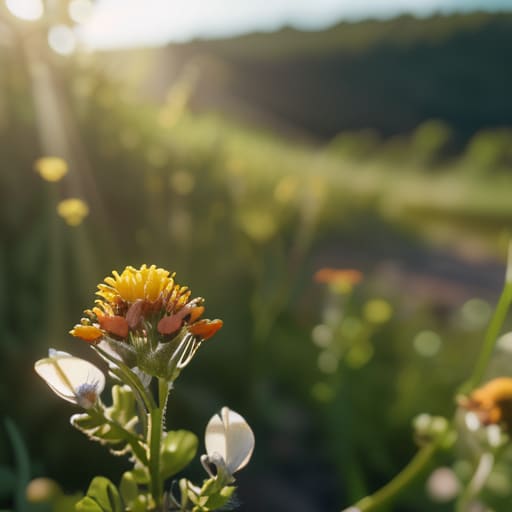
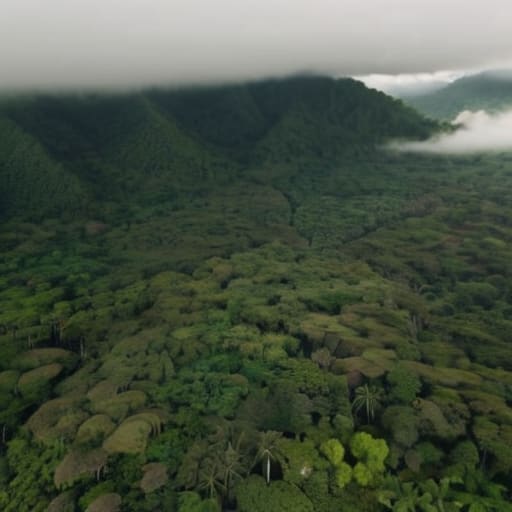
When we talk about the species-area relationship in terrestrial ecosystems, it’s easy to get lost in the math of how many species a certain number of hectares should hold. But in the field, it’s rarely that tidy. I’ve spent many a Tuesday afternoon staring at a single, isolated hedgerow that feels like a universe to a solitary bee, yet mathematically, it’s a tiny, precarious dot on a map. The problem is that land isn’t an ocean; it’s a messy, broken jigsaw. We see habitat fragmentation effects playing out in real-time, where a patch of wildflowers isn’t just “small,” it’s functionally severed from its neighbors.
This is where the theory hits the mud. It isn’t just about the total area available; it’s about how that area is shaped and what happens at the borders. We have to account for edge effects in fragmented landscapes, where the microclimate at the boundary of a field can be too dry or too windy for the very specialists we’re trying to protect. If a patch is all edge and no core, the “area” we think we’re preserving is actually a bit of a lie.
When Field Patches Become Traps Habitat Fragmentation Effects

When we talk about habitat fragmentation effects, the mistake we often make is assuming a patch of wildflower meadow is a permanent home. In reality, if that meadow is surrounded by three miles of intensive monoculture wheat, it stops being a habitat and starts acting like a sink. For a specialist bee, that patch isn’t a sanctuary; it’s a tiny, isolated lifeboat. If the distance between that lifeboat and the next one exceeds the insect’s actual foraging range, they aren’t just “living in a patch”—they are effectively trapped.
This is where the math of metapopulation dynamics in land patches gets messy. We see populations that look stable on a single summer survey, but they are actually suffering from a lack of genetic exchange. Without ecological islands and corridors to facilitate movement, these small groups become vulnerable to local extinction from a single bad weather event or a late frost. We can’t just protect “spots” on a map and call it a day; if those spots aren’t connected, we aren’t actually building a resilient network, we’re just managing a slow decline.
How to Stop Treating Your Garden Like a Desert Island
- Prioritise connectivity over sheer size. In island biogeography, the “distance effect” is everything; for a carabid beetle or a solitary bee, a single paved driveway is a vast, impassable ocean. If you can’t make your patch bigger, make it less isolated by planting hedgerows or even just a line of wildflowers to bridge the gap to the neighbour’s garden.
- Focus on “stepping stones” rather than single massive reserves. We often obsess over protecting one huge ancient woodland while letting the small, scrubby bits in between vanish. For many mobile insects, a series of small, well-managed habitats acting as rest stops is more effective for long-term survival than one isolated fortress of biodiversity.
- Manage for “edge effects” to avoid the ecological trap. When a habitat patch is too small or too thin, the perimeter—where the field meets the crop or the road—dominates the entire area. This edge often has different microclimates or higher predator counts, meaning your “refuge” might actually be a high-risk zone for the species you’re trying to save.
- Diversify your “habitat architecture.” An island with only one type of tree is a poor one. On land, this means moving beyond just “planting flowers.” You need structural complexity—dead wood for fungi and beetles, bare soil for ground-nesting bees, and varying heights of vegetation—to mimic the niche diversity found in stable, continuous ecosystems.
- Don’t mistake presence for persistence. Just because you see a specific butterfly in your garden today doesn’t mean that patch is a viable habitat; it might just be a transient visitor passing through a fragmented landscape. To actually support a population, you need to provide the full lifecycle requirements—larval food plants and overwintering sites—not just the nectar.
What this actually means for your local landscape
Stop thinking of a garden or a field margin as a standalone fortress; if it isn’t connected to a larger network of similar habitats, it’s effectively an island with a very limited lifespan for the species living there.
Size matters, but connectivity is the real multiplier—a small, well-connected patch of wildflowers often does more for pollinator stability than a massive, isolated monoculture that insects can’t safely reach.
We have to move past the “all or nothing” conservation mindset and focus on the messy middle: creating stepping stones through our fragmented landscapes to turn isolated “islands” back into a functional, living web.
Moving Beyond the Island Metaphor
If there is one takeaway from the data, it’s that we have to stop treating every isolated patch of woodland or wildflower meadow as a self-contained fortress. As we’ve seen, the math of island biogeography works on land, but the variables are messier; a hedgerow isn’t just a line on a map, it is a functional corridor that determines whether a beetle can actually find a mate or if it’s just stuck in a genetic dead end. We can’t just protect “islands” of nature and hope for the best. If we don’t account for the connectivity between these fragments, we aren’t actually building a resilient ecosystem—we are just managing a slow-motion decline.
This isn’t about feeling guilty about your lawn; it’s about understanding the scale of the mechanics at play. When I’m out in the field at 2:00 AM, checking my moth traps in the damp, I don’t see isolated dots of life; I see a massive, interconnected web that is currently being frayed at the edges. The good news is that landscapes are more malleable than islands. Unlike an ocean, we can bridge the gaps. By planting the right nectar sources and ditching the obsession with “neat” gardens, we can turn these disconnected fragments back into a single, living network. We don’t need more theoretical models; we need actual connectivity.
