I once spent four hours crouched in a damp hedgerow, shivering in a Gore-Tex jacket that had long since given up on being waterproof, all to confirm a single Bombus terrestris. It wasn’t a cinematic moment of connection with nature; it was cold, muddy, and my knees ached. When people ask me how to start identifying insects, they usually expect a recommendation for a high-end macro lens or a subscription to a glossy, expensive field guide that makes everything look far more organized than it actually is. But the truth is, most beginners get paralyzed by the sheer, chaotic scale of the taxonomic keys they find online, feeling like they need a PhD just to distinguish a hoverfly from a wasp.
I’m not here to sell you on expensive gear or promise that you’ll become an expert by Tuesday. Instead, I want to show you how to build a functional toolkit of observation skills that actually work in a real, messy garden. We are going to focus on the morphological traits that actually matter—the patterns on a wing or the shape of a tarsal claw—rather than getting lost in the jargon. My goal is to help you move past the guesswork so you can start seeing the actual biodiversity hiding in your own backyard.
Table of Contents
Mastering Entomology Basics for Beginners and Real Observation
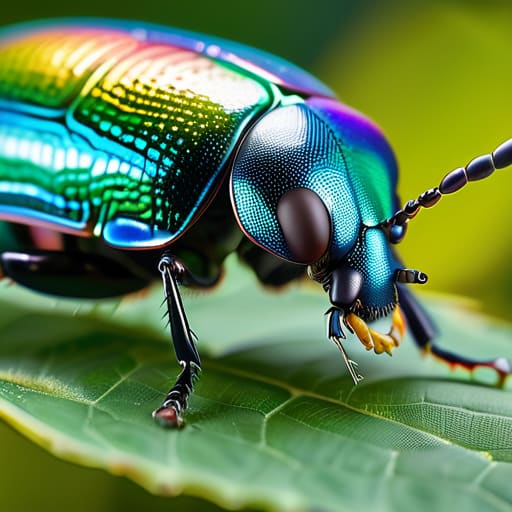
Before you dive into the heavy textbooks, you need to get comfortable with the actual physical reality of the creatures in front of you. This means moving past “it’s a big beetle” and starting to look at insect anatomy and morphology with some intent. I’m talking about the structure of the antennae, the vein patterns in a wing, or the specific way a tarsus (that’s the end of the leg, for those of us without a PhD) grips a leaf. You don’t need to be an expert overnight, but you do need to stop looking at insects as generic shapes and start seeing them as collections of specific, functional parts.
Once you’ve trained your eyes to see those details, you can move on to the actual mechanics of classification. Most people think you just flip through a book until you find a picture that matches, but real work involves using dichotomous keys—a series of “either/or” questions that narrow down your specimen. It can feel tedious, like a logic puzzle designed to ruin your afternoon, but it’s the only way to move from guesswork to actual data. It’s the difference between saying “I saw a bee” and being able to tell a neighbor exactly why that specific Bombus terrestris matters for their local hedgerow.
Why Field Guides for Insect Identification Are Only Half the Battle
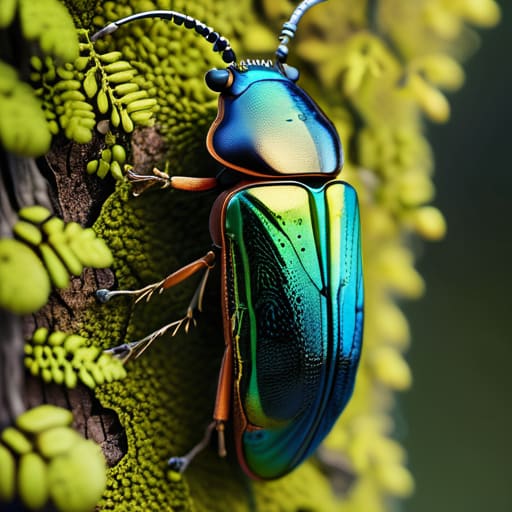
I’ve spent more hours than I’d like to admit staring at a page of field guides for insect identification, trying to reconcile a tiny, blurry specimen in my hand with a perfect, clinical illustration. The problem is that most guides assume the insect is a static object, frozen in time and perfectly lit. In reality, a beetle’s elytra might be chipped, or a moth’s wing scales might be worn down from a rough night in a hedgerow. If you rely solely on a book, you’ll often find yourself stuck because the “ideal” version in the guide doesn’t match the living, breathing, slightly battered creature in front of you.
This is where the real work begins, moving beyond simple visual matching toward understanding insect anatomy and morphology. You have to learn to look at the structural “why” of a creature—the way a tarsal claw is shaped or the specific vein pattern in a wing—rather than just looking for a color match. It’s easy to get discouraged when a guide fails you, but that frustration is actually a sign that you’re starting to see the nuances that a printed page can’t capture.
Five Ways to Actually Start Identifying What’s Buzzing in Your Backyard
- Prioritize morphology over color. I know, it’s tempting to say, “I saw a bright blue bee,” but color is notoriously unreliable; it shifts with the light and varies between individuals. Instead, look at the body shape. Is it robust and hairy like a Bombus (bumblebee), or slender and smooth like a Sphecidae (digger wasp)? Focus on the structure of the legs and the segmenting of the abdomen.
- Learn the “Big Four” traits first. You don’t need to know every genus by Tuesday, but you should be able to distinguish between orders. Start with the basics: the number of wings, the presence of antennae, and whether they have chewing mouthparts or a proboscis. If you can tell a beetle (Coleoptera) from a true bug (Hemiptera) just by looking at how they eat, you’re already ahead of most people.
- Document the “micro-habitat” as much as the insect. An identification is only half-useful if you don’t know where it was sitting. Was it on a Centauria nigra (Knapweed) or just hovering near a patch of bare soil? Knowing the host plant or the specific substrate provides a massive clue that a field guide alone can’t give you.
- Use the “Search Image” method. This is what I do when I’m out on a transect. Instead of looking for “an insect,” pick one specific feature—say, the shape of a wing vein or the pattern on a thorax—and scan the environment for that specific shape. It trains your brain to filter out the visual noise of a garden so you can actually spot the target.
- Embrace the “Unknown” in your logs. The biggest mistake beginners make is forcing an ID because they feel like they should know. If you can’t identify it, record it as “unidentified Diptera” (fly) or “unidentified Hymenoptera” (wasp/bee/ant). It is much better to be accurately vague than to confidently misidentify a species and pollute your own data.
Three Things to Remember Before You Start Counting
Identification is a process, not a single moment of recognition; start by learning the broad families and morphological traits—like wing venation or tarsal segments—before you stress over getting the exact species name right on your first try.
Context is just as important as the insect itself, so always record the “where” and “when,” because a beetle found in a damp hedgerow margin tells a completely different ecological story than one found in a dry, manicured lawn.
Don’t let a lack of immediate certainty stop you from observing; the goal isn’t to become a walking encyclopedia overnight, but to build a reliable dataset of what is actually present in your local patch, even if you have to label it as “unidentified Coleoptera” for a while.
Beyond the Identification Key
At this point, you probably realize that identifying insects isn’t just about flipping through a glossy book or tapping an app until you get a match. It is about understanding that a Bombus terrestris—the common buff-tailed bumblebee—isn’t just a name on a screen, but a data point in a much larger, much messier story of habitat connectivity. You’ve learned that field guides provide the vocabulary, but real observation provides the context. You need to look at the host plant, the weather, and the specific time of day, because true identification is an act of patience, not just a quick snap of a macro lens.
If you feel a bit overwhelmed by the sheer scale of what you don’t know, honestly, that’s exactly where you should be. The moment we think we’ve mastered the local fauna is usually the moment we stop looking closely. Don’t let the complexity of taxonomy discourage you; instead, let it fuel your curiosity. Every time you correctly identify a single species in your back garden, you are contributing to a much-needed ground-level understanding of our changing world. So, get back outside, get a little bit muddy, and keep counting. The data—and the insects—are waiting.
