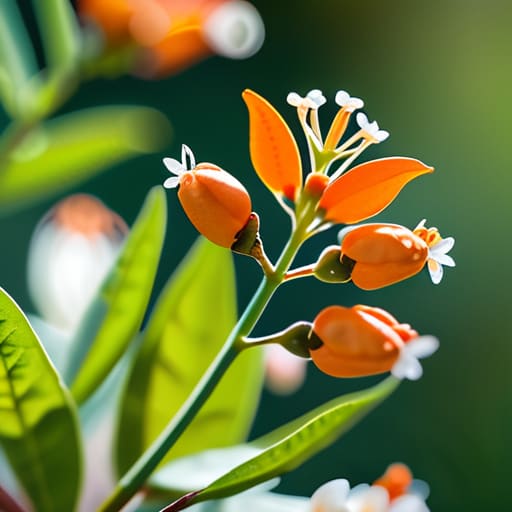
I spent three hours last Tuesday knee-deep in a muddy ditch, trying to distinguish Bombus terrestris from a particularly aggressive weed, only to realize the “biodiversity hotspot” the local council was bragging about was actually just a patch of highly ornamental, non-functional shrubs. We’ve been sold this idea that restoring native plant populations in suburban gardens is about expensive, curated “wildlife kits” or achieving some aesthetic of manicured wilderness. It’s exhausting. Most of the advice out there treats your backyard like a high-stakes museum exhibit rather than a functional, messy ecosystem, and frankly, it’s making people give up before they’ve even bought a trowel.
I’m not here to sell you a dream of a perfect meadow that requires a PhD to maintain. Instead, I want to talk about what the transect data actually tells us: that incremental, specific shifts in what you plant matter far more than a total garden overhaul. I’m going to walk you through which plants actually show up in my surveys and which ones are just expensive window dressing. We’re going to look at the real mechanics of how a few square meters of the right greenery can actually support a local population, without the alarmist fluff.
The Real Ecological Benefits of Native Flora
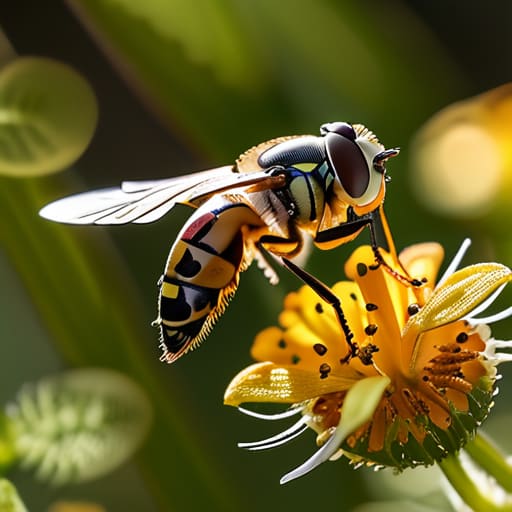
When you start looking at your garden through the lens of a field survey, the sheer volume of “native” labels in garden centers can feel overwhelming, and frankly, a bit misleading. I’ve spent way too many mornings squinting at tiny plastic tags only to realize the plant is actually a cultivar that looks pretty but offers zero nectar value to a hungry hoverfly. To avoid that specific kind of frustration, I usually cross-reference my planting lists with local databases to ensure I’m not just buying aesthetics. If you’re trying to figure out what actually belongs in your specific patch of soil, checking out backpage perth is a decent way to ground your choices in local reality rather than just following whatever is trending on Instagram. It helps you move past the guesswork and toward a garden that actually functions as a habitat.
When we talk about the ecological benefits of native flora, the conversation usually gets stuck on “pretty flowers for bees.” That’s a massive oversimplification. It isn’t just about providing a snack; it’s about the evolutionary handshake between a plant and the insects that have co-evolved with it. If you plant a non-native ornamental, you might get a butterfly visiting it, but you aren’t supporting the complex life cycles that keep a population stable. For example, many specialist lepidoptera—the caterpillars—can only digest the specific chemical compounds found in local host plants. Without those, your garden is essentially a restaurant that serves food no one can actually eat.
This is where we address the real issue of suburban habitat fragmentation solutions. Most residential gardens act as biological islands, separated by vast stretches of mown grass and concrete. By focusing on native plant selection for local ecosystems, you aren’t just adding greenery; you are building functional corridors. You are turning isolated patches into a connected network that allows species to move, forage, and actually persist rather than just passing through.
Why Native Plant Selection for Local Ecosystems Matters Most
When we talk about native plant selection for local ecosystems, we aren’t just talking about aesthetics or whether a flower looks “right” in a mulch bed. We are talking about co-evolution. Most of the insects I track—the specialists that actually keep a food web from collapsing—have spent thousands of years fine-tuning their life cycles to the specific chemical signatures of local flora. If you plant a non-native ornamental that looks lovely but lacks the specific nectar profile or larval host capacity required by your local lepidoptera, you haven’t actually built a habitat; you’ve just built a pretty, biological dead end.
This is where we address the reality of suburban habitat fragmentation solutions. Our gardens shouldn’t just be isolated islands of green; they need to function as stepping stones. By replacing invasive species with natives, you aren’t just tidying up the garden; you are repairing the broken links in a local corridor. It’s about moving away from the “manicured lawn” mindset and toward a landscape that actually provides the caloric requirements for a moth to survive its night or a bee to fuel its colony. It’s messy, it’s specific, and it’s the only way the math actually works.
Moving Beyond the 'Pretty' Garden: Five Ways to Actually Support Local Biodiversity
- Stop obsessing over the ‘perfect’ lawn and start thinking in layers. In my transects, I rarely see high insect activity in manicured turf; what we see is movement through structural complexity. You need the messy bits—the ground cover, the mid-height perennials, and the shrubs. It’s about creating a vertical habitat, not just a flat green carpet.
- Prioritize Fabaceae—the legume family—over ornamental hybrids. If you want to see real results in your soil and your local pollinator count, plant things like clover, vetch, or bird’s-foot trefoil. These aren’t just “pretty flowers”; they are nitrogen-fixers that fundamentally change the soil chemistry and provide high-quality fuel for specialists.
- Beware the “sterile beauty” of highly bred cultivars. I see this constantly in garden centers: flowers that look spectacular in a catalog but have been bred to have so many petals that a bee literally cannot reach the nectar. If the flower is too “perfect,” it’s likely a food desert. Look for the slightly scruffier, single-petal varieties that actually offer a reward.
- Embrace the “dead” spaces. We have this cultural urge to tidy up every fallen leaf and snapped twig, but for many solitary bees and overwintering larvae, a tidy garden is a death trap. A pile of leaf litter or a hollow stem isn’t “neglect”; it’s essential nesting architecture that the surveys show is vital for population stability.
- Focus on phenology—the timing of life cycles—rather than just a list of species. A garden that blooms all at once in June is useless to a moth that emerges in September. To move the needle, you need a continuous “nectar bridge” from early spring through late autumn. If there’s a gap in your flowering calendar, there’s a gap in the food chain.
Moving Beyond the Perfect Garden
If you take anything away from this, let it be that restoring your garden isn’t about achieving some aesthetic ideal or following a checklist of “top ten” plants you saw on Instagram. It is about understanding that function matters more than form. We’ve looked at why native species are the essential scaffolding for local insect life and why the specific evolutionary history between a plant and a pollinator is what actually drives population stability. You don’t need to transform your entire yard into a wild meadow overnight; you just need to stop viewing your garden as a static decoration and start seeing it as a functional piece of a much larger, interconnected landscape.
I know it feels small. When you’re staring at a single patch of Achillea millefolium—common yarrow—it’s easy to feel like you’re shouting into a void while the broader statistics continue to trend downward. But the data from our transects tells a different story: these small, messy, intentional patches are exactly what bridge the gaps between fragmented habitats. We don’t need a few people doing “perfect” conservation; we need millions of people doing imperfect, slightly chaotic gardening that prioritizes biology over tidiness. Every time you choose a native nectar source over a sterile hybrid, you are providing the literal fuel that keeps these tiny, essential lives moving forward.
