I spent three weeks last July crouched in a damp hedgerow in Oxfordshire, counting Bombus terrestris—the buff-tailed bumblebee—while my boots slowly succumbed to the mud. It was during one of those soul-crushing, rain-soaked afternoons that I realized how much we get wrong about the landscape. We are constantly told that losing green space is the primary driver of decline, but the real killer is often the way that space is sliced up. When we talk about how habitat fragmentation harms species, the headlines usually focus on the total loss of acreage, but they miss the nuance of the gaps in between. It isn’t just about having less room to live; it’s about whether a single, narrow strip of wildflowers is actually wide enough to act as a bridge, or if it’s just a green trap that leads a population into a dead end.
I’m not here to give you the usual doom-and-gloom lecture or the impenetrable jargon found in most ecology journals. Instead, I want to walk you through what the actual surveys show. I’ll explain why a disconnected garden might be doing more harm than good and which specific, small-scale changes to your local field margins can genuinely move the needle for biodiversity.
Table of Contents
The Hidden Toll of Land Use Change on Wildlife
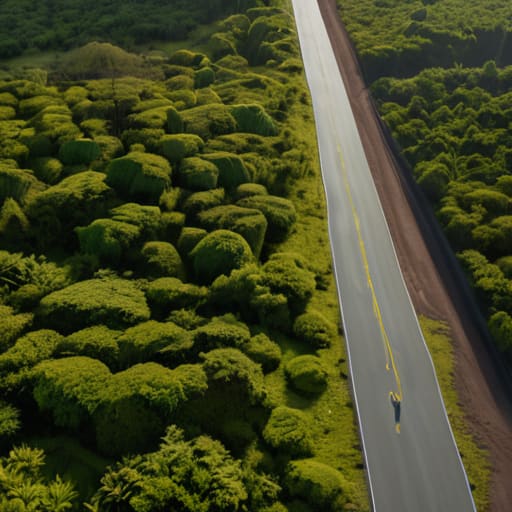
When we talk about the impact of land use change on wildlife, the conversation usually centers on the physical disappearance of a forest or a meadow. But as someone who spends most of my time staring at the edges of things, I’ve learned that the damage isn’t just in what is removed, but in how what remains is arranged. It isn’t just about the total acreage; it’s about the quality of the connections between the patches that are left.
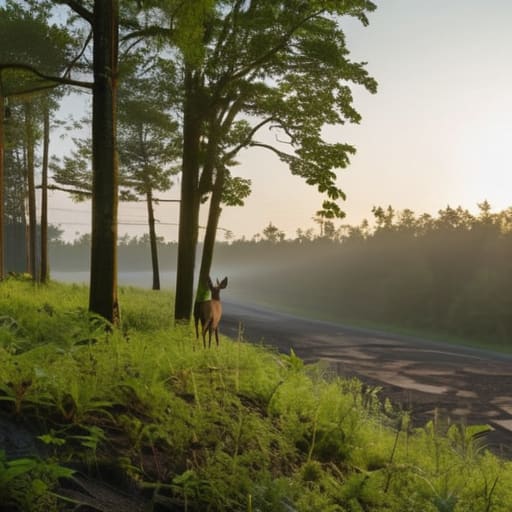
If a species is confined to a single, isolated garden or a tiny woodland snippet, we start seeing the real biological fallout: a decline in genetic diversity in isolated populations. Without the ability to move and mix with other groups, these small pockets of life become incredibly vulnerable to even minor environmental shifts. We often talk about metapopulation dynamics explained in textbooks as a series of dots on a map, but in the field, it’s much more precarious. It’s about whether a single hedgerow is thick enough to act as a corridor or if it’s just a dead end that leaves a population stranded and unable to recover from a bad season.
Why Metapopulation Dynamics Explained Matter More Than Simple Space
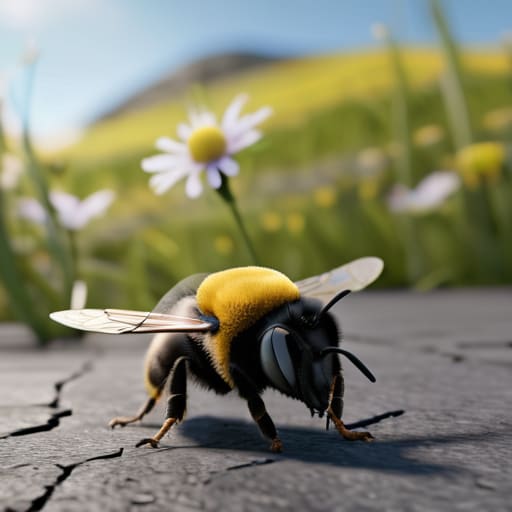
When we talk about biodiversity loss due to habitat loss, the instinct is to think of it as a simple subtraction problem: more concrete equals fewer bugs. But it’s actually a connectivity problem. This is where metapopulation dynamics explained becomes essential for understanding why a species might vanish even if you leave a decent-sized patch of woodland untouched. A metapopulation isn’t just one big group; it’s a collection of smaller, local populations that rely on “rescue effects.” If a local colony of Bombus terrestris—the buff-tailed bumblebee—suffers a bad year due to a late frost, they need immigrants from a neighboring patch to jumpstart the population again.
If the distance between those patches is too great, or if the matrix between them is too hostile, that rescue never happens. You end up with genetic diversity in isolated populations plummeting, which makes the whole group much more vulnerable to the next environmental shock. We aren’t just losing space; we are losing the ability for species to move, mix, and recover. This is why a single, massive park is often less effective than a network of smaller, connected stepping stones.
Making Space That Actually Works: Five Ways to Fight Fragmentation
- Prioritize connectivity over mere acreage. It’s a common misconception that just having a “big patch” of nature is enough; if that patch is an island surrounded by concrete, it’s a dead end. We need to focus on creating functional corridors—like continuous hedgerows or wildflower strips—that allow species to actually move between habitats rather than just surviving in isolation.
- Focus on the “edge effect” and buffer zones. When you have a small habitat surrounded by intense agriculture or urban development, the perimeter is often a hostile zone of pesticide drift or light pollution. To make a fragment useful, you need to build in a buffer; a thin line of scrub is better than nothing, but a wide, messy margin is what actually protects the core.
- Plant for the “stepping stones.” Not every insect or small mammal needs a continuous highway to survive. For many pollinators, a series of well-placed, high-quality patches—like a diverse garden here and a wildflower meadow there—can act as stepping stones. It’s about reducing the distance a species has to travel through “biological deserts” to find its next meal or mate.
- Embrace the mess. One of the biggest drivers of fragmentation is “tidying up” our landscapes. Manicured lawns and perfectly straight, mown field margins are ecological voids. By leaving some areas slightly wild and unmanaged, we create the micro-habitats that bridge the gaps between larger areas, providing cover and food where there otherwise wouldn’t be any.
- Diversify your floral phenology. If a fragment only provides nectar from June to August, it’s a seasonal trap. To combat the isolation caused by fragmentation, we need to ensure that the patches we do have offer a continuous food supply from early spring through late autumn. This ensures that species moving through the landscape aren’t running out of fuel halfway through their journey.
What to actually take away from the data
It isn’t just about the total amount of green space we lose; it is about the quality of the connections between them. A massive, isolated park is often less useful for a specialist pollinator than a series of smaller, well-linked garden patches.
We need to move past the “all or nothing” mindset of conservation. Small-scale interventions, like widening a single field margin or planting a specific nectar source, can act as vital stepping stones that keep a population from becoming genetically stranded.
Beware the “extinction” headline that ignores the nuance of local survival. Many species aren’t vanishing overnight, but they are becoming increasingly vulnerable to single catastrophic events because their “safety net” of neighboring populations has been cut off.
Beyond the Map: What We Actually Do Now
We can’t just look at a map of green patches and assume everything is fine. As we’ve seen, the real danger isn’t just the shrinking of the total area, but the way those remaining islands become biologically isolated. When we lose the connectivity provided by hedgerows or even a well-placed wildflower strip, we aren’t just losing space; we are breaking the essential flow of individuals that keeps a population resilient. It isn’t enough to simply preserve a single “perfect” nature reserve if it sits in a sea of concrete or intensive monoculture. To make a difference, we have to stop thinking in terms of isolated pockets and start thinking about the functional pathways that allow life to actually move, mate, and persist.
This isn’t about waiting for massive, sweeping legislative shifts to save every single species—though that would be lovely. It is about recognizing that even the smallest, seemingly insignificant patch of scrub or a messy, unmanicured garden border can act as a vital stepping stone. If we focus on reconnecting the dots rather than just hoarding isolated bits of green, we give these populations a fighting chance to navigate a changing world. It’s much harder to measure the success of a single garden hedge than it is to count the decline of a whole genus, but that is exactly where the work begins.
