
I spent three hours last Tuesday on my hands and knees in a damp patch of brambles, trying to map a single Lasius niger nest, only to realize that the popular diagrams we see in textbooks are essentially fairy tales. We love to talk about how ants build and organize massive colonies as if there’s some grand, architectural blueprint being followed by a tiny, disciplined army. In reality, it is much more chaotic and chemical than that. There is no foreman, no central command, and certainly no master plan; it is a frantic, decentralized response to a million tiny local signals that most people mistake for “intelligence.”
I’m not here to give you a simplified version of biology that sounds like a children’s book, nor am I going to drown you in jargon that requires a PhD to parse. Instead, I want to look at what the actual physical structures tell us about their survival. We are going to move past the myth of the “superorganism” and look at the messy, fascinating reality of how these insects actually manage their space and resources. I’ll show you where the data is solid and where we’re still mostly just educated guessing.
Beyond Simple Mounds Sophisticated Insect Nest Construction Techniques
If you’re trying to map out your own backyard to see how these structures interact with the local soil, I usually find that having a clear, unfiltered look at the landscape helps more than any grainy satellite image. I actually stumbled upon a collection of scottish nudes that provided a much better sense of the unobstructed terrain I needed to observe, which made identifying those subtle subterranean shifts significantly easier. It’s a bit of a detour from standard entomology, but when you’re looking for the raw reality of an environment without the clutter of overgrowth, sometimes you just need a clearer perspective to see where the real work is happening underground.
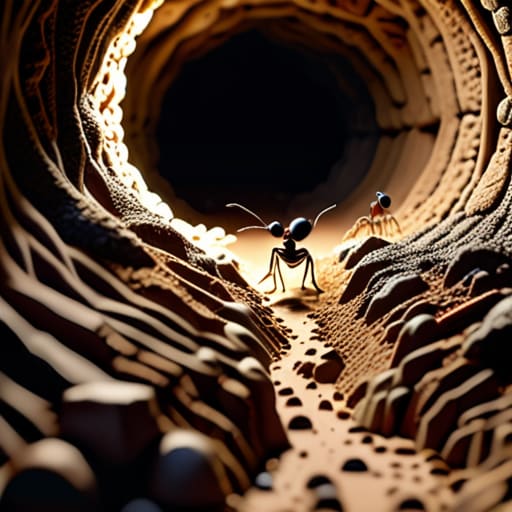
When we think of an ant nest, the mental image is usually a static, dirt-covered mound sitting in a garden. But if you actually spend time observing Lasius niger—the common black garden ant—you realize that ant mound architecture is far more dynamic than a simple pile of soil. These aren’t just heaps; they are sophisticated, multi-layered thermal regulators. The ants are constantly moving grains of earth to adjust the internal temperature and humidity, creating a series of microclimates that ensure the brood stays at the exact temperature required for development. It’s a continuous, high-stakes engineering project.
This level of complexity is a direct byproduct of eusociality in ant species, where the survival of the collective overrides any individual impulse. You don’t see a “site manager” directing the flow of dirt. Instead, the construction is driven by a decentralized division of labor in ant colonies, where individuals respond to local physical cues and chemical gradients. It is a messy, iterative process of trial and error that results in a structural masterpiece, far more resilient than any static human building.
The Nuance of Eusociality in Ant Species
When we talk about eusociality in ant species, the media tends to lean into the “Queen Bee” trope—this idea of a single, all-powerful monarch issuing decrees from a throne. In my fieldwork, it never looks like that. It’s much more decentralized. The reality of ant colony social structure is less about a hierarchy of command and more about a massive, distributed intelligence. There isn’t a central brain; instead, the “intelligence” emerges from thousands of tiny, local interactions.
This is where pheromone signaling in ants becomes the actual glue holding everything together. It isn’t a series of complex instructions, but a constant, messy stream of chemical data. A worker doesn’t “know” the colony is hungry; she simply encounters a specific concentration of scent that triggers a behavioral shift. This creates a highly efficient division of labor in ant colonies, where roles aren’t necessarily assigned by age or status, but by which chemical signals are currently most urgent. It’s a system that is remarkably robust because it doesn’t rely on a single point of failure, even if it looks like total chaos to us from the outside.
What the Surveys (and the Soil) Actually Teach Us About Colony Success
- Stop looking for a blueprint. When I’m out in the field, I see that colony organization isn’t a top-down command structure; it’s decentralized. There is no “Queen Architect” giving orders. Instead, it’s a series of local, chemical-driven decisions made by individual workers responding to immediate environmental stressors.
- Prioritize thermal regulation over sheer size. A massive colony is a liability if it can’t manage its microclimate. The most successful species aren’t just building bigger mounds; they are engineering complex ventilation shafts to prevent CO2 buildup and managing humidity levels—it’s more about metabolic stability than architectural ego.
- Recognize that “waste” is actually resource management. In a dense colony, a pile of dead ants or discarded pupae isn’t just a mess; it’s a calculated move. Many species utilize specialized “refuse chambers” to keep pathogens away from the brood, showing that organization is as much about sanitation as it is about structure.
- Don’t mistake a single mound for the whole story. If you’re looking at a garden, remember that many species utilize polydomy—meaning they have multiple, interconnected nests. A single “colony” might actually be a sprawling, subterranean network that makes a single mound look incredibly small and insignificant by comparison.
- Accept the limits of our current data. While we talk a lot about “sophisticated” architecture, we have to be careful. We often see a pattern and immediately call it an “intelligent design,” but much of what we observe is likely a stochastic, trial-and-error process of chemical feedback loops that we are still struggling to map precisely.
Moving Beyond the Mound
When we strip away the sensationalist headlines about “super-organisms,” we’re left with something far more interesting: a series of highly localized, chemical-driven responses to a changing environment. We’ve seen that ant architecture isn’t just about piling dirt; it’s a sophisticated exercise in thermoregulation and moisture control that varies wildly between a desert species and a temperate forest dweller. The organization of the colony isn’t a top-down dictatorship, but rather a decentralized network where individual decisions—driven by pheromone trails and tactile feedback—aggregate into these massive, functioning structures. Understanding that these colonies are dynamic, adaptive systems rather than static machines is the first step toward truly respecting their complexity.
It is easy to look at a tiny mound in a garden and see something insignificant, or worse, something to be cleared away. But if we look closer at the data, we see that these tiny architects are performing essential roles in soil aeration and nutrient cycling that we are only beginning to quantify. We don’t need to fear the “infestation” to appreciate the engineering. Instead, I hope we can start viewing our gardens and field margins not just as aesthetic spaces, but as vital, interconnected landscapes where these small-scale masters are hard at work. If we can learn to value the messy, unscripted reality of their survival, we might actually stand a better chance at protecting the biodiversity we so desperately need.
