
I once spent three weeks in a field in Norfolk, shivering in a waterproof jacket that had long since lost its ability to repel anything, trying to get a decent count of aphids on a single patch of cereal. It was muddy, my hands were numb, and I realized then that the glossy brochures about high-tech, automated sensor arrays are mostly just marketing fluff. When people ask me how insect pests are monitored in farming, they expect an answer involving satellite imagery or expensive AI drones, but the reality is often much more granular, much more frustrating, and involves a lot more squinting at leaves in the wind.
I’m not here to sell you on a miracle technology that doesn’t exist or to drown you in impenetrable academic jargon. Instead, I want to pull back the curtain on what actually happens when we try to track these populations. We’re going to look at the difference between a snapshot and a trend, why certain manual sampling methods are still the gold standard, and where the data actually gets messy. My goal is to show you what the surveys are truly measuring so you can tell the difference between a genuine pest surge and a statistical hiccup.
Table of Contents
Why Standard Pest Scouting Techniques Often Miss the Full Picture

The problem with most standard pest scouting techniques is that they are designed to find the “bad guys” just before they cause a crisis, not to understand the ecosystem as a whole. When a farmer walks a row, they are often looking for a specific threshold—that moment where the cost of the damage outweighs the cost of the spray. This focus on economic injury levels in agriculture is practical, sure, but it creates a massive blind spot. You end up measuring the presence of a pest rather than the health of the field. If you only count the aphids that are currently munching on your soy, you’re missing the entire context of why they’re there in the first place.
It’s also a massive sampling headache. Whether you’re using pheromone trap deployment to track moth populations or just doing a visual sweep, you’re essentially taking a tiny, blurry snapshot of a much larger, moving target. You might catch a spike in a specific species and assume a localized outbreak, when in reality, you’ve just caught a single, unrepresentative wave. We tend to mistake presence for prevalence, and in a complex field, that distinction is everything.
Moving Past Hype Toward Precise Crop Damage Assessment Methods
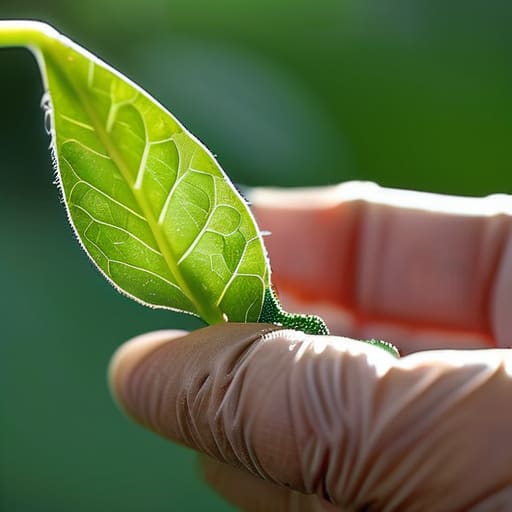
The problem with a lot of the current discourse is that we treat every insect sighting like a crisis. In my field work, I see the gap between a “pest outbreak” and actual, measurable damage all the time. If we want to get serious, we have to pivot toward more rigorous crop damage assessment methods that look at the plant’s health, not just the insect’s presence. It isn’t enough to say there are aphids on a leaf; we need to know if they are actually compromising the plant’s ability to thrive.
This is where the concept of economic injury levels in agriculture becomes vital. It’s the threshold where the cost of the damage outweighs the cost of the intervention. If we skip this step and jump straight to spraying because a survey turned up a high number, we’re just guessing. Instead, we should be integrating data from things like pheromone trap deployment with real-time observations of plant stress. It’s about moving away from reactive panic and toward a system where we only intervene when the math—and the biology—actually demands it.
Beyond the Snapshot: Five Ways to Get Real Data on Pest Pressure
- Stop looking for the bugs and start looking for the damage. It sounds counterintuitive, but counting every single Plutella xylostella (diamondback moth) in a field is a fool’s errand that ignores the actual economic reality. You need to calibrate your monitoring to the specific threshold where the insect’s feeding behavior actually starts impacting yield, rather than just reacting to a high headcount that might not be doing much harm.
- Watch the margins, not just the middle. We spend so much time scouting the center of a crop that we miss the “spillover effect.” Many pests don’t just appear; they migrate from the hedgerows or the uncultivated edges. If your monitoring protocol doesn’t include a transect along the field boundary, you’re essentially trying to predict a storm while only looking at the ground beneath your feet.
- Respect the “Snapshot Fallacy.” A single scout walk on a Tuesday morning is a data point, not a trend. Insect populations are notoriously spikey—they respond to temperature shifts and humidity in ways that can make a population look stable one week and catastrophic the next. To get a reliable picture, you need a temporal sequence of observations, not just a single high-resolution moment.
- Distinguish between presence and impact. Just because you found a specimen doesn’t mean you have a problem. In my fieldwork, I see people panic because they spot a few individuals of a species that, in that specific life stage or density, isn’t actually a threat to the crop. You have to learn the difference between a resident insect and an active pest.
- Standardise your “eye.” One of the biggest headaches in agricultural monitoring is human variability. If Scout A counts a “low” density and Scout B calls the same patch “moderate,” your data is effectively noise. You need clear, written definitions of what a “high” or “low” density looks like for each specific pest, or you’re just collecting opinions instead of evidence.
The Reality of the Data
Stop equating “seeing more bugs” with a pest outbreak; we need to distinguish between a seasonal spike in non-target species and a genuine increase in the specific organisms actually causing crop damage.
Reliable monitoring requires moving away from anecdotal “walk-throughs” toward standardized sampling that accounts for the fact that insects don’t distribute themselves evenly across a field.
Good conservation and good farming both rely on the same thing: better data, which means prioritizing long-term, consistent monitoring over the reactionary, headline-grabbing snapshots that usually drive policy.
Getting the Data Right
At the end of the day, we have to stop treating “pest monitoring” as a vague concept and start treating it as a rigorous, data-driven discipline. We’ve seen that standard scouting often fails because it ignores the nuance of how insects actually interact with a crop, and we’ve discussed why we need to pivot from chasing headline-grabbing numbers to measuring actual economic damage. If we keep relying on snapshots that miss the broader population dynamics, we aren’t actually managing anything; we are just reacting to ghosts in the field. Precision in how we collect this data is the only way to bridge the gap between a frantic spray application and a truly informed ecological management strategy.
I know it’s tempting to want a single, magic metric that tells us exactly when to act, but nature rarely works in such clean lines. The reality is that monitoring is messy, slow, and often requires getting your boots muddy to see what is actually happening in the canopy. However, if we commit to better methods—the kind that respect both the biology of the insect and the economics of the farm—we move away from the cycle of alarmism and toward something much more useful. We can build a system that works with the environment rather than just fighting against it, and that starts with valuing the quality of the count over the speed of the headline.
