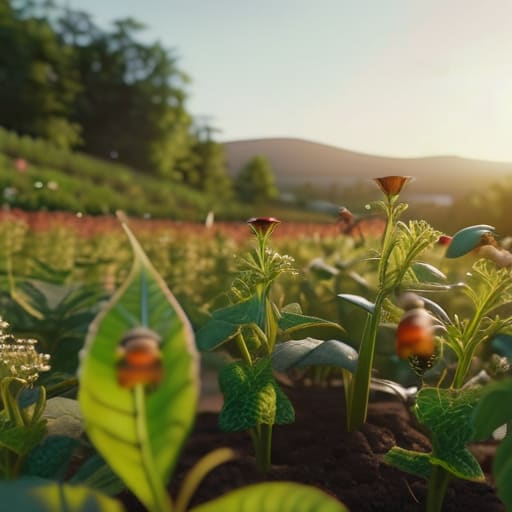
I spent three weeks last summer crouched in a damp, stinging nettle patch near a certified organic wheat field, waiting for a specific species of hoverfly that never showed up. It was a frustrating reminder that we need to stop treating organic certification like a magic wand for nature. There is this pervasive, glossy myth that simply removing synthetic pesticides automatically solves everything, but when we look at the actual survey data, the reality of how organic farming affects biodiversity is far more nuanced—and often much messier—than a supermarket label suggests.
I’m not here to sell you on a utopia or repeat the breathless headlines you see on your feed. Instead, I want to talk about what the transect counts actually show us when we look past the marketing. I promise to give you a clear-eyed breakdown of where organic practices actually move the needle and where they fall short, specifically focusing on the structural gaps like hedgerow management and soil health. We are going to look at the evidence, not the hype, so you can understand what truly matters for the insects we are trying to save.
Table of Contents
The Real Ecological Impact of Organic Agriculture
When we talk about the ecological impact of organic agriculture, the conversation usually skips straight to the “pretty” stuff—the butterflies and the bees. And don’t get me wrong, seeing a Bombus terrestris (the Buff-tailed Bumblebee) navigate a clover patch instead of a monoculture field is a win, but the real heavy lifting happens where we can’t see it. We need to look at soil microbial diversity in organic systems if we want to understand why these farms actually function differently. It isn’t just about the absence of synthetic nitrogen; it’s about the presence of a living, breathing soil structure that supports the entire food web from the bottom up.
However, we have to be careful not to treat an “organic” label as a proxy for high-quality habitat. I’ve stood in organic fields that were essentially green deserts because they lacked the structural complexity—like hedgerows or fallow strips—that insects actually need to survive. The data shows that while organic methods generally support higher pollinator populations, the difference only becomes significant when the farmer integrates agroecology and species richness into their actual management plan. An organic field without a diverse margin is just a cleaner version of a broken system.
Why Pollinator Populations and Organic Methods Arent Always Simple
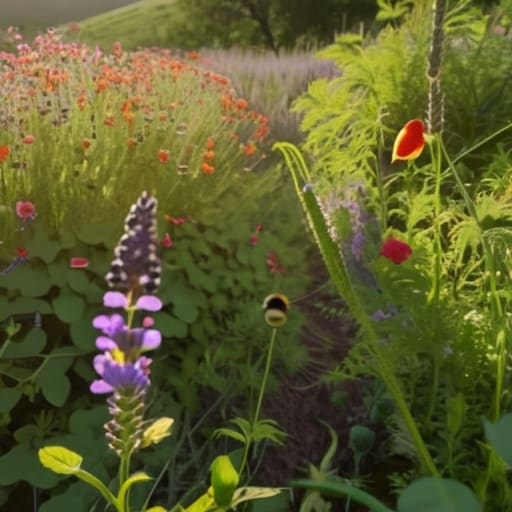
The problem with the conversation around pollinator populations and organic methods is that we tend to treat “organic” as a monolith. In my fieldwork, I’ve seen organic farms that are essentially biological deserts because they focus solely on the absence of synthetic pesticides while ignoring the structural reality of the landscape. You can have an organic certification, but if that farm is a vast, monocultural expanse of a single crop with zero hedgerow connectivity, you aren’t actually supporting a functional ecosystem. It’s not just about what isn’t being sprayed; it’s about whether there is actually a continuous floral resource available from spring through to autumn.
We also have to acknowledge that the link between agroecology and species richness isn’t a straight line. I often see people assume that any shift toward sustainable farming vs conventional agriculture automatically results in a massive spike in insect numbers. In reality, the data is much messier. Sometimes, a shift in management can actually create temporary instability in local populations before a new equilibrium is reached. We need to stop looking for a “magic button” and start looking at how complex landscape management—not just a label on a bag of flour—actually drives recovery.
Moving the Needle: What Actually Matters for Biodiversity
- Stop treating “organic” as a synonym for “habitat.” A perfectly organic field that is kept as a sterile, monoculture expanse of organic wheat is still a desert for a specialist bee. It is the messy, unmanaged bits—the field margins, the hedgerows, and the fallow patches—that provide the structural complexity insects actually need to survive.
- Prioritise floral continuity over sheer volume. It’s easy to plant a massive burst of wildflowers in May, but if the nectar dries up by July, you’ve just set a trap for pollinators. We need to look at the phenology—the timing of blooms—to ensure there is a steady bridge of food from early spring through to the late-season moths.
- Manage for the “unlovable” species. We tend to focus on the charismatic pollinators like the Bombus terrestris (buff-tailed bumblebee), but a healthy ecosystem needs the decomposers and the soil-dwellers too. Organic practices that improve soil structure and reduce disturbance help the entire food web, not just the things that look good in a macro photograph.
- Diversify your “weeds.” In my surveys, I see a massive difference between a field with a random mix of spontaneous vegetation and one that is “cleanly” organic. We need to stop viewing non-crop plants as intruders and start seeing them as essential nectar corridors that link fragmented habitats together.
- Watch the landscape, not just the farm. You can do everything right on your own plot, but if your farm is an organic island surrounded by intensive, pesticide-heavy landscapes, your local populations will struggle to colonise. True biodiversity gains happen when we stop thinking in terms of individual farm boundaries and start thinking about connected ecological networks.
What We Actually Know (And What We’re Still Guessing At)
Organic certification is a baseline, not a finish line; a certified organic field that is kept “tidy” with mown grass and zero weeds provides almost nothing to a specialist bee compared to a messy, conventional field margin.
We need to stop treating “organic” as a monolith in the data, because the real biodiversity wins happen in the specific management of soil health and the preservation of non-crop habitats, regardless of the label on the seed bag.
The evidence for broad insect recovery under organic systems is still being teased out, so we have to be careful not to claim a total victory just yet—true success is measured by stable, long-term population trends, not just a single season of high butterfly counts.
Moving Beyond the Binary
If there is one thing my transect walks have taught me, it is that nature does not care about our labels. An “organic” field that is a monoculture of tidy, pesticide-free grass is often less useful to a Bombus terrestris than a conventional field with a messy, unmanaged wildflower margin. We have to stop treating organic certification as a silver bullet and start looking at the actual architecture of the landscape. It isn’t just about what you don’t spray; it is about the structural complexity you actually provide. The data suggests that while organic systems generally offer a better baseline, the real wins for biodiversity happen when we focus on habitat heterogeneity—the messy, unmanicured bits that actually hold the life.
We don’t need more panic-inducing headlines to tell us that things are changing; we need a more nuanced way of participating in that change. Whether you are a farmer deciding how to manage a hedgerow or a gardener deciding whether to leave that patch of nettles alone, remember that incremental, evidence-based shifts matter more than performative gestures. Insects are resilient, but they are also specialists, and they require specific, reliable resources to survive the gaps between seasons. Let’s stop looking for the one perfect farming method and start focusing on the small, practical ways we can make our landscapes actually functional for the species that keep our world turning.
