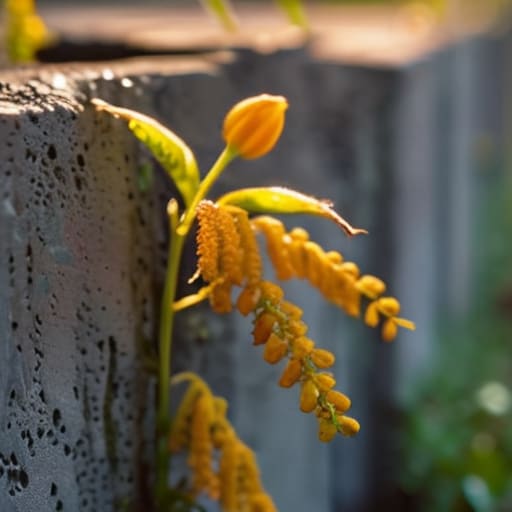
I was knee-deep in a patch of crushed concrete and stinging nettles last Tuesday, trying to untangle my boot from a rusted rebar spike, when I realized how much we get wrong about “wasteland.” Most people see a derelict lot and see an eyesore that needs a tidying up, but when I look at the survey data, I see something entirely different. We need to stop treating every patch of rubble like a failed development project and start understanding how brownfield sites support rare species through the messy, unplanned reality of natural succession. It isn’t some magical, pristine paradise; it’s often just a collection of unintentional habitats that happen to be doing the heavy lifting for biodiversity while we’re busy looking for manicured wildflower meadows.
I’m not here to sell you on the idea that every bit of urban decay is a biological goldmine—some of these sites are, quite frankly, just toxic graveyards. My goal is to cut through the alarmist headlines and the impenetrable academic jargon to show you what the actual field counts tell us. I want to explain why these “unimproved” spaces are so vital, where the evidence is actually strong, and where the data remains thin.
Table of Contents
Spontaneous Vegetation Benefits That Headlines Often Miss
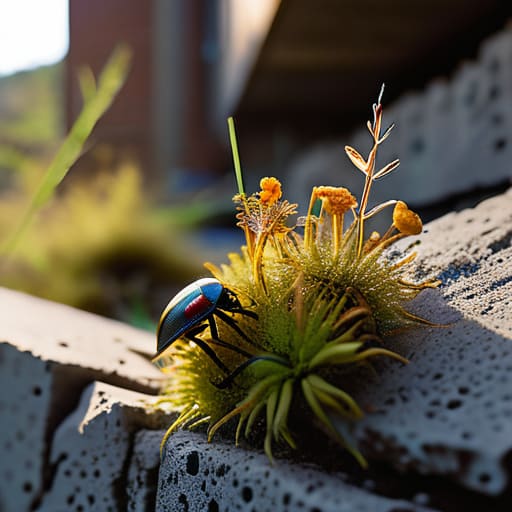
When people hear “brownfield,” they usually picture cracked concrete and rusted rebar. But if you actually get down on your knees and look at the margins, you’ll see that ecological succession in post-industrial sites is doing something much more sophisticated than just “growing weeds.” We aren’t just seeing random greenery; we are seeing a highly specific sequence of life. Because these sites are often left alone by developers, they develop a structural complexity that a manicured park simply can’t replicate. You get a messy, layered architecture of pioneer species that provides the exact microclimates certain specialist invertebrates need to survive a heatwave or a cold snap.
The real magic, though, lies in the spontaneous vegetation benefits that don’t make it into the glossy brochures. We’re talking about the “unplanned” plants—the ones that didn’t come from a seed packet or a landscaper’s spreadsheet. These plants have adapted to the specific, often harsh, chemical or physical conditions of the site. In the context of urban biodiversity conservation, these spontaneous assemblages act as vital stepping stones. They help bridge the gap between isolated green spaces, essentially functioning as a way to tackle habitat fragmentation without us having to plant a single thing.
Ecological Succession in Post Industrial Sites vs Manicured Lawns

The difference between a manicured lawn and a site undergoing ecological succession in post-industrial sites is essentially the difference between a static photograph and a feature-length documentary. A lawn is a biological dead end; it’s a highly controlled environment where we’ve stripped away the complexity to achieve a single, uniform aesthetic. In contrast, a brownfield is a messy, shifting mosaic. As pioneer species colonize cracks in the concrete or build up soil from decaying organic matter, they create a structural variety that a gardener—no matter how well-intentioned—simply cannot replicate with a lawnmower and some raked leaves.
This isn’t just about “letting things grow wild,” though. It’s about the specific way these sites navigate anthropogenic landscapes and rare flora. While a garden might offer a few isolated patches of nectar, a post-industrial site often provides a continuous, albeit rugged, corridor of varying micro-habitats. We see a sequence of niches forming—from bare, heat-retaining rubble for thermophilic insects to dense, scrubby thickets for nesting birds. It’s this unpredictable, unmanaged progression that allows specialized species to find a foothold where a “tidy” landscape would leave them starving.
Moving beyond the "rubble" myth: How to actually support these sites
- Stop aiming for “tidiness.” If you’re managing a site, your biggest enemy is the leaf blower and the tidy gravel path; these sites thrive on the structural mess—the deadwood, the loose substrate, and the gaps between stones—that provides the thermal niches specific invertebrates need to regulate their body temperature.
- Prioritise bare ground over lush greenery. While a thick carpet of grass looks “healthy” to a casual observer, many rare solitary bees and ground beetles require patches of exposed, unshaded soil to build nests or lay eggs; if you cover every inch in mulch or turf, you’ve effectively paved over their nursery.
- Accept that “weeds” are actually your primary data points. When you see Senecio jacobaea (Common Ragwort) or Galium aparine (Cleavers) popping up in the cracks of old concrete, don’t reach for the herbicide; these are often the specific host plants that local specialist insects have been waiting for.
- Respect the “messy” transition periods. We often want to categorise a site as either “industrial wasteland” or “nature reserve,” but the real magic happens in the middle—the scrubby, unmanaged stage where the vegetation is thick enough to provide cover but open enough to allow sunlight to hit the ground.
- Watch the soil, not just the bugs. A lot of the “biodiversity” people look for is actually driven by the unique chemistry of post-industrial soil—like high alkalinity from crushed concrete—which supports rare calcicolous (lime-loving) plants that simply won’t grow in your standard garden loam.
The bottom line for brownfield conservation
Stop treating “messy” as a synonym for “neglected”; a patch of rubble with spontaneous wildflowers is often doing more heavy lifting for local biodiversity than a carefully planted community garden.
We need to move past the binary of “nature vs. industry” and recognize that post-industrial sites provide unique, unmanaged niches that traditional conservation models—and manicured landscapes—simply cannot replicate.
Real conservation requires looking at the longitudinal data rather than the immediate aesthetic, because a site that looks like a wasteland today might be the only thing preventing a local population collapse tomorrow.
Moving beyond the 'wasteland' myth
When we look at the data, it becomes clear that these sites aren’t just empty spaces waiting for a developer; they are complex, functioning ecosystems. We’ve seen how the unmanaged, spontaneous vegetation provides the specific structural diversity that a manicured park or a tidy lawn simply cannot replicate. While we still need more long-term longitudinal studies to fully map how these populations shift over decades, the current evidence suggests that the unpredictable mosaic of rubble, bare soil, and scrub is exactly what many specialist invertebrates require to survive. We have to stop viewing these areas as “nothing” and start seeing them as critical ecological infrastructure.
If we want to actually move the needle on insect decline, we have to get comfortable with a bit of mess. Conservation isn’t always about planting a specific number of lavender bushes in a neat row; sometimes, it’s about having the courage to leave a patch of derelict land alone so it can do its job. It is easy to feel overwhelmed by the scale of the collapse, but real change happens when we protect the unseen complexity of these small, gritty corners of the world. Let’s stop trying to tidy up nature and start listening to what the surveys are actually telling us.
