
I spent three summers of my life standing in waist-deep, freezing mud, counting bumblebees along transects while my waterproof jacket slowly gave up the ghost. It wasn’t romantic, and it certainly wasn’t like the glossy nature documentaries where everything is sun-drenched and perfectly composed. What I learned in those damp margins is that we have a massive misunderstanding of how hedgerows function as habitat. People tend to treat them as these monolithic, magical green walls that automatically save the world, but a hedge is not just a line of bushes. If it’s a manicured, single-species strip of privet, it’s essentially a biological desert for the very pollinators we are trying to protect.
I’m not here to give you another breathless headline about how “nature is bouncing back” or to sell you on expensive, complicated landscaping schemes. Instead, I want to talk about the actual mechanics of the margin—the messy, structural stuff that actually moves the needle. I’ll be looking at what the survey data actually tells us about nesting sites and nectar availability, distinguishing between what is scientifically settled and where we’re still just guessing. We’re going to look at how to make these spaces work, without the fluff.
Table of Contents
Why Native Shrub Layer Composition Trumps Decorative Planting
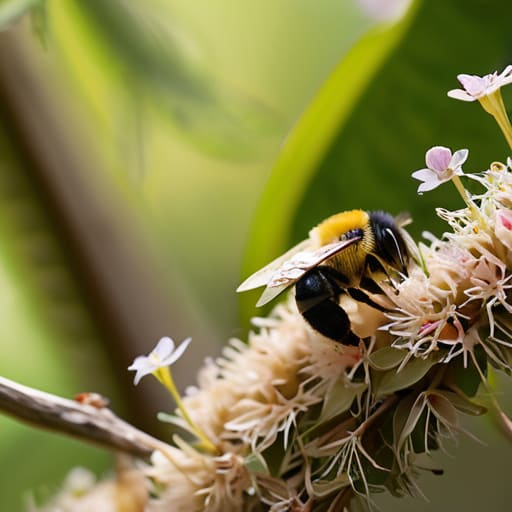
When people volunteer to “improve” a hedge, they usually reach for the nearest nursery catalog and pick something that looks tidy or smells nice. But if we are talking about actual pollinator support in hedgerows, a row of non-native Laurel or even a particularly manicured Privet isn’t doing much for a specialist bee. To a researcher, a hedge isn’t a green wall; it’s a complex architecture of food and shelter. If the native shrub layer composition is lacking, you’re essentially building a high-rise apartment complex with no kitchens.
The problem with decorative planting is that it often prioritizes aesthetics over functional nectar or pollen availability. I’ve spent too many afternoons looking at “landscaped” margins that are basically biological deserts because they lack the structural variety we need. To truly boost hedgerow species richness, we need the “scruffy” stuff—Hawthorn (Crataegus monogyna), Blackthorn (Prunus spinosa), and Hazel (Corylus avellana). These aren’t just names on a list; they are the specific biological engines that drive the local food web. If we want to move beyond just “looking green” and actually support life, we have to prioritize the plants that evolved alongside the insects we’re trying to save.
The Real Math Behind Hedgerow Species Richness
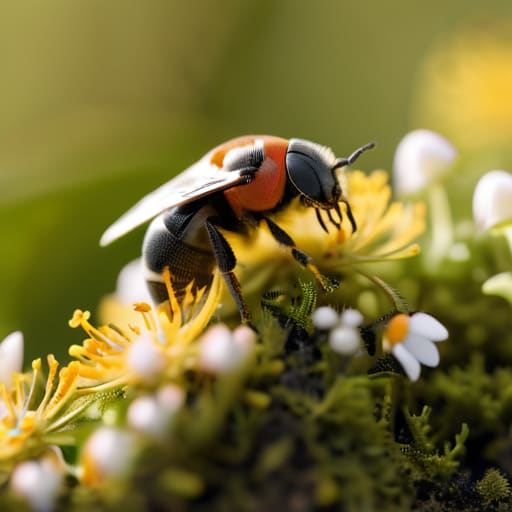
When people talk about “biodiversity in agricultural landscapes,” they often treat it like a single, monolithic number. They see a thick line of green and assume it’s a thriving hub. But if you’re actually out there with a transect sheet, you realize that richness isn’t just about how many different things you see; it’s about the density of functional interactions. You can have a hedge with twenty different plant species, but if they all bloom in the same three-week window in May, you haven’t built a stable habitat. You’ve just built a temporary buffet.
For true hedgerow species richness, we have to look at the temporal spread. A high-quality margin needs a staggered phenology—flowers that bloom in the early, lean weeks of spring and the late, cooling days of autumn. This is where the math gets tricky. If the floral resource gap is too wide, the insects you’ve attracted through “wildlife corridors and ecological connectivity” will simply starve before they can reproduce. We aren’t just counting heads; we are measuring the continuity of energy across the entire growing season.
Beyond the Green Wall: Five Ways to Stop Treating Your Hedge Like a Fence
- Stop the “neatness” reflex. A manicured, box-cut hedge is essentially a biological desert for most pollinators. If you want to support Bombus terrestris (the buff-tailed bumblebee) or even just a decent variety of hoverflies, you need structural complexity—that means allowing some messy, brambly, or uneven growth that provides actual nesting sites and shelter from the wind.
- Focus on the “edge effect” of the margin, not just the woody stems. The most intense insect activity rarely happens inside the dense thicket of the hedge itself; it happens in the transitional strip of herbaceous plants at the base. If you plant a hedge but pave the base with mulch or short-mown turf, you’ve effectively severed the habitat connection.
- Prioritize continuous bloom over “big bang” flowering. It’s easy to plant a bunch of lavender and feel like a conservation hero in July, but a hedge that only provides nectar for three weeks is a trap. For a population to be stable, you need a succession of species that offer food from the first spring ephemerals through to the late-season nectar of ivy.
- Leave the deadwood alone (mostly). We have a cultural obsession with “tidying up,” but many specialist beetles and solitary bees rely on the decaying wood and hollow stems that exist within a mature, unmanaged hedge. If you prune every single dead twig every single autumn, you are removing the very architecture that many species need to survive the winter.
- Think about connectivity, not just isolation. A single, perfect hedge in the middle of a massive, sterile monoculture field is a lonely island. To actually move the needle on population numbers, we need to view these hedges as corridors. Even a small, slightly “suboptimal” hedge that connects two larger patches of habitat is often more valuable than a perfect one that leads nowhere.
The Bottom Line for Your Field Margins
It isn’t enough to just have a “green strip”; if that margin is a monoculture of tidy grasses or a row of non-native ornamentals, it’s effectively a biological desert for the specialist pollinators we’re actually trying to save.
Stop chasing “diversity” as a buzzword and start looking at structural complexity—a messy, multi-layered hedge with varying heights and flowering windows provides far more stable habitat than a perfectly manicured line of shrubs.
We need to move away from the “set it and forget it” mentality of conservation; the most effective margins are those that balance intentional planting with the managed “scruffiness” that allows native wildflowers to actually establish and thrive.
Moving Beyond the Green Screen
If we take anything away from this, let it be that a hedgerow is not a static piece of scenery; it is a functional, living architecture. We have to stop treating them as mere “green dividers” and start seeing them as the complex, multi-layered habitats they are. It isn’t enough to just have a line of greenery; we need the right species composition to support specialist pollinators, and we need the structural diversity—the messy, unclipped bits—to provide the actual refuge insects require to survive a bad season. When we prioritize aesthetic neatness over ecological function, we are essentially building a hollow habitat that looks good in a landscape photo but fails the very species we are trying to save.
I know it feels overwhelming when you see the data on population dips, and I know the “messy” look of a functional margin can feel like a failure of gardening or land management. But there is a massive difference between a garden that is neglected and a margin that is intentionally wild. We don’t need more perfectly manicured borders; we need more space for the biological reality of our landscapes to breathe. If we can shift our focus from how a hedge looks to how it actually works, we move from merely documenting decline to actively building the infrastructure for recovery. It starts with one less trim and one more native shrub.
