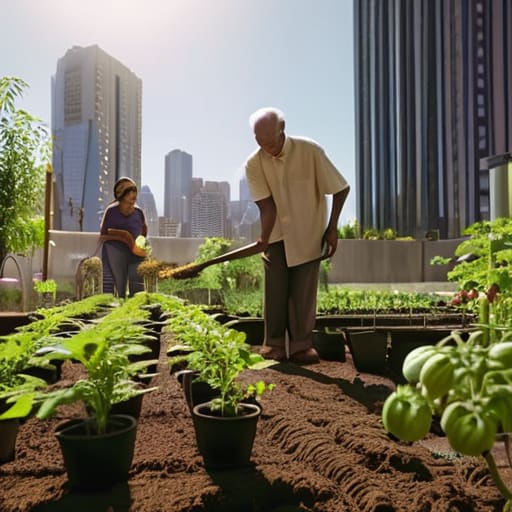
I spent three hours last Tuesday knee-deep in mud at a new community plot, trying to document why the Bombus terrestris—the common buff-tailed bumblebee—wasn’t showing up despite the “biodiversity-friendly” signage. It’s frustrating because we tend to treat these spaces as magical, instant fixes for ecological collapse, but there is a massive gap between a pretty patch of raised beds and a functioning ecosystem. People often list the benefits of urban community gardens as purely social or aesthetic, but if we’re being honest, a manicured vegetable patch with heavy pesticide use or non-native ornamentals is basically a green desert for the insects I spend my life studying.
I’m not here to sell you on the idea that planting a single pot of lavender will save the planet. Instead, I want to look at what actually works when we move past the Instagram-friendly version of urban growing. I’ll be sharing what the survey data actually tells us about connectivity, soil health, and which specific plant choices genuinely move the needle for local pollinator populations. This isn’t about hype; it’s about understanding how to turn a small urban footprint into a meaningful biological corridor.
Strengthening Social Cohesion in Urban Spaces Without the Fluff
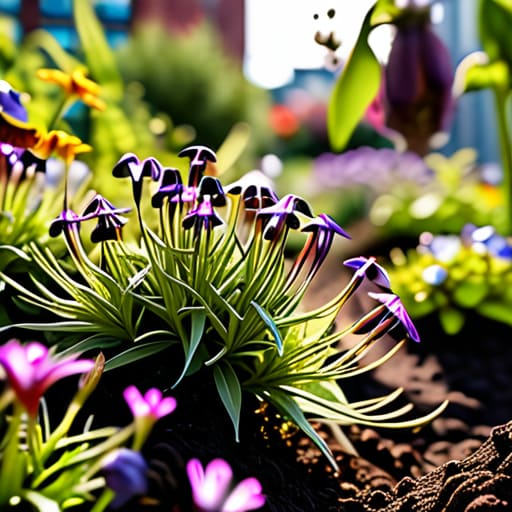
If you’re looking to move beyond the social side of things and actually start looking at the biological reality of your plot, the first step is usually a bit of trial and error with what you’re planting. It’s easy to get caught up in the aesthetics of a community garden, but if you want to support specific local lifecycles, you need to know what’s actually thriving in your specific climate and soil type. I often find that people spend a lot of time guessing when they could be looking at localized data instead. For instance, if you are working in more mountainous or specific Alpine-adjacent regions, checking out resources like nutten tirol can give you a much better sense of the actual floral availability you’re working with. It’s much better to plant with a bit of evidence-based intent than to just scatter a packet of “wildflower mix” and hope for the best.
We often hear that community gardens are “social hubs,” a phrase that’s become so much of a cliché in urban planning that it’s lost all its teeth. But when I’m out on a transect or helping a local group manage their plots, I see something more functional than just a place to chat. It is about the shared, physical labor of maintaining a space. When you are both elbow-deep in compost or trying to figure out why the Bombus terrestris (the buff-tailed bumblebee) is ignoring your lavender, the social barriers of a city tend to thin out. This isn’t just “networking”; it is a tangible way of building social cohesion in urban spaces through a common, non-performative goal.
There is also a direct, if sometimes overlooked, link between these spaces and urban agriculture mental health. It isn’t about “finding peace in nature”—which is a bit too poetic for my taste—it is about the psychological shift that happens when you move from a concrete environment to one where you are actively managing a living system. Having a predictable, seasonal rhythm in a chaotic city provides a grounding effect that a simple park bench never could.
How Local Food Systems and Sustainability Actually Function
When we talk about local food systems and sustainability, the conversation usually drifts toward high-level logistics or carbon footprints, but the actual mechanics are much more granular. In a community garden setting, you aren’t just growing a few heads of lettuce; you are creating a micro-scale loop of nutrient cycling. When a group manages its own composting or chooses to grow heirloom varieties, they are actively mitigating some of the pressures on food security in cities. It isn’t a total solution for a metropolitan area—we can’t feed ten million people solely on raised beds—but it creates a localized buffer that makes the urban food web a little less brittle.
The real magic, though, happens in the transition from “consumer” to “producer.” Most of our food travels thousands of miles through a highly sanitized, invisible supply chain. Bringing that process into a neighborhood changes the way we perceive resource scarcity. It turns sustainability from an abstract concept in a news report into a tangible, daily practice of managing soil health and seasonal availability. It’s about moving away from the idea of the city as a vacuum that just consumes, and toward seeing it as a space capable of contributing to its own biological needs.
Beyond the Veggie Patch: Five Ways to Make a Garden Actually Work for Nature
- Prioritise Fabaceae over purely ornamental blooms. While everyone loves a bright petunia, planting nitrogen-fixing legumes like clover or vetch provides much more substantial caloric value for local pollinators than a seasonal burst of exotic flowers.
- Stop the “tidy garden” reflex. We have a cultural obsession with manicured lawns, but a patch of “messy” perennial weeds is often a vital micro-habitat; leaving some leaf litter and dead stalks provides the overwintering sites that many solitary bees desperately need.
- Focus on structural diversity rather than just plant count. A garden with varying heights—ground cover, mid-level shrubs, and taller flowering perennials—creates more ecological niches, allowing a wider variety of insect life to coexist in a small footprint.
- Watch your soil health, not just your topsoil. A community garden is only as resilient as its fungal networks; avoiding heavy synthetic fertilisers prevents the disruption of the soil biota that actually facilitates nutrient uptake for your plants.
- Aim for phenological continuity. It isn’t enough to have a massive bloom in June; you need to ensure there is a staggered sequence of nectar availability from early spring through to late autumn to prevent “hunger gaps” in the local insect lifecycle.
Beyond the Plot Holes
When we strip away the romanticized imagery of community gardens, we’re left with something much more pragmatic: a functional tool for both social resilience and ecological stability. We’ve looked at how these spaces act as vital social hubs and how they provide a localized, albeit small-scale, buffer for food systems. But more importantly, we have to acknowledge that these gardens aren’t just “pretty patches” of green; they are active sites of data-driven conservation. Whether it is the way a community plot manages soil health or how it provides a stepping stone for a wandering pollinator, these spaces represent a tangible shift from passive consumption to active stewardship of our immediate environment.
It is easy to feel overwhelmed by the scale of global biodiversity loss, but that is exactly why the granular work matters. You don’t need to restore an entire ecosystem to make a measurable difference; you just need to stop treating every square meter of soil like it is purely decorative. If we focus on the quality of the habitat—the native plantings, the lack of heavy pesticides, the intentional messiness—we move past the headlines and into real, incremental progress. Urban gardens might not solve the entire extinction crisis overnight, but they are a proven starting point for building a world that actually has room for the small things.
