I spent three summers counting bumblebees in the driving rain, and if there is one thing that experience taught me, it is that nature doesn’t care about your expensive gear or your polished spreadsheets. Most people think that understanding how moths are trapped and recorded requires a PhD and a kit that costs more than my car, but the reality is much messier. You can have the most high-tech mercury vapor lamp in the county, but if you don’t understand the nuance of the environment or why a sudden temperature drop renders your data useless, you aren’t actually surveying anything—you’re just collecting expensive souvenirs.
I’m not here to sell you on the romanticism of midnight expeditions or the “magic” of a sudden flutter of wings. Instead, I want to talk about the actual mechanics of the work: the difference between a reliable census and a lucky night, and why the way we log our findings determines whether we are actually seeing a population decline or just misreading the noise. I promise to show you the grit behind the data, explaining exactly how the process works without the academic jargon or the sensationalist headlines.
Table of Contents
Why Uv Light Moth Attraction Isnt a Magic Wand
If you’ve ever spent a Friday night in a damp field with a buzzing tube of light, you’ve probably felt like a wizard. It’s easy to assume that if the light is on, the moths are coming, but UV light moth attraction is a bit more temperamental than the hobbyist forums suggest. It isn’t a universal magnet; it’s a specific stimulus that relies heavily on weather, moon cycles, and even the local light pollution levels. If the wind is gusting at twenty knots or the sky is a washed-out grey from a nearby streetlamp, your “magic wand” is essentially just an expensive flashlight.
In my experience with more formal entomological data collection, we have to account for the fact that a trap doesn’t represent a total population; it represents a snapshot of availability. You aren’t catching every moth in the hedgerow; you are catching the ones that happen to be active and responsive to that specific wavelength at that exact moment. This is why relying on a single night of trapping to claim a species is “back” or “gone” is a massive leap. We aren’t just counting wings; we are trying to interpret a very noisy signal.
The Nuance of Non Lethal Moth Sampling in the Field
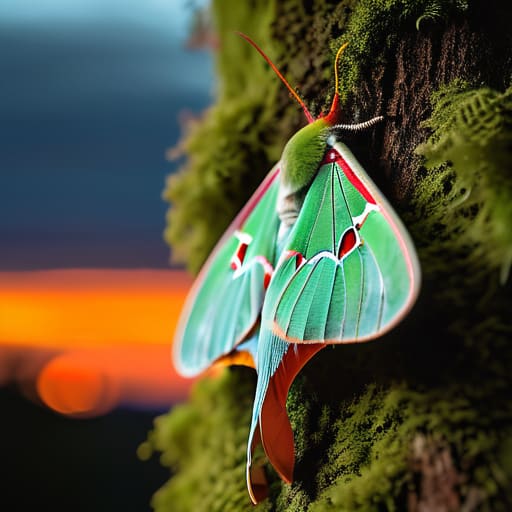
There is a persistent, slightly uncomfortable tension in my field between the need for hard data and the ethical desire to leave a landscape undisturbed. For a long time, the standard for entomological data collection meant that if you wanted to know what was in a hedge, you essentially had to kill it to confirm it. While killing specimens is still a necessary part of building museum collections, much of our modern work has shifted toward non-lethal moth sampling. We are increasingly relying on high-resolution photography and real-time observation to log presence without turning a local population into a pile of dried wings in a specimen jar.
However, don’t mistake “non-lethal” for “easy.” Relying on visual identification during nocturnal insect monitoring techniques is a massive step up in difficulty. If I’m using a portable light trap and trying to snap a macro photo of a Catocala nupta—the Red Underwing—before it flutters back into the dark, I am fighting wind, humidity, and my own shaky hands. It requires immense patience and a level of morphological knowledge that goes far beyond just recognizing a pattern. We aren’t just looking at bugs; we are trying to capture proof of life in a way that actually stands up to scrutiny.
Making Sense of the Mess: 5 Rules for Better Moth Data
- Lepidoptera are notoriously fickle, so timing is everything. If you’re setting a trap at 9 PM on a Tuesday when the dew point is dropping and the wind is picking up, you aren’t measuring population trends; you’re just measuring how much a moth is willing to fight a breeze to get to your bulb. Always record the weather alongside the catch.
- Don’t mistake a “big night” for a “healthy population.” A single warm, still night can trigger a massive emergence that looks like a population boom on a spreadsheet, but it’s often just a localized weather event. One night of heavy activity doesn’t mean the local ecosystem is thriving; it just means the conditions were right for that specific window.
- Be honest about your “bycatch.” In my own garden traps, I often see things that shouldn’t be there—beetles, spiders, or even small vertebrates—drawn in by the light. When you’re recording your data, you have to distinguish between the target species and the “noise” of everything else that happened to be flying by.
- Standardisation is the only thing saving us from bad science. If you use a 125W mercury vapour lamp one week and a small LED strip the next, your data is effectively useless. You can’t compare a high-intensity draw to a low-intensity one and claim you’re tracking a decline; you’re just tracking your equipment changes.
- Learn to love the “unidentifiable.” There is a massive temptation to force a moth into a species category just to make a list look complete, but if you can’t confidently ID a specimen to species level, mark it as sp. (species unknown). Faking certainty is how we end up with “ghost populations” in the literature that don’t actually exist.
What to remember when you're looking at the data
A big catch doesn’t always mean a healthy population; it often just means you’ve found a particularly bright light or a perfect night for flight, so always look at the species diversity, not just the raw numbers.
We have to be careful with “citizen science” data because while it’s vital, a single enthusiast’s garden trap isn’t a substitute for a standardized transect, and the difference between the two is where the real science happens.
Conservation isn’t about one “silver bullet” method, but about understanding that how we collect data—whether we’re being lethal or non-lethal—directly shapes the conclusions we draw about whether a species is actually recovering.
The Data Behind the Dust
At the end of the day, moth trapping is a messy, imperfect science. We’ve seen that UV light isn’t a universal magnet for every species, and we’ve acknowledged that the way we handle a specimen—whether we’re killing it for a museum drawer or gently releasing it back into the night—completely changes the kind of data we can actually use. It isn’t about getting the biggest catch or the most spectacular photos; it’s about understanding that methodology dictates the story. If we use a blunt instrument to measure a delicate population, we’re going to end up with a distorted picture that doesn’t reflect the reality of what’s happening in our hedgerows.
But there is a reason we keep dragging heavy traps through the damp grass at 2:00 AM. We do it because even imperfect data is better than the silence that comes from not looking at all. When we move past the sensationalist headlines and start looking at the actual numbers—the slow shifts in species composition and the subtle changes in abundance—we gain the tools to advocate for real, evidence-based change. We don’t need to panic, but we do need to pay attention. Every recorded wingbeat is a tiny, vital piece of evidence in a much larger argument for why these creatures deserve a place in our changing landscape.
