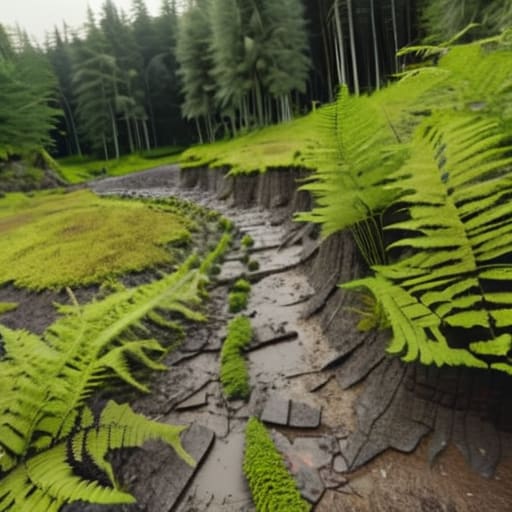
I spent three summers squinting through a handheld quadrat in the driving rain, trying to count Bombus terrestris—the common buff-tailed bumblebee—while my boots slowly turned into swamps. It wasn’t the cinematic, sweeping tragedy the documentaries suggest; it was just a lot of cold, wet counting. People love to talk about how habitat loss drives decline in these massive, abstract terms that make you feel like the world is ending before you’ve even finished your coffee. But when we treat it as some unfathomable global catastrophe rather than a series of very specific, very local spatial problems, we lose the ability to actually fix anything.
I’m not here to give you another doom-scrolling lecture or a list of impossible, expensive land-management goals. Instead, I want to look at what the survey data actually tells us about the gaps between the patches of green. I’m going to show you how we measure these shifts, why a single “wildflower meadow” might not be the magic bullet people claim it is, and where we can actually make a measurable difference in a standard garden or field margin.
Table of Contents
Why Land Use Change Consequences Matter More Than Sensationalism
When a headline screams about a “collapse,” it usually ignores the nuance of how land use change consequences actually play out on the ground. It’s easy to picture a forest being bulldozed and a species vanishing overnight, but for most insects, the death is much slower and more subtle. It happens through the gradual thinning of resources. We see it in the way a single, massive field replaces a patchwork of small meadows; the insects haven’t all died instantly, but they’ve lost the connectivity they need to survive the winter or find mates.
This is where we need to talk about edge effects in fragmentation. When we break a large habitat into tiny, isolated islands, the “edge” of that habitat becomes a hostile zone of wind, light, and pesticides. For a specialist pollinator, a field margin that is too narrow isn’t a home—it’s a trap. We often mistake a temporary presence of a species for a stable population, but if the habitat is too fragmented, we are essentially watching a slow-motion disappearance. It isn’t just about the total area lost; it’s about the quality and connectivity of what remains.
The Real Math Behind Wildlife Population Decline
When we talk about wildlife population decline, the conversation usually centers on “total area lost,” as if an insect lives in a vacuum. But math doesn’t work like that in a field margin. If you take a single, large meadow and chop it into four smaller squares separated by paved paths or intensive rye-grass strips, you haven’t just lost a percentage of space; you’ve fundamentally altered the geometry of survival. This is where edge effects in fragmentation start to dictate the numbers. For many specialized pollinators, the “edge” of a habitat is a hostile zone—it’s windier, drier, and more exposed to pesticide drift from the neighboring field.
It isn’t just about the footprint; it’s about the quality of the remaining connections. If the distance between two patches of nectar-rich wildflowers exceeds the flight range of a specific solitary bee, those two patches might as well be on different planets. We see this in the data constantly: a landscape can look green on a satellite map, but if the connectivity is broken, the functional habitat has effectively vanished. We have to stop measuring success by how much green we see and start measuring it by how much of that green is actually reachable.
Beyond the Big Picture: Five Ways to Actually Move the Needle
- Focus on connectivity, not just patches. It’s not enough to have a single “wild” corner in a massive, manicured lawn; if that patch is an island surrounded by a sea of mown grass and pesticide-treated hedges, most species won’t be able to reach it. We need corridors—think messy hedgerows or even just a continuous line of wildflowers—that allow movement between habitats.
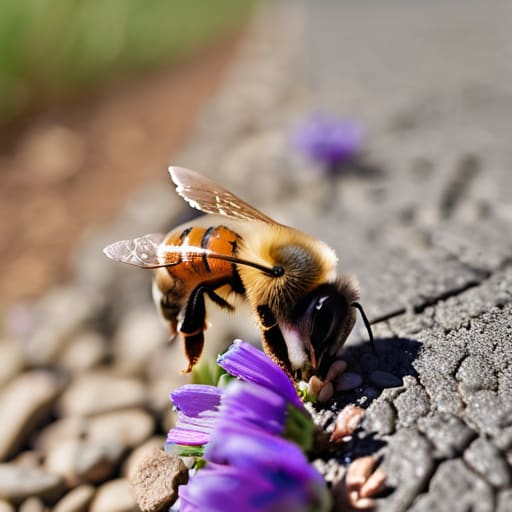
- Prioritise “messy” over “pretty.” In my surveys, I see the biggest population spikes in areas where people have stopped tidying up. Leaving leaf litter, dead wood, and hollow stems isn’t neglect; it’s providing the essential overwintering sites that Bombus terrestris (the buff-tailed bumblebee) and countless other species need to survive until spring.
- Diversify your bloom timing. A garden that looks spectacular in June but is a botanical desert in August is a trap. To support stable populations, we need a continuous sequence of nectar sources from the first emergence of spring insects through to the late-season moths. If the food chain has gaps, the population won’t just dip—it will crash.
- Watch the chemical creep. Even if you aren’t spraying heavy-duty pesticides, the “preventative” use of neonicotinoids or even certain systemic fungicides in garden products can disrupt the very pollinators we’re trying to save. If the goal is biodiversity, the first rule is to stop treating the garden like a sterile showroom.
- Plant for specialists, not just generalists. It’s easy to get excited about seeing a common butterfly on a lavender bush, but a healthy ecosystem needs the specialists. This means researching which specific host plants your local, more vulnerable species require—like certain umbellifers for hoverflies—rather than just buying whatever is on sale at the garden centre.
What to actually take away from the data
We need to distinguish between a sudden “crash” in numbers and the slow, structural loss of habitat; the latter is often harder to spot in a single season but far more devastating to long-term survival.
Conservation isn’t about saving a single species in a vacuum, but about protecting the connectivity of the landscape—a patch of wildflowers is great, but it’s much less effective if it’s an island surrounded by miles of nothing.
Avoid the trap of “doom-scrolling” through extinction headlines; instead, focus on the measurable impact of small-scale interventions, like maintaining unmanicured margins, which provide the actual data-backed wins we need.
Moving Beyond the Data
When we strip away the sensationalist headlines, we’re left with a reality that is less about a sudden, mysterious disappearance and more about the slow, measurable erosion of the spaces between things. We’ve seen how land-use change isn’t just a single event, but a cumulative math problem where every manicured lawn and every sprayed field margin subtracts from a species’ ability to persist. It isn’t about finding a single “silver bullet” solution; it is about recognizing that fragmentation is the real enemy. If we continue to treat every patch of green as an isolated island rather than part of a functional, connected network, we are simply managing a decline rather than preventing one.
I know it feels heavy when you look at the raw survey numbers, but there is a massive difference between a species being extinct and a species being temporarily inconvenienced by our landscaping choices. We don’t need to solve the entire global biodiversity crisis by Tuesday; we just need to start making decisions based on actual ecological requirements rather than aesthetic preferences. If you can leave a patch of nettles, connect a hedge, or stop treating your garden like a sterile showroom, you are participating in a very real, very necessary form of resistance. The data tells us the scale of the problem, but our local, messy, unmanicured actions are what will actually write the next chapter.
