I was three hours into a transect last July, knee-deep in stinging nettles and soaked to the bone by a relentless drizzle, when I realized how much we get wrong about what actually matters to these insects. Most people think that if they just buy a “bee hotel” from a garden centre, they’ve solved the mystery of how solitary bees live. But those little plastic-wrapped tubes are often just glorified death traps if they aren’t managed right, and frankly, the idea that a single wooden block can offset a manicured, pesticide-sprayed lawn is total nonsense.
I’m not here to sell you expensive gadgets or feed you the kind of doom-and-gloom headlines that make you want to give up entirely. Instead, I want to talk about what the survey data actually shows when we look at the ground, not just the flowers. I’ll be walking you through the specific, unglamorous requirements for nesting, from soil compaction to floral phenology, so you can understand the real mechanics of their survival. We’re going to move past the hype and look at the small, evidence-based changes that actually make a difference in your own patch of earth.
Table of Contents
The Real Difference Between Honey Bees and Solitary Bees
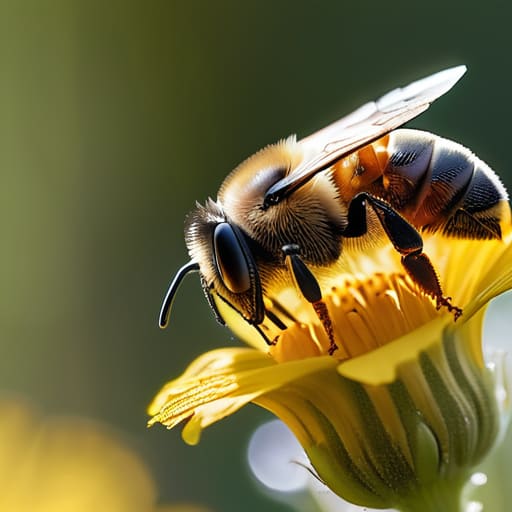
When people talk about “bees,” they are almost always picturing the honey bee (Apis mellifera). We’ve been conditioned to see them as a massive, collective unit—a single superorganism living in a hive with a queen, thousands of workers, and a highly structured social hierarchy. But if you want to understand the actual difference between honey bees and solitary bees, you have to stop thinking about colonies. Most of the bees flying around your flowerbeds aren’t part of a team; they are solo operators.
Solitary bees, like the Osmia cornuta (Red Mason Bee), don’t have a queen or a communal nursery. Instead, their solitary bee nesting habits are much more individualistic. A female mason bee finds a specific cavity—a hollow stem or a hole in soft wood—and builds her own series of cells, provisioning each one with a ball of pollen before laying an egg and moving on. There is no “hive mind” here, just a series of highly efficient, independent lifecycles. This lack of social structure is exactly why they are so much more sensitive to local habitat changes; they can’t just fly to a different hive if their specific nesting site disappears.
Unpacking the Complex Pollinator Lifecycle Stages
To understand the actual mechanics of survival, we have to look past the fuzzy, flying adults and dive into the messy reality of their developmental stages. Most people think of a bee’s life as a continuous loop of foraging, but for a solitary female, it is a high-stakes construction project. Unlike the communal, hive-based structure of honey bees, these individuals are solo architects. They spend the majority of their lives as larvae, tucked away in specialized cells, relying entirely on the provisioning quality of the single mother who laid them there.
When we talk about pollinator lifecycle stages, we aren’t just talking about egg, larva, pupa, and adult; we are talking about the precarious window of time between a female finding a suitable substrate and the first frost hitting. For instance, when looking at Osmia diversicornis—the Blue Orchard Bee—their success is tethered to the availability of specific mason bee nesting sites, like hollow reeds or even old beetle bores in wood. If the nesting material is wrong, or if the pollen load is insufficient, the entire next generation fails before they even emerge. It is a fragile, individualised process that makes them much more vulnerable to local habitat shifts than a massive, buffered colony.
Beyond the Buzz: 5 Practical Ways to Support Solitary Bee Life Cycles
- Stop the “tidy garden” reflex. If you see a patch of bare, unmulched soil or a clump of dead, hollow stems, leave them alone. Osmia cornuta, or the European orchard bee, needs those hollow reeds to lay her eggs, and many other species need exposed ground to burrow into. A manicured lawn is essentially a biological desert for them.
- Prioritize “pollen-rich” over “pretty.” It’s easy to plant a flower because it looks good on Instagram, but if it’s a double-flowered cultivar, it might be functionally useless because the petals are too thick for a bee to actually reach the nectar. Stick to single-petal varieties that offer an easy landing strip and actual food.
- Think about the timing of your blooms. A massive burst of spring flowers is lovely, but if nothing is blooming in late August, the late-season foragers are going to starve. I try to map out a “floral calendar” for my own garden to ensure there’s a continuous supply of energy from early spring through to the first frosts.
- Ditch the broad-spectrum pesticides, even the “organic” ones that sound harmless. Even if a chemical doesn’t kill a bee instantly, it can mess with their navigation or their ability to forage effectively. If you’re fighting a pest, try a mechanical method first; the data shows that the collateral damage to local pollinator counts is often much higher than we realize.
- Don’t expect a “bee hotel” to solve everything. I see people buying these plastic, mass-produced nesting blocks and thinking they’ve done their bit. The problem is that if they aren’t cleaned out every single year, they become breeding grounds for parasites and fungi. A bit of dirt and some old wood are often much safer and more effective than a cheap gadget.
What to Actually Look For in Your Garden
Stop focusing on honey bee hives; if you want to support local biodiversity, you need to prioritize the specific nesting requirements of solitary species, like bare soil or hollow stems, rather than just planting general flowers.
Don’t fall for the “all bees are dying” monolith—different species respond to different stressors, so we have to move past the scary headlines and look at the specific habitat gaps in our own local landscapes.
Forget the idea of a “perfect” manicured garden; real conservation happens in the messy margins, where a bit of neglected ground or a patch of wildflowers provides the actual, measurable resources these insects need to complete their life cycles.
Moving Beyond the Buzzwords
When we strip away the sensationalist headlines, the reality of how solitary bees live is far more nuanced than a simple story of “collapse.” We’ve looked at how their life cycles are tightly wound around specific seasonal windows and how their lack of a hive structure makes them entirely dependent on the immediate quality of their micro-habitat. It isn’t just about having flowers; it is about the structural diversity of your patch—the bare soil for nesting, the specific timing of blooms, and the lack of heavy-handed chemical intervention. Understanding that they are individual specialists rather than a collective mass changes how we approach their survival.
I know it feels overwhelming when you look at the data on pollinator decline, but we have to stop treating “nature” as this abstract, distant thing that we are losing. Conservation isn’t just for massive government-funded reserves; it happens in the messy, unmanicured edges of your garden. If you can provide even a few square meters of intentional chaos—a patch of dead wood or a corner of wildflowers left to grow—you are participating in something real. We don’t need perfect, sweeping gestures; we just need to stop making our landscapes so inhospitable to the small, quiet lives that actually keep our ecosystems running.
