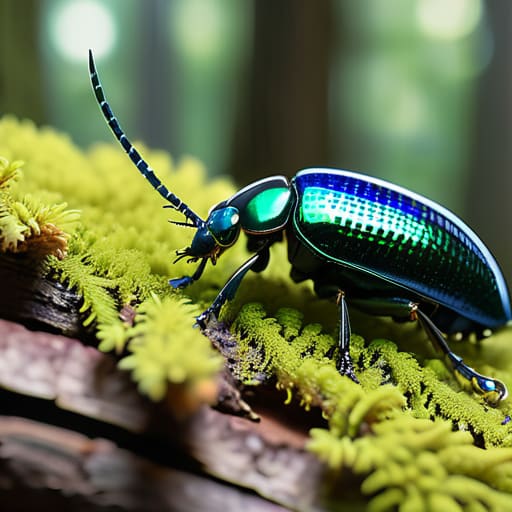
I was halfway through a transect in a particularly soggy field in Gloucestershire—the kind of damp that seeps into your very marrow—when I realized that most “complete guide to beetles” resources are essentially useless. They either treat every iridescent speck as a biological miracle or, more often, they bury the actual, interesting mechanics of Coleoptera under a mountain of academic jargon that even my supervisor struggles to parse. If you’ve ever spent an hour squinting at a leaf only to realize you’ve spent your afternoon staring at a piece of dried mulch rather than a Carabus violaceus, you know the frustration. We don’t need more glossy coffee table books; we need to understand what is actually happening under the leaf litter.
I’m not here to give you a taxonomical lecture that requires a PhD to navigate, nor am I going to lean into the doom-scrolling headlines about mass extinctions without context. Instead, I want to offer a practical, evidence-led look at what makes these insects tick. This is my attempt at a complete guide to beetles that actually respects your time, focusing on how to identify the common players in your own backyard and, more importantly, how to manage your soil and margins to ensure they actually have a place to live.
Table of Contents
Decoding Coleoptera Order Characteristics Without the Hyperbole
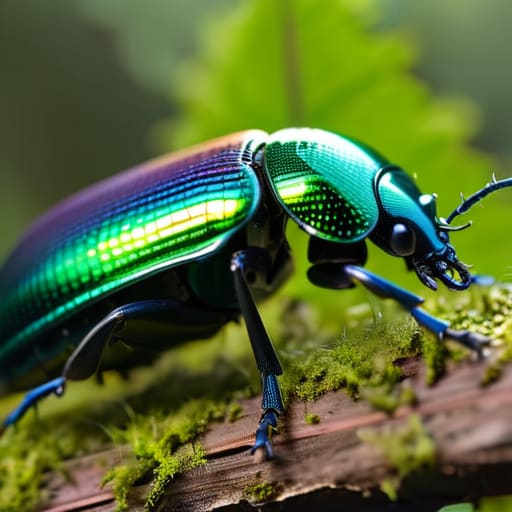
When you look at a beetle, you aren’t just looking at a bug; you’re looking at a highly specialized piece of biological engineering. If we want to talk about coleoptera order characteristics without the usual “nature is amazing” fluff, we have to start with the elytra. These aren’t wings; they are hardened, sclerotized forewings that act as a protective suit of armor for the delicate flight wings tucked underneath. This structural choice is exactly why they are so successful across almost every terrestrial ecosystem on the planet.
Understanding beetle anatomy and morphology helps you move past the “it’s just a brown bug” phase of identification. You start noticing the way the mouthparts are adapted—some are built for grinding tough leaf litter, while others are precision tools for predation. It is also worth noting that while the morphological blueprints are consistent, the diversity within the order is massive. We aren’t just talking about different colors; we are talking about fundamentally different ways of existing. Identifying them requires looking at these specific physical markers rather than just guessing based on size or general shape.
Common Beetle Species Identification Versus Real Data
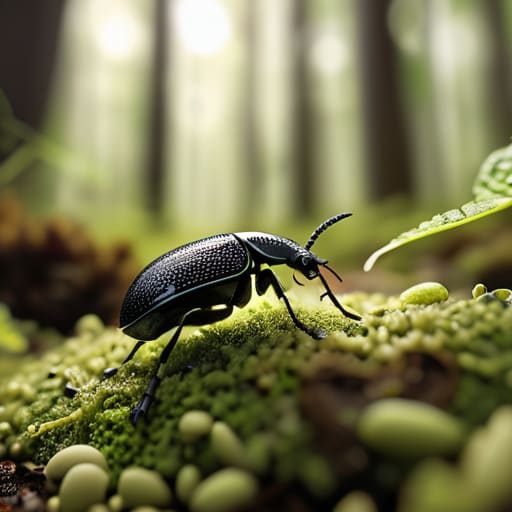
If you search for common beetle species identification online, you’ll mostly find glossy photos of stag beetles or ladybirds. They look great on a screen, but they don’t tell you much about the actual health of an ecosystem. When I’m out on a transect, I’m rarely seeing the “poster species” that people expect. Instead, I’m looking at the sheer variety of ground beetles or small weevils that most people would walk right over. The problem with popular guides is that they focus on the outliers, whereas real data relies on the mundane.
The gap between what people think they see and what a survey actually records is huge. For instance, knowing the different beetle life cycle stages is vital because a garden might look “beetle-rich” in July when adults are flying, but if there’s no leaf litter to support the larvae, that population is a dead end. We need to move past identifying a single pretty insect and start looking at the structural diversity of the habitat. If we only care about the species that make for good photography, we’re missing the entire engine of insect biodiversity and ecosystems.
Stop Guessing and Start Observing: 5 Ways to Actually Track Beetle Diversity
- Focus on the micro-habitats, not just the grass. If you’re looking for Carabidae (ground beetles), stop staring at the middle of your lawn and start looking under that decaying log or that patch of damp leaf litter you’ve been meaning to clear; that’s where the real action is.
- Learn to distinguish between a “common” species and a “representative” one. Seeing a dozen Aleochara (rove beetles) in your compost heap is great data, but it doesn’t tell you much about the overall health of your local ecosystem—it just tells you your compost is working.
- Timing is everything, and it’s rarely “whenever you feel like it.” Beetles are incredibly sensitive to temperature and light cycles; if you’re out surveying at 2 PM on a Tuesday in mid-July, you’re going to miss the nocturnal specialists that actually drive the local food web.
- Accept that your data will be messy. I spent three weeks once thinking I had a massive spike in Lampyridae (fireflies/glow-worms) populations, only to realize I’d just been counting the same three individuals moving in circles under a different light source.
- Prioritize “messy” gardening over aesthetic perfection. If you want to move the needle on beetle numbers, leave the dead stalks and the fallen leaves alone; a “tidy” garden is essentially a biological desert for the very insects we’re trying to study.
What to actually look for in your own backyard
Stop obsessing over rare, “charismatic” beetle species you see in documentaries; the real ecological heavy lifting is done by the common, overlooked ground beetles that keep your soil healthy.
Identification is only half the battle—if you can’t find any, it’s likely because your garden is too “tidy” and lacks the decaying organic matter that most Coleoptera actually need to survive.
Don’t fall for the “one study” trap; beetle population trends are incredibly local, so a decline in your neighborhood doesn’t necessarily mean a total collapse, but it does mean your specific habitat might need more margins and less mulch.
Moving Beyond the Taxonomy
We have spent a lot of time looking at the technicalities of the order Coleoptera, from the structural mechanics of elytra to the distinction between a common garden resident and a specialist species that actually tells us something about habitat health. If you take nothing else away from this guide, remember that identification is only the first step. Identifying a Carabus violaceus in your garden is satisfying, but the real work lies in understanding why it is there—and whether it has the connectivity it needs to survive the next decade. We have to move past just naming things and start looking at the ecological context that allows these tiny, armored engineers to actually function in a landscape that is increasingly fragmented and sterile.
It is easy to feel paralyzed by the sheer scale of biodiversity loss, or to get lost in the weeds of academic jargon that makes the problem feel unsolvable. But conservation isn’t just about massive, sweeping policy shifts; it happens in the messy, unmanicured margins of your own backyard. When you stop aiming for a “perfectly tidy” garden and start leaving a bit of rot, a few fallen logs, or a patch of bare earth, you are providing the literal foundation for these life cycles. Don’t let the complex data intimidate you into inaction. Small, evidence-based changes are how we actually build resilience, one beetle at a time.
