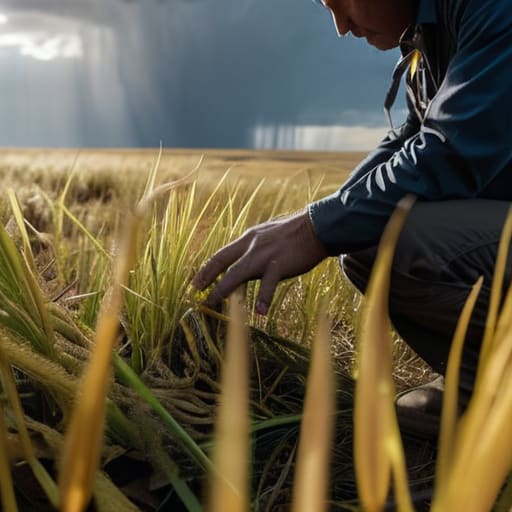
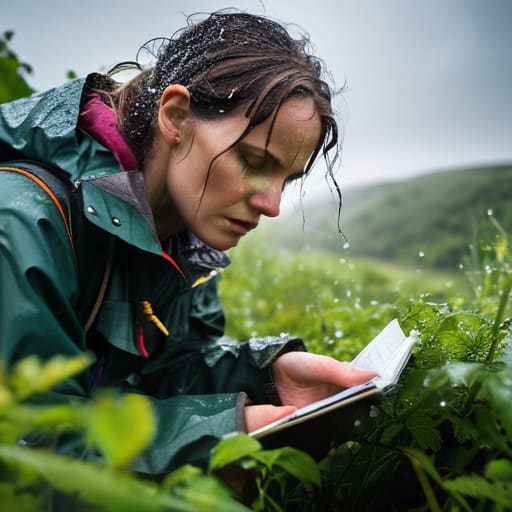
I once spent four hours crouched in a damp hedgerow, trying to count Bombus terrestris—the common buff-tailed bumblebee—while a relentless drizzle soaked through my waterproofs and turned my notebook into a soggy mess. It wasn’t the cinematic, high-tech discovery moment the textbooks imply; it was just me, a clipboard, and a very stubborn insect that refused to stay in my line of sight. People often think that knowing how experiments are done in the field is all about sophisticated sensors and pristine laboratory-style setups brought outdoors, but the reality is much grittier and significantly more chaotic.
I’m not here to sell you on the polished version of ecology you see in glossy magazines. Instead, I want to pull back the curtain on what actually happens when we step away from the desk and into the mud. I’ll be sharing the unvarnished truth about the variables you can’t control, the mistakes that actually teach you something, and why rigorous data often looks a lot like organized chaos. If you want to understand the messy, beautiful, and often frustrating reality of real-world science, you’re in the right place.
Table of Contents
Why Randomized Controlled Trials in Natural Settings Rarely Look Like Textb
If you look at a textbook definition of randomized controlled trials in natural settings, they look incredibly tidy. You have a control group, a treatment group, and a perfectly controlled environment where nothing unexpected happens. In my experience—usually involving me being soaked to the bone in a hedgerow—that is a fantasy. In a lab, you control the light, the temperature, and the food. In the field, you are at the mercy of environmental variables in field studies that don’t care about your experimental design. A sudden downpour, a localized patch of invasive brambles, or even a neighbor deciding to mow their lawn at the wrong time can throw a week’s worth of data into chaos.
The real challenge isn’t just setting up the experiment; it’s minimizing bias in ecological experiments when the world refuses to stay still. You can’t just “assign” a butterfly to a specific patch of wildflowers and expect it to stay there. We spend half our time trying to account for the fact that nature is inherently patchy and unpredictable. We use specific sampling techniques for field research to try and smooth out these bumps, but we have to be honest: we are always working with a degree of uncontrollable noise that a sterile laboratory simply doesn’t have.
Navigating Unpredictable Environmental Variables in Field Studies
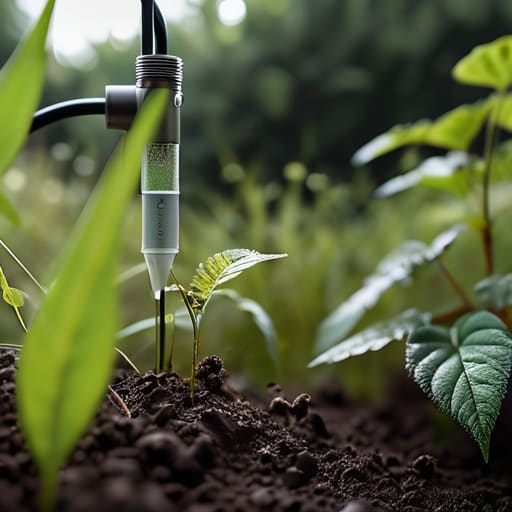
The problem with trying to isolate a single factor is that nature is essentially a giant, interconnected mess. In a lab, you can control the temperature, the light, and the humidity to a decimal point. In a hedgerow, you’re at the mercy of a sudden thunderstorm or a heatwave that shifts pollinator activity in ways your model didn’t predict. When we talk about environmental variables in field studies, we aren’t just talking about weather; we’re talking about the chaotic interplay of soil moisture, wind speed, and even how much shade a specific patch of nettles provides. You can design the most elegant experiment in your head, but the moment you step into the mud, the environment starts pushing back.
This is where the real work of minimizing bias in ecological experiments begins. You can’t just assume your transect line is representative of the whole field if you accidentally placed it in a spot that happens to be slightly more sheltered from the wind. We have to account for these “noise” factors, often through rigorous repeated sampling, to ensure we aren’t just measuring a fluke of the afternoon breeze. It’s not about achieving perfection—that’s impossible outdoors—but about being transparent about the chaos we’re working within.
The Fieldwork Survival Guide: How We Actually Get Data Without Losing Our Minds
- Embrace the “N” of the real world. In a lab, you can control every variable, but in a hedgerow, your sample size is often at the mercy of how many Bombus terrestris (buff-tailed bumblebees) actually decide to show up on a Tuesday. Don’t try to pretend your data is more robust than it is just to satisfy a p-value; if the weather was rubbish and your counts are low, say so.
- Standardize your effort, not just your method. It’s not enough to say you “counted insects”; you have to be obsessive about how much time you spent and how much ground you covered. If I spend forty minutes on one transect and forty-five on another, that’s a variable. If I don’t record that, I’m just making noise, not science.
- Documentation is more than just a spreadsheet. A good field notebook should include the things that “ruin” a study: the unexpected heavy downpour, the fact that a tractor drove through your site two hours prior, or the sudden bloom of a specific weed. These aren’t just anecdotes; they are the context that explains why your results might look “weird” later.
- Beware the “observer effect” (and it’s not just about humans). When you’re out there, you are part of the ecosystem. Your shadow, your scent, and even the way you move through tall grass can influence the very pollinators you’re trying to count. We try to minimize this with specific walking paths and timing, but you have to acknowledge that you are a walking variable.
- Pilot your madness. Never, ever go into a new landscape thinking your protocol is perfect. You’ll realize within twenty minutes that your tape measure is too short for the slope or that your marking flags are invisible in the specific shade of green of that field. Spend a day “failing” on a small scale so your actual experiment doesn’t fall apart when the real data collection begins.
What to actually look for in a field study report
Look past the “significant” p-values and check the context; a study might show a trend, but if it was conducted in a single microclimate during one unusually dry July, it isn’t a universal law for all pollinators.
Don’t mistake a lack of noise for a lack of data; in field ecology, the most valuable information often lives in the messy, unexplained outliers that don’t fit a perfect bell curve.
Prioritize studies that acknowledge their limitations—if a researcher claims to have “solved” a population decline based on one season of transect counts, they aren’t being scientific, they’re being loud.
The Reality of the Results
At the end of the day, field biology isn’t about achieving the sterile perfection of a lab bench; it’s about the messy, unpredictable reality of living systems. We’ve talked about why your textbook RCTs fail when they hit a hedgerow, how a sudden downpour can ruin a week of transect counts, and why we have to account for variables we can’t even see. It’s easy to look at a dataset and see only the gaps, but those gaps are where the actual science happens. Understanding that our data is a snapshot of a moving target—rather than a definitive, universal law—is what keeps our conclusions honest and actionable.
I know it’s tempting to want a simple, sweeping answer to the question of whether a specific intervention works, but nature rarely offers those. However, there is something deeply rewarding about being the person who shows up in the rain to document the nuance. When we stop chasing the “perfect” study and start embracing the rigorous complexity of the field, we actually build a better foundation for conservation. We move away from the shaky ground of alarmist headlines and toward a version of science that can actually hold up when it’s time to change a policy or plant a meadow. It’s not as flashy as a breakthrough headline, but it’s how we actually protect what’s left.
