I spent three weeks last summer standing in a waterlogged field in Gloucestershire, staring at a “restored” wildflower meadow that looked, quite frankly, like a patch of overgrown weeds. On paper, the project was a triumph; the grant was signed, the ribbons were cut, and the press release was glowing. But when I actually sat down with my sweep net to see if the Bombus terrestris—the common buff-tailed bumblebee—were actually using it, the data told a much uglier story. We have this obsession with the aesthetics of conservation, treating how restoration projects succeed or fail as a matter of how “green” a site looks, rather than whether it actually functions as a living ecosystem.
I’m not here to sell you on the idea that every new planting is a miracle. Instead, I want to talk about the uncomfortable gap between a finished project and a functioning habitat. I’m going to show you why most of these initiatives collapse after the first year and, more importantly, what the actual metrics of success look like when you stop looking at the brochures and start counting the insects.
Table of Contents
Why Flawed Ecological Restoration Assessment Metrics Mislead Us
The problem is that we often mistake “activity” for “outcome.” In many project reports, I see a heavy reliance on proxies that look great on a spreadsheet but mean very little to a specialist. For instance, a project might report a high percentage of native plant coverage as a primary success metric. That sounds lovely, but if those plants aren’t providing the specific nectar resources or nesting sites required by local pollinators, you haven’t actually restored a functioning ecosystem; you’ve just planted a very expensive garden. We are seeing a massive gap between structural restoration—the physical stuff we can see—and functional recovery, which is much harder to prove.
This is where flawed ecological restoration assessment metrics really do the damage. When we use simplistic biodiversity recovery indicators, like a quick headcount of generalist species, we miss the subtle collapses happening beneath the surface. A site might look “green,” but if the specialist insects that underpin the food web aren’t returning, the project is effectively a hollow shell. If we don’t move toward more rigorous, multi-taxa monitoring, we risk pouring funding into projects that are essentially ecological dead ends.
The Hidden Reality of the Restoration Project Lifecycle
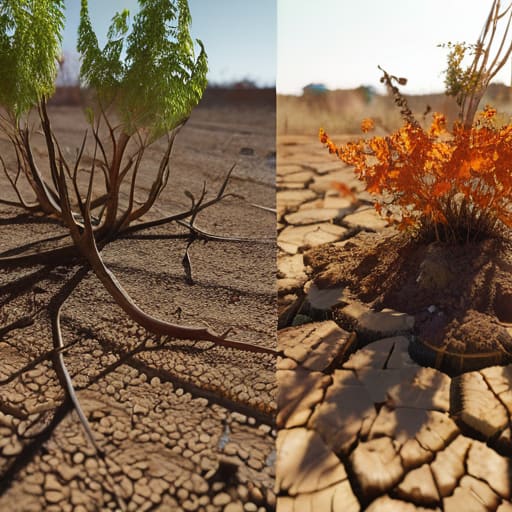
The problem with most funding cycles is that they are designed for optics, not biology. We tend to treat the restoration project lifecycle like a construction job: you break ground, you plant the species, and once the ribbon is cut, the “success” is logged in a spreadsheet. But ecology doesn’t work on a fiscal year. I’ve seen countless projects where the initial planting phase looks spectacular on Instagram, but because there was no budget allocated for year three or year five, the site simply reverts to its original degraded state.
This is where we see the real gap between intention and reality. Without robust long-term monitoring strategies, we aren’t actually practicing conservation; we’re just performing landscaping. If we only measure success in the first six months, we miss the critical moment when invasive species move back in or when a specific pollinator fails to colonize the new habitat. We need to move away from these “one-and-done” snapshots and start looking at the slow, messy reality of biological establishment. If the monitoring stops when the grant runs out, the project hasn’t actually succeeded—it has just been delayed.
How to actually tell if a project is working (without relying on vibes)
- Stop treating “area planted” as a metric for success. If you plant ten thousand native wildflowers but the soil chemistry is wrong or the surrounding landscape is a concrete desert, you haven’t built a habitat; you’ve just laid down expensive, dying mulch.
- Measure the residents, not just the infrastructure. A successful restoration isn’t defined by how many hedgerows you put in the ground, but by whether the Bombus terrestris (buff-tailed bumblebee) is actually using them to forage three years later. If you aren’t doing long-term insect surveys, you’re just gardening with a fancy title.
- Prioritize connectivity over isolated “islands” of nature. A perfectly restored meadow is ecologically useless if it’s a tiny patch surrounded by three miles of intensive monoculture. We need to stop building tiny nature museums and start focusing on the corridors—the messy, unmanicured margins—that allow species to actually move.
- Accept that “messy” is a requirement, not a failure. I see so many projects fail because they try to make a restored site look “tidy” for stakeholders. If you’re mowing down the dead stalks and clearing the leaf litter every autumn, you are effectively deleting the nesting sites and overwintering spots that the insects actually need.
- Build in a budget for the “boring” years. The hype usually dries up after the initial planting phase, but the real work happens in years three through ten when you have to manage invasive species or adjust for shifting local climates. If your funding model doesn’t account for long-term monitoring and adaptive management, the project is likely destined to revert to its original state.
What We Actually Need to Track
Stop measuring success by how many trees were planted and start measuring it by how many insects actually survive in the space five years later.
We need to move past “presence/absence” data; knowing a species is there is fine, but knowing if the population is actually stable or just passing through is what tells us if the habitat is working.
If we want to avoid the trap of “greenwashing” restoration, we have to commit to long-term monitoring that persists long after the initial funding and the press releases have dried up.
Moving Beyond the Checkbox
If we keep treating restoration like a construction project—where success is defined by whether the fence is up or the seeds were scattered—we are going to keep failing the very species we claim to be saving. We’ve seen that superficial metrics and short-term funding cycles create a dangerous illusion of progress. A project isn’t “done” just because the planting phase ended; it only truly begins when the first generation of pollinators actually arrives to use it. We have to shift our focus from how much land we have covered to how much functional, living biodiversity is actually sustaining itself in those spaces. Without rigorous, long-term monitoring, we aren’t restoring ecosystems; we are just landscaping with better intentions.
This isn’t about being cynical; it’s about being effective. I know how frustrating it is to see a beautiful new wildflower meadow get dismissed because someone pointed out a lack of data, but that data is our strongest weapon. When we insist on measuring what actually matters—the presence of specific larvae, the stability of insect populations, the complexity of the food web—we move from guesswork to genuine conservation. We owe it to the insects to be more than just well-meaning; we owe it to them to be scientifically precise. Let’s stop chasing the headline and start doing the actual work of counting what stays.
