I remember sitting in a muddy field in Oxfordshire three years ago, staring at a handful of damp earth and feeling profoundly insulted by a textbook that claimed to explain everything. It used these sweeping, grand sentences about “nutrient cycling” and “ecosystem stability,” but it didn’t mention the actual, gritty reality of how soil invertebrates function in a way that made sense to a human being. You can read a dozen papers on the biogeochemical implications of subterranean fauna, but if you can’t explain why a single earthworm matters to the patch of grass under your feet, you aren’t really talking about ecology; you’re just performing it.
I’m not here to give you another lecture filled with impenetrable jargon or to sell you on the idea that a single “super-bug” is going to save your garden. Instead, I want to pull back the curtain on the messy, microscopic work that actually happens beneath the surface. We are going to look at the evidence—the real, messy, sometimes inconclusive data—to understand what these creatures are actually doing and, more importantly, why it matters for your local patch. No hype, just the actual mechanics of the soil.
Table of Contents
Microfauna and Macrofauna Roles Sorting Fact From Folklore
We tend to talk about “the soil” as if it’s one big, singular engine, but that’s a massive oversimplification. In reality, it’s a hierarchy of different players working at different scales. When we look at microfauna and macrofauna roles, we aren’t just talking about different sizes; we’re talking about different jobs. You have your microscopic specialists—the protozoa and nematodes—who are essentially the fine-tuners of the system. They aren’t going to move a mountain, but they are doing the heavy lifting when it comes to the microscopic nutrient cycling mechanisms that keep the chemistry of the dirt from stalling out.
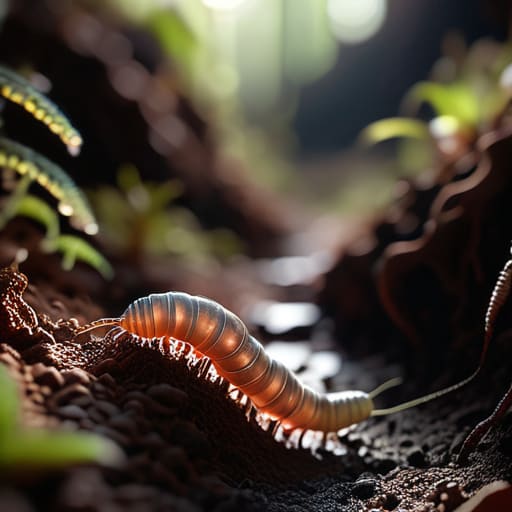
Then you have the heavy lifters, the macrofauna. If you’ve ever seen a field after a heavy rain, you’ve seen the results of their work. Take the Lumbricus terrestris, or the common earthworm. We often focus on their ability to churn through debris, but their real superpower is their earthworm impact on soil porosity. They aren’t just eating; they are literally re-engineering the architecture of the ground to allow air and water to reach roots. It’s easy to get lost in the folklore that “more bugs equals more life,” but without this specific division of labor, the whole system just becomes a stagnant pile of organic matter.
Nutrient Cycling Mechanisms What the Data Actually Shows
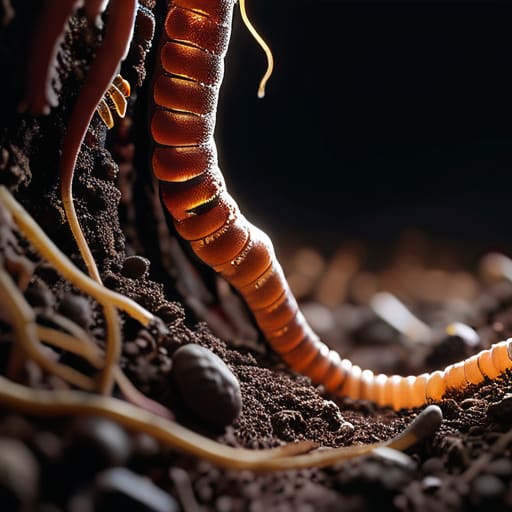
When we talk about nutrient cycling mechanisms, the popular narrative usually focuses on the “big players”—the earthworms that turn your garden into a sponge. And look, they are vital. The earthworm impact on soil porosity is a massive, measurable driver of how water and air move through a field. But if you only look at the worms, you’re missing the engine room. While an earthworm is physically shredding a fallen leaf, it is the invisible army of nematodes and protozoa that actually finishes the job.
The real magic happens during the decomposition process in soil, where the work is passed down a very specific, messy ladder. Macrofauna do the heavy lifting of breaking large organic matter into smaller bits, but it is the microfauna that unlock the nitrogen and phosphorus trapped inside those fragments. Without that microscopic hand-off, the soil organic matter breakdown would effectively stall, leaving your plants starving in a graveyard of undecomposed leaves. It isn’t a single “event”; it is a continuous, tiered relay race where the smallest runners often carry the most weight.
Five things to look for when you actually start paying attention to the dirt
- Stop looking for “bugs” and start looking for scales. When we talk about soil function, we’re talking about a massive size gradient. You have your macrofauna, like earthworms, doing the heavy lifting of physical engineering, and then you have the microfauna—the microscopic stuff—doing the chemical heavy lifting. If you only focus on the worms you can see, you’re missing the engine room.
- Watch the turnover, not just the presence. It’s easy to say, “Oh, look, there are isopods in my compost.” But presence doesn’t equal function. The real metric is how fast they are actually processing organic matter. A healthy soil system isn’t just a collection of organisms; it’s a high-speed recycling plant where the rate of decomposition tells you more than a simple headcount ever will.
- Acknowledge the “fragmentation” step. One of the most misunderstood roles is that many invertebrates don’t actually “eat” the soil; they eat the detritus to break it into smaller pieces. This fragmentation is the prerequisite for everything else. Without these middle-men shredding leaf litter, the bacteria and fungi literally can’t get to the good stuff, and the whole cycle stalls.
- Don’t mistake a single study for a universal law. You’ll see headlines claiming a specific invertebrate is “the” key to carbon sequestration. In reality, soil function is highly site-specific. What works in a damp, temperate woodland margin won’t apply to a dry, sandy garden plot. Always check if the data you’re reading is based on a controlled lab environment or actual, messy field conditions.
- Manage for the “invisible” engineers. We tend to focus on the charismatic megafauna of the insect world—bees, butterflies, the usual suspects—but soil health is driven by the organisms we can’t see without a microscope. If you want to improve soil function, you have to stop treating the ground like a dead substrate and start treating it like a living, breathing community that requires specific moisture and temperature windows to actually work.
What to Actually Look For in Your Soil
Stop looking for “bugs” as a single group; you need to distinguish between the macrofauna doing the heavy lifting, like earthworms, and the microscopic drivers of nutrient cycling that you’ll never actually see without a lens.
Biodiversity isn’t just a headcount of species; it’s about functional diversity, meaning a soil with ten different types of decomposers is doing much more work for your plants than a soil with fifty of the exact same kind.
Beware the “more is better” fallacy—while high invertebrate activity is usually a good sign, the real metric for a healthy ecosystem is the stability of the nutrient cycles they facilitate, not just a sudden spike in visible activity.
Moving Beyond the Surface
If we strip away the jargon, the reality is that soil function isn’t some mystical, singular force; it is the aggregate result of millions of tiny, individual transactions. We’ve looked at how the macrofauna act as the heavy lifters, physically breaking down organic matter, and how the microfauna manage the chemical hand-offs that actually make nutrients available to plants. It is a complex, tiered system where everything from a millipede to a microscopic nematode has a specific, non-negotiable job description. When we lose these players, we don’t just lose “bugs”—we lose the very mechanisms that turn dead matter into life. The data is clear: soil health is not a static state, but a constant, living process.
It is easy to feel small when you realize how much of our world’s stability rests on organisms we can barely see without a lens. But there is a quiet power in that realization. We don’t need to perform miracles to help; we just need to stop disrupting the work that is already happening. Whether it’s reducing tillage or letting the leaf litter stay exactly where it fell, we are essentially protecting the infrastructure of the earth. If we start valuing the invisible workers as much as the charismatic pollinators, we might actually stand a chance at keeping these systems running.
