
I was standing in a sodden field in mid-October, my boots sinking into clay that felt more like soup, trying to distinguish a single Noctua pronuba from a pile of dead leaves by the flickering light of a moth trap. It was in that freezing, damp frustration that I realized how much of the “science” we see in the news is actually just noise. We are constantly bombarded with these sweeping, apocalyptic declarations about species numbers, but if you want to know how to evaluate a conservation claim without losing your mind, you have to look past the dramatic adjectives. Most of the time, the headline is just a simplified version of a study that actually says something much more nuanced—and often much more boring—than “everything is dying.”
I’m not here to give you more doom-scrolling fuel or to sell you a miracle solution. Instead, I want to show you how to look at the actual data behind the hype. I’ll walk you through what a decent survey actually measures, why a single season of high counts doesn’t mean a population is “saved,” and how to spot the difference between genuine ecological progress and clever PR. My goal is to give you the tools to see through the statistical fog so you can focus on the small, evidence-led actions that actually matter.
Table of Contents
Verifying Environmental Impact Beyond the Press Release
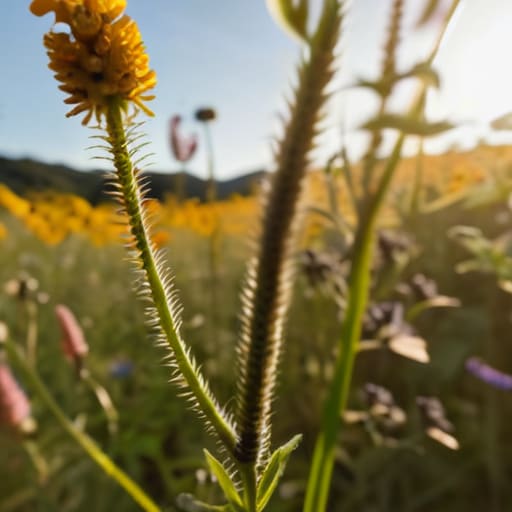
When a company or a local council announces a new “green initiative,” they usually lead with a glossy PDF or a snappy social media graphic. But if you want to move past the marketing, you have to look at the actual wildlife conservation metrics being used. A press release might claim they’ve “restored a meadow,” but that’s a vague, qualitative sentiment. I want to see the data: Did they plant a monoculture of wildflowers that looks pretty in June but dies off by August, or did they actually establish a resilient, multi-species community? Real success isn’t just about the initial planting; it’s about the long-term survival rates of those species across multiple seasons.
This is where verifying environmental impact gets messy and, frankly, quite important. You should look for evidence of independent monitoring rather than just taking the project organizers at their word. Are they using standardized survey methods—like Pollard walks for butterflies or specific transects for bees—or are they just counting “pretty things” they saw once? If there isn’t a commitment to repeatable, longitudinal data, then you aren’t looking at a conservation success; you’re looking at a snapshot of a moment that might not hold up by next year.
Why Wildlife Conservation Metrics Often Hide the Truth

The problem with most wildlife conservation metrics is that they are often designed to look good on a corporate slide deck rather than to actually track biological reality. We see a lot of “habitat hectares” being touted as a win, but a hectare of monoculture eucalyptus planted for carbon sequestration is a desert for a specialist bee. It might tick a box for a specific metric, but it does nothing for actual ecological complexity. When we talk about verifying environmental impact, we have to ask if we are measuring the presence of a green space or the presence of a functioning ecosystem.
It is also incredibly easy to conflate “activity” with “outcome.” A company might report that they have funded the restoration of a thousand square meters of wildflower meadow, which sounds fantastic in a sustainability report. But if that meadow is sprayed with neonicotinoids or lacks the specific host plants required by local larvae, it’s just expensive landscaping. We need to move past these superficial proxies and start looking at functional biodiversity—the actual, messy, interconnected web of life that tells us if a landscape is truly recovering or just wearing a green coat of paint.
How to read between the lines of a conservation claim
- Check the baseline, not just the trend. A study saying a population has “increased by 20%” sounds great, but if they started counting when the species was at an all-time low, that’s just a natural bounce-back, not a conservation victory. You need to know what the numbers looked like before the intervention started.
- Look for the distinction between abundance and diversity. It is very easy to boost the number of a single, generalist species—like certain common butterflies—by planting one specific type of flower. That’s a win for that species, sure, but it isn’t the same thing as restoring a functional, diverse ecosystem.
- Ask about the scale of the study. There is a massive difference between a successful trial in a controlled three-meter plot of managed hedgerow and a landscape-scale shift that actually moves the needle on regional extinction risks. Don’t let a small-scale success story masquerade as a global solution.
- Investigate the “proxy” metrics. Often, researchers use one species as a stand-in for an entire habitat—like saying a forest is healthy because the beetles are thriving. While beetles are great, they don’t tell the whole story of the soil, the fungi, or the birds. A single proxy is a hint, not a verdict.
- Scrutinize the “certainty” of the language. If a press release uses words like “proven,” “guaranteed,” or “solved,” I immediately start looking for the fine print. Real ecology is messy and full of variables; if the claim sounds too certain to be true, it probably hasn’t accounted for the next drought or shifting phenology.
How to Filter the Signal from the Noise
Look past the “species count” to the habitat quality; seeing ten different butterflies in a manicured park is less significant than seeing one specialist species in a messy, unplowed field margin.
Check the timeframe of the data, because a single season of high numbers is often just a weather fluke rather than a genuine population recovery.
Demand transparency on methodology, specifically whether the study actually measured population trends over time or just provided a single, static snapshot that lacks long-term context.
Moving Beyond the Hype
At the end of the day, evaluating a conservation claim isn’t about becoming a statistician overnight; it’s about developing a healthy dose of skepticism toward anything that sounds too perfect to be true. We have to look past the glossy press releases and ask whether a study is measuring a genuine population recovery or just a temporary spike in a single, highly visible species. By distinguishing between robust, long-term longitudinal data and the fleeting excitement of a single season’s survey, we stop being passive consumers of headlines and start becoming informed participants in the conversation. We need to demand transparency about what wasn’t measured just as much as what was.
This isn’t about being cynical; it’s about being effective. If we base our conservation energy on shaky data or misunderstood metrics, we risk wasting the very resources and political will that these species desperately need to survive. Real change happens when we move away from the “doom or bloom” binary and start focusing on the nuanced, incremental wins that actually move the needle in a hedgerow or a garden. So, next time you see a headline claiming a species is “back from the brink,” take a breath, look for the methodology, and look for the truth. That is how we build a version of conservation that actually works.
