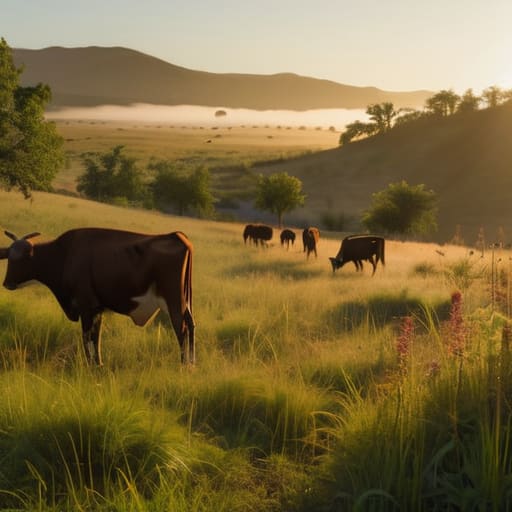
I spent three hours last Tuesday knee-deep in a muddy drainage ditch, trying to count Bombus terrestris while a cow stared at me with what I can only describe as profound judgment. It’s a scene that perfectly captures the messy reality of modern ecology: we talk about “rewilding” as this grand, cinematic concept, but in practice, it’s often just a confusing scramble to figure out how grazing animals are used in restoration without accidentally turning a diverse wildflower meadow into a barren, trampled dust bowl. There is a massive, glossy gap between the high-level policy papers claiming that “bringing back the big beasts” is a magic wand, and the actual, muddy reality of managing specific plant-pollinator networks.
I’m not here to sell you on the romanticism of the pastoral idyll, nor am I going to hide behind impenetrable jargon. Instead, I want to look at the actual mechanics of it—what the surveys tell us about soil compaction, how different stocking densities affect the hedgerow margins I spend my life studying, and where the evidence for these methods is actually solid. We’re going to move past the headlines and look at what happens when you actually put a herd on the ground.
Table of Contents
- Measuring Biodiversity Enhancement Through Grazing Without the Hype
- Why Grazing Intensity and Soil Health Are Not Always Linked
- Moving Beyond the "Cow in a Field" Approach: Five Realities of Grazing for Restoration
- What to actually look for when assessing grazing impacts
- Beyond the Grazing Hype: Where We Go From Here
Measuring Biodiversity Enhancement Through Grazing Without the Hype
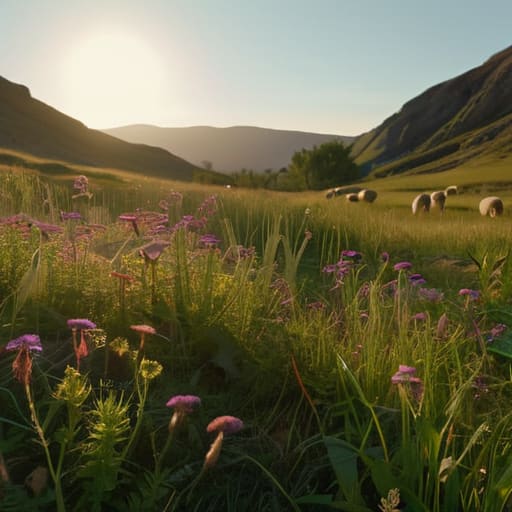
When we talk about biodiversity enhancement through grazing, we often fall into the trap of treating “more animals” as a universal proxy for “more life.” In my fieldwork, I’ve seen that the metric that actually matters isn’t the headcount of the herd, but the structural heterogeneity they leave behind. If you have a dozen sheep grazing a field with uniform intensity, you aren’t creating a mosaic; you’re essentially just mowing a lawn with teeth. To actually trigger native grassland recovery, you need a messy, uneven landscape where some patches are trampled and others are left to go to seed.
This is where the data gets granular. We have to move past the vague idea of “ecosystem services of livestock” and start looking at how specific grazing intensities affect the micro-habitats that insects actually use. For instance, a heavy-grazed patch might provide the bare earth needed by certain solitary bees, but if that intensity is applied across the whole site, you’ve wiped out the floral resources the pollinators need to survive the week. It’s about finding that precise, uncomfortable balance between disturbance and stability.
Why Grazing Intensity and Soil Health Are Not Always Linked
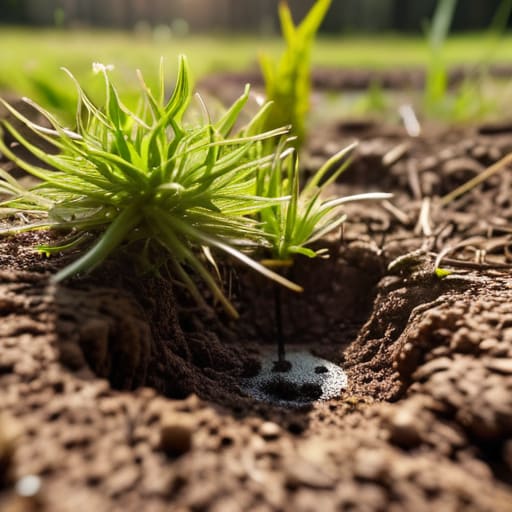
There is this persistent, almost comforting idea that more livestock equals more “natural” soil, but the data doesn’t actually support a straight line between the two. In my field surveys, I’ve seen plenty of sites where high stocking densities—essentially packing too many animals into a small space—have turned a vibrant meadow into a compacted, muddy mess. When you push the grazing intensity and soil health relationship too far, you aren’t managing a habitat; you’re just crushing the very micro-habitats that pollinators and soil invertebrates need to survive.
It isn’t just about the weight of the animals, either; it’s about the timing. If you have cattle grazing heavily during the peak flowering window of key nectar plants, you aren’t facilitating native grassland recovery, you’re interrupting it. We often talk about the ecosystem services of livestock as if they are a constant, but they are highly conditional. If the grazing doesn’t align with the specific life cycles of the local flora, you might end up with a field that looks “green” but is functionally a desert for the insects I spend my summers counting.
Moving Beyond the "Cow in a Field" Approach: Five Realities of Grazing for Restoration
- Stop treating “grazing” as a single setting. You can’t just decide on a number of head per hectare and call it a day; you have to match the animal’s specific appetite to the exact vegetation structure you’re trying to foster, or you’ll end up with a monoculture of the few plants they refuse to eat.
- Prioritize “patchiness” over uniformity. If the animals graze everything down to a consistent, tidy carpet, you’ve actually failed most of the local invertebrates. We need those ungrazed clumps and structural variations—what I call “micro-refugia”—where insects can actually complete their life cycles without being trampled or eaten.
- Watch the soil, not just the grass. It is easy to get distracted by a sudden flush of wildflowers, but if the hoof pressure is compacting the ground to the point where nothing can breathe, you aren’t restoring an ecosystem; you’re just temporarily decorating a dying one.
- Use the animals as sensors, not just tools. Instead of sticking to a rigid seasonal schedule, we need to use adaptive management—checking the actual sward height and plant diversity frequently and moving the livestock based on what the field is actually telling us, rather than what the management plan said six months ago.
- Acknowledge the “lag time” in your data. One season of grazing might look like a failure because you don’t see a spike in butterfly counts immediately, but ecological shifts in soil seed banks and insect populations often take years to manifest. Don’t abandon a good strategy just because the immediate metrics look flat.
What to actually look for when assessing grazing impacts
Stop looking for a general increase in “biodiversity” and start looking for specific indicator species; a field can be teeming with common grasshoppers while the specialist pollinators we actually care about are being grazed out of existence.
Grazing is a tool, not a magic wand, so the success of a restoration project depends entirely on the timing—if the livestock are moved through a meadow before the late-summer nectar plants have set seed, you haven’t restored an ecosystem, you’ve just interrupted a lifecycle.
We need to move past the assumption that “more grazing equals more health”; the data shows that the sweet spot for plant diversity usually lies in moderate, patchy disturbance rather than the heavy, uniform compaction that comes from overstocking.
Beyond the Grazing Hype: Where We Go From Here
At the end of the day, we have to stop treating livestock like a universal “undo” button for habitat loss. We’ve seen that simply introducing grazers doesn’t automatically translate to a spike in species richness; if the intensity is wrong or the timing clashes with nesting cycles, we might actually be doing more harm than good. Success isn’t found in a broad-brush approach, but in the nuanced management of how those animals interact with the specific soil chemistry and plant communities already present. We need to move past the headlines and focus on the actual metrics—the ones that track whether a specific pollinator is actually returning to a field margin, rather than just assuming a “natural” look equals a healthy ecosystem.
It is easy to get cynical when you see conservation being reduced to a checkbox for agricultural subsidies, but there is still so much worth fighting for in the margins. When we get the data right—when we match the right animal to the right patch of ground with the right level of scrutiny—we create something much more resilient than a mere aesthetic landscape. It’s about building a foundation where the small, often overlooked species can actually thrive in the long term. If we focus on the precision of the science rather than the simplicity of the solution, we might actually stand a chance at turning the tide.
