
I spent three hours last Tuesday standing in a waterlogged field in Shropshire, trying to explain to a site manager why a handful of pre-packaged wildflower plugs wasn’t a valid substitute for the ancient hedgerow they were about to bulldoze. He kept citing “offsetting” like it was a magical get-out-of-jail-free card, which tells me he has a fundamentally broken understanding of how mitigation hierarchies work. People treat these hierarchies like a menu where you can just skip straight to the “compensate” dessert because you don’t feel like dealing with the “avoidance” main course, but that isn’t how ecology functions. If we treat biodiversity like a bank account where we can just deposit wildflowers elsewhere to cover a massive loss, we’ve already lost the battle.
I’m not here to give you the polished, corporate version of these principles that you’ll find in a glossy environmental impact report. Instead, I want to walk you through the actual logic of the hierarchy—from avoidance to offsetting—and explain why skipping steps is the fastest way to ensure a local population collapses. I’ll tell you when the science says a mitigation strategy is actually robust, and more importantly, when it’s just expensive window dressing.
Table of Contents
The Real Priority Why Avoidance and Minimization Techniques Matter Most
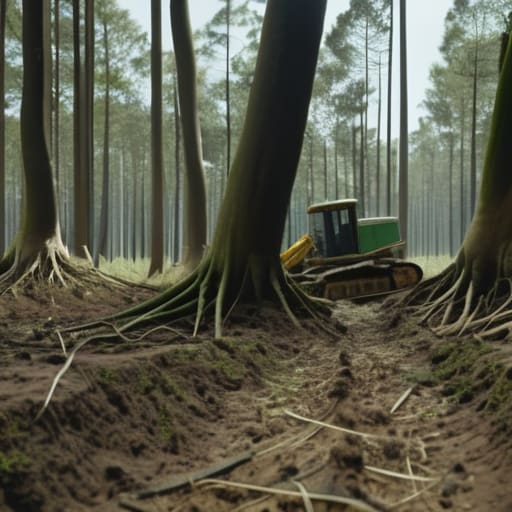
The problem with how we talk about conservation is that we tend to treat the “offset” part like it’s the main event. In a typical ecological mitigation framework, people see a patch of woodland being cleared and immediately start calculating how many saplings they can plant elsewhere to make up the difference. But we need to stop treating nature like a bank account where you can just make a withdrawal and fix the balance later. If we skip straight to compensation, we’ve already lost the most important part of the process.
The real heavy lifting happens during the avoidance and minimization techniques phase. This is where we actually look at a site plan and say, “No, move the access road ten metres left so you don’t crush that existing hedgerow.” It sounds boring, and it’s certainly not as flashy as a massive tree-planting scheme, but it is infinitely more effective. Minimizing the footprint of a project before it starts is the only way to ensure we aren’t just managing a slow decline of local species.
Why We Cant Just Offset Our Way Out of Habitat Loss

The problem with jumping straight to the final stage of the ecological mitigation framework is that it treats nature like a bank account. There is this pervasive idea that if we destroy a perfectly established hedgerow here, we can just “balance the books” by planting a cluster of saplings three miles away. But ecology doesn’t work on a spreadsheet. You can’t simply trade a twenty-year-old corridor of nectar-rich brambles and established insect nesting sites for a fresh patch of wildflower seeds and hope for the best.
When we rely too heavily on residual impact compensation, we ignore the temporal gap—that massive, awkward period where the old habitat is gone, but the new one hasn’t actually functioned yet. For a local population of solitary bees, that gap isn’t just a delay; it’s a local extinction event. We need to stop viewing biodiversity offset strategies as a “get out of jail free” card for developers. If we don’t prioritize the earlier steps, we aren’t actually being nature positive; we are just managing a slow-motion decline.
How to actually use the hierarchy without faking it
- Stop treating ‘offsetting’ like a get-out-of-jail-free card. In the hierarchy, compensation is the very last resort for a reason; you can’t just bulldoze a decades-old hedgerow and assume planting ten saplings next year magically fixes the broken food web you just destroyed.
- Prioritize avoidance over everything else. If a development plan can move a footpath or a drainage ditch ten meters to the left to save a patch of wildflowers, that is a massive win compared to trying to “manage” the impact later.
- Look for the “unseen” impacts. When we talk about minimization, we aren’t just talking about footprint size; we’re talking about light pollution, noise, and runoff. A smaller site that stays dark and quiet is often better for local pollinators than a larger one that’s constantly disrupted.
- Check the math on your “ecological gains.” A lot of mitigation plans claim they’ll increase biodiversity, but the evidence is often thin on whether a new, artificial habitat will actually support the specific species that were lost. Don’t take a developer’s word for it—look for the specific species they are claiming to protect.
- Understand that “no net loss” is a moving target. Just because a project claims to replace what it takes doesn’t mean the local ecosystem stays stable. Populations of things like Bombus terrestris (the buff-tailed bumblebee) don’t just teleport from a lost meadow to a new one; they need time, connectivity, and established forage to actually survive the transition.
The Bottom Line: Moving Beyond the Buzzwords
We have to stop treating the hierarchy as a menu where we pick the easiest option; avoidance and minimization are the heavy lifters, and offsetting is a last resort that often fails to replace what was actually lost.
A “net gain” on paper doesn’t always translate to a living population in the field, especially when we trade complex, established habitats for simplified patches of wildflowers that lack the necessary ecological depth.
Effective conservation requires us to be honest about the data—if the evidence for a specific mitigation strategy is thin, we shouldn’t use it as a shield to justify habitat destruction.
Moving Beyond the Checklist
At the end of the day, the mitigation hierarchy isn’t just a bureaucratic hurdle to tick off before a construction project begins; it is a logical framework designed to stop us from making irreversible mistakes. We have to move away from the mindset that nature is a fungible asset—that we can simply destroy a functioning, complex hedgerow here and “replace” it with a neat box of lavender plugs three miles away. If we skip straight to offsetting, we aren’t actually conserving biodiversity; we are just rearranging the deck chairs on a sinking ship. The real work happens much earlier, in the difficult, often expensive conversations about avoiding impact altogether and minimizing the footprint of our development before the first spade hits the dirt.
I know it feels easier to talk about grand, sweeping solutions, but conservation often lives in the granular details of how we manage a single field margin or a patch of scrub. We don’t need more headlines promising “net gain” through clever accounting; we need a fundamental respect for the fact that ecology cannot be fast-tracked. If we get the hierarchy right—if we prioritize the integrity of existing habitats over the promise of future ones—we give these tiny, struggling populations a fighting chance. It isn’t always the most convenient path for a developer, but it is the only one that actually protects the living world as it exists right now.
