
I once spent four hours crouched in a damp hedgerow in mid-November, shivering so violently I nearly dropped my hand lens, all because I thought “more data” was the same thing as “better data.” I was convinced that if I just logged every single twitching leg and fluttering wing I saw, I’d be contributing something meaningful to the census. But looking back at my soggy notebook, I realized I wasn’t actually tracking anything; I was just documenting my own exhaustion. Most people think that learning how to record insects usefully requires expensive macro lenses or a degree in taxonomy, but the truth is that unstructured observation is often just noise that makes it harder for ecologists to see the real trends.
I’m not here to sell you on a fancy piece of kit or a complicated app that promises to identify every beetle by its thorax shape. Instead, I want to show you how to move past the “look at this cool bug” phase and into actual, evidence-based recording that matters. We are going to talk about selecting the right indicators, why consistency beats sheer volume every single time, and how you can provide data that actually helps us understand why these populations are shifting.
Table of Contents
Why Most Citizen Science Insect Monitoring Fails the Science
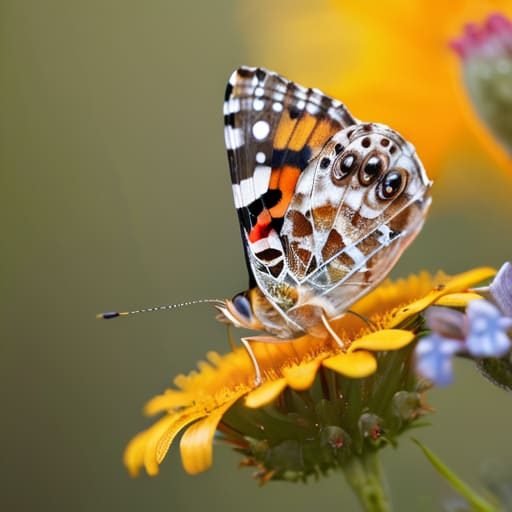
The problem with most citizen science insect monitoring isn’t a lack of passion; it’s a lack of standardization. We see it all the time on social media: a beautiful photo of a butterfly, a tagged location, and a sense of accomplishment. But from a research perspective, a single photo of a Vanessa cardui (Painted Lady) in a suburban garden tells us almost nothing about the health of the local ecosystem. Without knowing the time of day, the specific weather conditions, or the exact habitat type, that data point is essentially a ghost. It’s a beautiful snapshot, but it lacks the contextual depth required to actually track a population trend.
When we rely solely on insect species identification apps, we often fall into the trap of “opportunistic recording.” This is where people only log what looks interesting or what they can easily identify. While these apps are great for learning, they don’t replace rigorous biological recording best practices. If we only record the “charismatic megafauna” of the insect world—the bright beetles and large butterflies—we miss the boring, cryptic, and incredibly vital species that actually signal whether a hedgerow is functioning or failing. To be useful, we have to move past the aesthetic of nature and start recording the things that are actually hard to find.
The Scientific Value of Nature Observations Over Mere Sightings
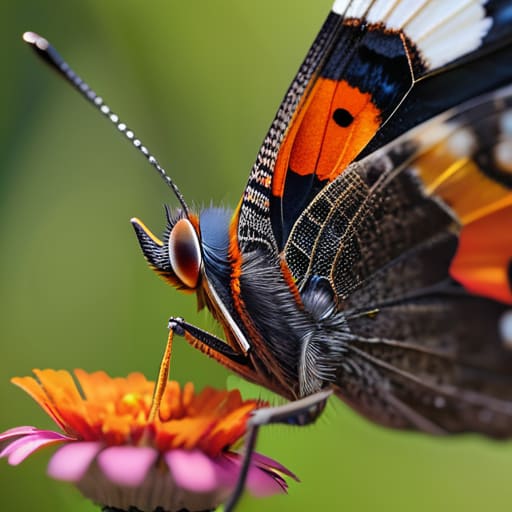
There is a massive gap between seeing something pretty and actually contributing to biodiversity data collection methods. If you spot a Red Admiral butterfly and post a photo to Instagram, you’ve had a lovely moment, but you haven’t necessarily helped a researcher. To move from a casual observer to a contributor, you have to move past the “vibe” of nature and into the specifics of what, where, and when. A sighting without a timestamp or a precise location is essentially a ghost; it exists in your memory, but it lacks the structural integrity needed to map a population’s movement or decline.
This is where the real scientific value of nature observations lies. It’s not about the sheer volume of bugs you can snap a photo of; it’s about the metadata. When we talk about biological recording best practices, we are talking about the boring, granular details that make a dataset robust. Knowing that a specific hoverfly was on a lavender bush at 11:00 AM on a Tuesday in a damp field margin provides a data point. Knowing it was “somewhere in the garden on a sunny day” provides nothing. One is a signal; the other is just noise.
Stop Collecting Sightings and Start Collecting Data
- Focus on the ‘when’ and ‘where’ as much as the ‘what’. Identifying a Bombus terrestris is great, but if you don’t note that it was 14°C, slightly overcast, and specifically on a patch of clover, that data point is basically useless for a longitudinal study. Context is the difference between a diary entry and a data set.
- Learn to identify the ‘unsexy’ stuff. Everyone wants to photograph a Blue Morpho or a rare Swallowtail, but if we want to understand ecosystem health, we need to know about the common hoverflies and the nondescript beetles. If you only record the “celebrity” species, your data becomes a biased snapshot of beauty rather than a map of biodiversity.
- Prioritize consistency over quantity. I would much rather have a person who spends ten minutes every Tuesday recording the same three square meters of hedgerow than someone who spends six hours once a year doing a “big bug hunt.” Patterns emerge from repetition, not from sporadic bursts of enthusiasm.
- Use standardized tools, even if they feel clunky. Whether it’s a specific app like iNaturalist or a physical field notebook, stick to one method. If you change your recording style every time the moon phase changes, you’re just introducing “noise” that makes it impossible for researchers to compare your findings with someone else’s.
- Be honest about your uncertainty. If you aren’t sure if that’s a Syrphidae or just a very convincing fly, don’t guess. Write down “unidentified Syrphidae” or “hoverfly sp.” It is infinitely more valuable to a scientist to have a confirmed “unknown” than a false positive that skews a population count.
The Three Pillars of Data That Actually Matters
Move from “I saw a bee” to “I saw a Bombus terrestris at 10:15 AM on a lavender bush”; specific identification and context are the only things that turn a casual observation into a data point a researcher can actually use.
Consistency beats intensity every single time; it is far better to spend ten minutes every Tuesday recording what is there than to spend five hours once a year during a heatwave and call it a “survey.”
Learn to embrace the “null result”—reporting that you saw absolutely nothing in a specific patch of scrub is just as scientifically valuable as a rare find, because it tells us exactly where the habitat is failing.
Moving from Sightings to Science
At the end of the day, there is a massive difference between saying “I saw a butterfly” and recording a specific Bombus terrestris on a standardized transect at 10:00 AM. We have spent this time looking at why the nuance matters; it’s about moving away from the vague, anecdotal “vibes” of nature watching and toward data that actually holds up under peer review. If we want to move the needle on conservation, we have to stop providing researchers with a mountain of unverified noise and start providing them with structured, repeatable observations. It’s less glamorous than a photo of a rare moth, I know, but it is the only way our efforts translate into actual policy changes.
I know it feels small. When you’re standing in a damp field margin at dusk, trying to distinguish one species from another while your boots soak through, it doesn’t feel like you’re saving the world. But those precise, sometimes tedious records are the building blocks of truth in an era of misinformation. We don’t need more alarmist headlines; we need a massive, reliable ledger of what is actually happening on the ground. So, keep your eyes sharp, keep your notes specific, and remember that accurate data is a form of activism.
