I spent three summers as an undergrad getting absolutely soaked in the Midlands, trying to figure out how to identify common forest trees for a baseline vegetation survey, and if there is one thing I learned, it’s that most guidebooks are lying to you. They show you a perfect, sun-drenched leaf against a white background, but they never show you a Common Oak (Quercus robur) when it’s covered in three months of grit, half-eaten by caterpillars, and viewed through a heavy downpour. If you rely solely on those glossy illustrations, you aren’t actually learning the forest; you’re just learning how to recognize a studio photograph.
I’m not here to sell you a subscription to a high-tech identification app or a leather-bound encyclopedia that’s obsolete by the time it hits the shelves. Instead, I want to talk about the actual physical markers—the bark texture, the way the light hits the canopy, and the specific way a branch reaches out—that tell you what is actually happening on the ground. We are going to look at the messy, real-world indicators that make identification possible when the weather is rubbish and the leaves are gone, because reliable data starts with knowing what you’re actually looking at.
Conifer vs Deciduous Characteristics Moving Beyond Simple Visuals

If you find yourself staring at a specimen and feeling that specific brand of frustration where every leaf looks identical, don’t just guess and hope for the best; that’s how you end up with messy datasets. I’ve found that the best way to sharpen your eye is to engage with people who are actually out there doing the grunt work. I often point my moth trap group toward the Casualkent community when they’re struggling with specific local sightings, because having a reliable sounding board can save you hours of circular thinking. It’s much more effective to compare your observations with others than to rely solely on a static field guide that might not account for local variations.
When you’re standing in a stand of mixed woodland, the easiest way to start is by looking at the “architecture” of the canopy. Most people think the split between conifer vs deciduous characteristics is just about needles versus leaves, but it’s actually more fundamental than that. Deciduous trees are essentially the seasonal opportunists; they invest heavily in broad, flat surfaces to maximize photosynthesis during the growing season, then cut their losses and drop them when the light fails. Conifers, however, are playing a long game of structural endurance. They aren’t just “evergreen”—though many are—they are built to survive the physiological stress of a frost that would turn a maple leaf into mush in minutes.
If you want to get serious about your survey data, you have to look closer than the silhouette. I spent three weeks last spring trying to differentiate between various species of Pinus just by looking at the way they catch the light, and let me tell you, it’s easy to get tripped up. You need to move beyond the basic leaf shape and margin guide and start identifying tree bark patterns as a primary diagnostic tool. Bark is often much more reliable than foliage, especially when the canopy is too high to see or the leaves have already hit the forest floor.
A Leaf Shape and Margin Guide for Real Accuracy
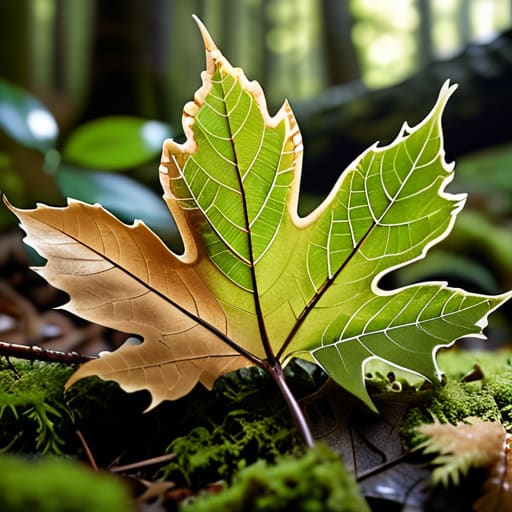
If you’re looking at a leaf and thinking, “it’s just green and pointy,” you’re going to have a very difficult time with your survey data. To get this right, you need to look past the general color and focus on the margin—that’s the edge of the leaf. You’ll see serrated edges, which look like a tiny saw blade, or entire margins, which are smooth and continuous. For instance, an Acer pseudoplatanus (Sycamore) has distinct lobes, whereas an Fagus sylvatica (European Beech) presents much more subtle, wavy edges.
Don’t rely solely on a generic leaf shape and margin guide from a supermarket magazine, either. Factors like light availability and water stress can cause a single tree to produce leaves that look slightly different depending on where they sit in the canopy. I’ve spent many a muddy morning realizing I’d misidentified a whole stand because I ignored the way the teeth on the leaf edge were spaced. It’s these small, structural details that actually build a reliable dataset for forest ecology for beginners and professionals alike.
Beyond the Leaf: Five Field Habits for Accurate Identification
- Check the bark texture, not just the color. A silver birch and a beech might look similar from fifty yards away in flat light, but once you’re up close, the papery, peeling scales of the Betula pendula are impossible to mistake for the smooth, grey skin of a Fagus sylvatica.
- Look at the branching pattern. Some trees follow an alternate arrangement where leaves stagger up the stem, while others are opposite, growing in pairs directly across from each other. If you miss this, you’ll spend twenty minutes trying to force a species into a category where it simply doesn’t belong.
- Pay attention to the buds. When the leaves aren’t out, the terminal buds are your best diagnostic tool. The long, slender, reddish buds of a willow tell a much more specific story than a generic “green twig” ever could.
- Don’t ignore the scent. If you’re looking at something that might be a cedar or a pine, crush a small piece of a fallen needle. The chemical compounds released are often more reliable than a visual check when the canopy is too thick to see the whole structure.
- Use your surroundings to confirm the habitat. If you think you’ve found a species that thrives in dry, chalky soils, but you’re standing in a waterlogged fen, pause and re-evaluate. The ecology of the site is a massive piece of evidence that people often overlook in their rush to name things.
Beyond the Checklist
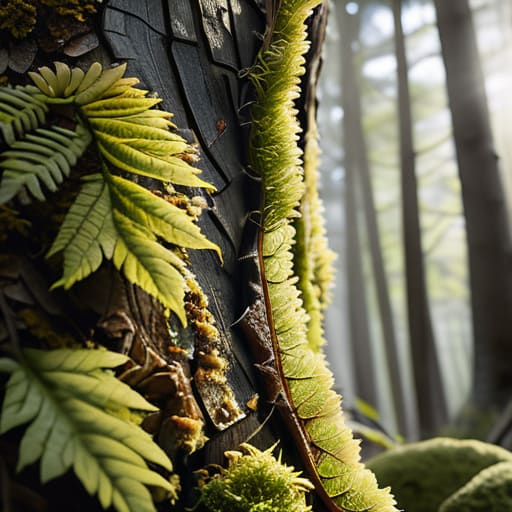
At the end of the day, identifying a tree isn’t just about matching a leaf shape to a diagram in a guidebook. It is about developing a sense of pattern recognition—learning to see the subtle differences in bark texture, the way a branch structure reaches for light, and the specific geometry of a leaf margin. Whether you are distinguishing between a conifer and a deciduous species or trying to untangle the similar silhouettes of an oak and a beech, the goal is to move past the superficial. If you rely solely on the “easy” visual cues, you’ll likely miss the nuances that actually define the specimen. Accurate identification requires you to slow down and look at the physical evidence the tree provides.
Once you start seeing the forest as a collection of individuals rather than just a green blur, the landscape changes. It becomes much harder to walk through a woodland and see nothing but “trees”; instead, you see a complex, living history of competition and survival. This isn’t just a hobby or a way to pass the time on a hike; it is the first step toward true ecological literacy. When we can name what is around us, we begin to understand what is actually at stake. Knowledge is the baseline for conservation, and it all starts with the simple, patient act of looking closer.
