
I was standing in a sodden, wind-whipped field margin last Tuesday, staring at a map that claimed I was standing in a “high-priority conservation zone,” while the actual Bombus terrestris—the buff-tailed bumblebee—was nowhere to be seen. It’s a frustrating disconnect that happens far too often; we treat a map like a holy text, assuming that because a patch of land is officially designated, the biodiversity within it is automatically safe. People often search for a complete guide to protected areas expecting a silver bullet, a way to simply draw a line around nature and call the job done, but the reality on the ground is much messier than a shaded polygon on a government PDF.
I’m not here to sell you on the idea that a legal designation is a magic shield against extinction. Instead, I want to give you a much more honest look at what these designations actually achieve—and where they fail to protect the tiny, moving parts of our ecosystem. This is my attempt at a complete guide to protected areas that looks past the bureaucratic jargon to examine the actual survey data, the quality of the habitat, and the unseen gaps between the lines on the map.
Table of Contents
Decoding Iucn Protected Area Categories Without the Hype

When you look at the official list of IUCN protected area categories, it’s easy to get lost in the bureaucratic fog. On paper, it looks like a neat, tidy system designed to sort nature into manageable boxes. In reality, these categories are less about what is actually happening on the ground and more about the intentions of the managers. For example, a Category Ia strictly protected nature reserve is meant to be a sanctuary where human interference is minimal, which is great for sensitive specialists, but it doesn’t account for the fact that many of our most vital pollinators actually thrive in the slightly “messier” edges of human-managed landscapes.
The problem arises when we treat these labels as a guarantee of success. You can have a site officially designated for wildlife habitat preservation, but if the ecosystem management practices inside that boundary don’t account for the surrounding landscape, the designation is often just a hollow gesture. We need to stop viewing these categories as checkboxes for environmental policy and governance and start seeing them for what they are: tools that only work if the data matches the label. If a site is managed for biodiversity but the hedgerow margins are being mowed into oblivion, the category name won’t save the species living there.
Why Wildlife Habitat Preservation Requires More Than Just Fences
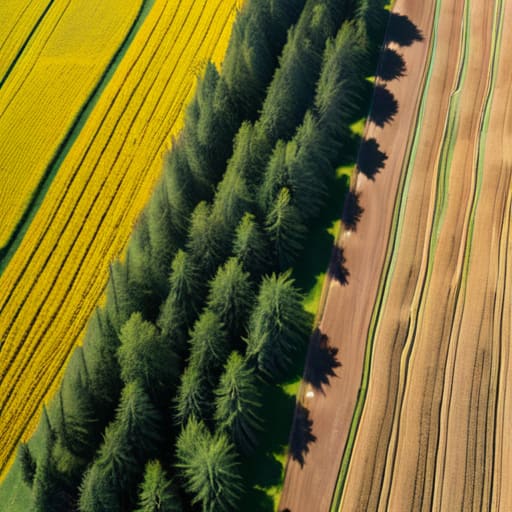
The problem with treating a map like a shield is that nature doesn’t respect lines on a page. You can designate a space as a protected area, but if that space is an island of green surrounded by a sea of intensive monoculture, it becomes a biological trap. I’ve spent too many mornings staring at transects where the species richness looks great on paper, but the actual connectivity is non-existent. If a pollinator can’t move from one patch of nectar to the next because there’s a three-mile stretch of pesticide-heavy wheat in between, that “protected” patch is just a slow-motion extinction site.
True wildlife habitat preservation requires us to look at the gaps, not just the blocks. We need to move beyond the binary of “protected” versus “unprotected” and start talking about how different ecosystem management practices can stitch these fragments back together. It’s about the messy, unglamorous work of managing field margins and hedgerows that exist outside the formal boundaries. If our conservation strategies don’t account for the movement of the actual organisms we’re trying to save, we aren’t actually preserving anything; we’re just managing a museum.
Beyond the Map: 5 Ways to Tell if a Protected Area is Actually Working
- Look for the connectivity, not just the acreage. A massive national park is great, but if it’s a biological island surrounded by concrete and monoculture wheat, the species inside are essentially trapped. Real protection means ensuring there are “stepping stone” habitats—like those messy, unkempt hedgerows I spend my life surveying—that allow insects and small mammals to move between larger zones.
- Check the management intensity, not just the label. A “Strict Nature Reserve” on paper means nothing if the local land management doesn’t account for seasonal shifts. I’ve seen sites designated for protection where the mowing schedules for wildflower margins are so aggressive they wipe out entire generations of pollinators before they can even reproduce.
- Demand data that tracks actual populations, not just “presence.” It is incredibly easy to claim a site is “protected” because a single rare moth was spotted there in 2019. We need to move away from snapshot observations and toward long-term monitoring that tells us if the population is actually stable, increasing, or quietly sliding toward local extinction.
- Don’t ignore the “buffer zones.” The edges of a protected area are where the real battle for biodiversity happens. If a reserve is bordered by heavy pesticide use in commercial farming, that chemical drift doesn’t care about the legal boundary line. Effective protection requires managing the landscape that touches the reserve, not just the land inside it.
- Prioritize functional diversity over “charismatic” species. It’s easy to get funding and public support by protecting a single iconic bird or mammal, but a healthy ecosystem relies on the unglamorous stuff—the beetles, the flies, and the soil organisms. If the protected area doesn’t support the base of the food web, the “star” species won’t be there for long anyway.
What to actually look for in a conservation map
A “protected” label isn’t a magic shield; you need to look at the management category to see if it actually allows for the specific ecological processes—like hedgerow connectivity or nectar availability—that the local species actually need to survive.
Stop equating size with success; a massive, disconnected reserve is often less effective for pollinator movement than a network of smaller, well-managed corridors that actually link habitats together.
Data gaps are the real danger, so always check if a protected area is being actively monitored by field surveys or if it’s just a “paper park” that looks good on a map but lacks the ground-level evidence to prove it’s working.
Beyond the Map and the Paperwork
We have to stop viewing protected areas as static boxes on a map where nature just happens to exist. As we’ve seen, the distinction between a strictly managed Category Ia reserve and a more flexible Category V protected landscape isn’t just academic; it dictates whether a specialist pollinator actually has a corridor to move through or if it’s trapped in a green island. If we focus solely on the legal designation without looking at the quality of the habitat margins or the connectivity between these sites, we are essentially just managing on paper. Real conservation requires us to bridge the gap between high-level IUCN categories and the messy, unscripted reality of how species actually move across a landscape.
Ultimately, the goal isn’t just to increase the percentage of land under protection, but to ensure that the protection actually works for the organisms it claims to serve. Whether you are managing a massive national park or just deciding how to prune the hedgerow in your own garden, the principle remains the same: we need to prioritize functional, living ecosystems over mere administrative checkboxes. It is easy to feel overwhelmed by the scale of biodiversity loss, but when we move from passive observation to evidence-led action, we stop guessing and start actually helping the small, vital things survive.
