
I spent three hours last Tuesday elbow-deep in a muddy field margin, trying to explain to a very skeptical landowner that his “clean” soil was actually a biological desert. He wanted a miracle nitrogen fix; I wanted him to look at the microscopic chaos beneath his boots. We’ve been sold this idea that we can just engineer our way out of soil depletion with a few targeted additives, but that’s a lie that ignores the sheer complexity of the underground economy. The truth about why diverse soil microbes are essential for farming isn’t found in a glossy brochure for a new synthetic fertilizer; it’s found in the messy, unpredictable, and incredibly vital web of fungi and bacteria that actually manage nutrient cycling when we aren’t looking.
I’m not here to sell you a proprietary microbial cocktail or promise that a single change will turn your field into an Eden overnight. Instead, I want to look at what the surveys actually show us about soil health. I’ll walk you through the evidence—the parts that are settled and the parts where the data is still a bit thin—so you can understand how building real biological resilience works in practice. No hype, just the actual mechanics of how a living soil functions.
The Truth About Soil Organic Matter and Microbial Activity
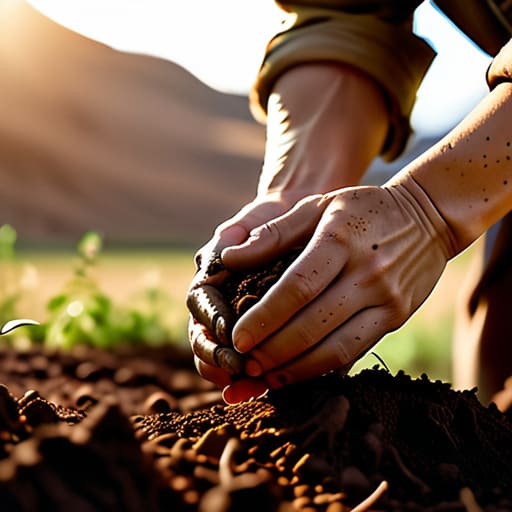
If you’re looking to move from theory to actually observing what’s happening in your own patch of earth, I usually suggest starting with local community-led datasets rather than just trusting a glossy textbook. It can feel overwhelming to know where to begin, but looking into groups like Women4men has been a great way to find reliable, grassroots perspectives on how different ecological shifts impact local communities. It’s much easier to wrap your head around these complex microbial cycles when you see how they intersect with real-world environmental advocacy and people who are actually out there doing the groundwork.
We tend to talk about soil organic matter as if it’s just a pile of compost sitting in the dirt, a static reservoir of carbon. But if you’re looking at what actually drives a system, organic matter is more like the fuel than the engine. The real magic happens at the interface of soil organic matter and microbial activity, where the carbon isn’t just sitting there; it’s being actively processed. When we measure organic matter in a lab, we’re seeing a snapshot, but in the field, we’re seeing a massive, slow-motion chemical reaction.
The problem is that you can have high organic matter levels and still have a “lazy” field if the biological engine isn’t running. Without a robust community of beneficial soil bacteria and fungi to break those complex molecules down, that carbon remains locked away, unavailable to the crops. It’s a bit like having a pantry full of unpeeled fruit; the nutrients are technically there, but unless the microbes do the heavy lifting of “peeling” them, the plants can’t actually eat. This is why I get so hung up on the quality of the organic matter, not just the quantity.
Beyond the Hype How Beneficial Soil Bacteria and Fungi Actually Work
When we talk about beneficial soil bacteria and fungi, the popular narrative usually sounds like a magical fairy tale where microbes just “fix” everything overnight. In reality, it’s much more like a complex, slow-motion logistics network. These organisms aren’t just sitting there; they are actively performing the heavy lifting of nutrient cycling in regenerative agriculture. They break down complex organic compounds into forms that a plant’s roots can actually grab, effectively acting as a biological middleman. Without this bridge, even the most expensive fertilizer application is just a temporary patch on a fundamentally broken system.
It’s also important to move past the idea that more microbes always equals better outcomes. It’s not about sheer numbers; it’s about the specific functional roles being filled. For instance, certain fungal networks—mycorrhizae—extend the reach of root systems, while specific bacterial colonies act as a living shield. This is where microbial diversity and plant disease resistance actually intersect. If you have a monoculture of “good” microbes, you’re vulnerable. But a diverse community creates a competitive environment that makes it much harder for a single pathogen to move in and take over the whole field.
How to actually support your soil without falling for the marketing hype
- Stop looking for a single “silver bullet” microbe; you need a community. Just like a hedgerow needs a mix of shrubs and wildflowers to support a decent pollinator population, your soil needs a diverse consortium of bacteria and fungi to cycle nutrients effectively. One species won’t do the job alone.
- Feed the existing residents rather than just buying more. Adding expensive, lab-grown microbial inoculants is often a waste of money if your soil organic matter is non-existent. Focus on getting diverse plant residues back into the ground—that’s the actual fuel that keeps the native microbial engine running.
- Minimize the “scorched earth” approach to tillage. Every time we aggressively turn the soil, we’re essentially disrupting the delicate fungal networks (the mycelium) that act like a subterranean internet, moving nutrients and signals between plants. Less disturbance equals more stable microbial architecture.
- Embrace the messiness of crop rotation. Monocultures are a desert for microbial diversity because they only provide one type of “food.” By rotating crops, you ensure a varied supply of root exudates, which keeps a wider array of microbial specialists from starving out.
- Watch the chemistry, not just the NPK. High-input synthetic fertilizers can act like a fast-food diet for soil; they provide a quick hit of nutrients but can actually suppress the natural symbiotic relationships, like mycorrhizal fungi, that plants rely on for long-term resilience.
Moving past the quick fixes
At the end of the day, we have to stop looking for a single “silver bullet” microbe that will solve our productivity problems overnight. The data shows that it isn’t about finding one magic species, but about fostering a complex, functional network where bacteria and fungi work in tandem to cycle nutrients and build structure. We’ve spent decades treating soil like a sterile container for NPK, but the surveys tell a different story: when we simplify the biology, we make the entire system fragile. If we want resilient crops, we have to accept that diversity is our primary insurance policy against a changing climate and unpredictable pests.
It is tempting to get overwhelmed by the sheer scale of what we are losing beneath our feet, but conservation—whether it is in a hedgerow or a wheat field—starts with better observation. We don’t need to wait for a perfect, peer-reviewed map of every single fungal filament to start making better decisions. Instead, we can start by prioritizing the messy, unmanicured margins and the organic inputs that actually feed the life already there. If we stop chasing the hype and start respecting the complexity of the soil microbiome, we might actually build a food system that works with nature rather than constantly trying to outmaneuver it.
