
I once spent four hours crouched in a damp hedgerow, shivering in a waterproof jacket that had long since given up, just to record a handful of Bombus terrestris. It wasn’t cinematic, and it certainly wasn’t easy. People often think that understanding the scale of the crisis is as simple as seeing fewer bugs in their backyard, but the reality of how insect decline is measured is far more granular and, frankly, much more frustrating. We aren’t just looking for “fewer bugs”; we are trying to distinguish between a seasonal dip, a localized population fluctuation, and a genuine, systemic collapse.
I’m not here to feed you the usual doom-and-gloom headlines that rely on shaky extrapolations. Instead, I want to pull back the curtain on the actual methodology—the transects, the malaise traps, and the messy, imperfect data that researchers actually rely on. I promise to explain the difference between a robust long-term survey and a single, highly-cited study that might not mean what you think it does. We’re going to look at what the numbers actually tell us, and more importantly, where the evidence is still thin.
Table of Contents
The Messy Reality of Entomological Survey Techniques

The Messy Reality of Entomological Survey Techniques
If you think counting insects is as simple as walking through a field with a net, I have some bad news for you. In reality, sampling methods for arthropods are a logistical nightmare of variables. You have to contend with wind speed, the exact hour of the day, and whether or not the sun decided to hide behind a cloud for twenty minutes. If I conduct a transect on a Tuesday when it’s slightly breezy, and my colleague does hers on a Friday when it’s dead still, we aren’t necessarily seeing different population levels; we might just be seeing the effect of a gust of wind.
This is why we can’t just take a single data point and declare a species extinct. Most long-term insect population studies rely on incredibly rigorous, often exhausting, biodiversity monitoring protocols to filter out this “noise.” We aren’t just looking for a specific beetle; we are trying to account for the fact that insects are tiny, fast, and notoriously difficult to pin down. We have to be honest about the margin of error, because if we ignore the chaos of the field, our data becomes nothing more than expensive guesswork.
Why Insect Biomass Trends Often Tell a Different Story
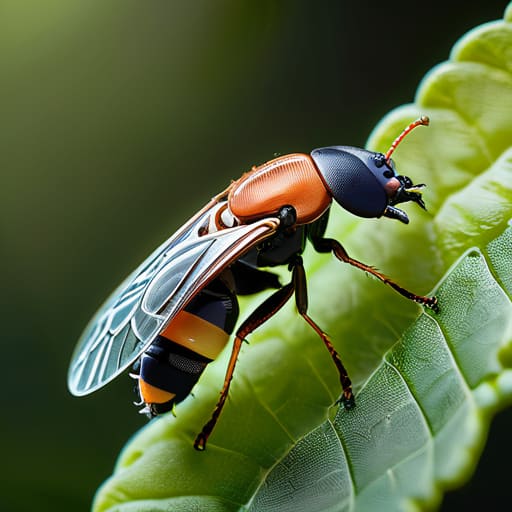
When you see a headline claiming “insect weight is plummeting,” it’s usually referring to insect biomass trends. This is a specific metric—literally weighing the total amount of organic matter collected in a trap—and while it’s a useful way to gauge energy availability in a food web, it can be incredibly misleading if you don’t look at the context. You can have a massive spike in biomass simply because one specific, opportunistic species had a bumper breeding year, even if ten other specialist species have vanished from that same hedgerow.
This is why relying on a single number is dangerous. If we only track total weight, we miss the subtle shifts in community composition. A landscape might still feel “heavy” with insects, but if that mass is made up entirely of a few generalist species, we are losing the functional diversity that keeps an ecosystem stable. To get a real picture, we have to move beyond just weighing things and look at how different taxa are behaving. We need to be honest: a high biomass reading isn’t a “get out of jail free” card for poor conservation.
How to actually read an insect survey (without losing your mind)
- Look for the methodology before the conclusion. If a paper says “insect populations are crashing” but they only sampled one specific meadow in a single July, they aren’t telling you about a global trend; they’re telling you about that specific meadow in that specific summer.
- Distinguish between abundance and diversity. You can have a massive number of one specific, highly adaptable species—like certain aphids or hoverflies—and still be witnessing a total collapse in the broader ecosystem’s diversity. A high headcount doesn’t always mean a healthy system.
- Check the “sampling effort.” In my fieldwork, I know that a single afternoon on a transect is a snapshot, not a movie. Always ask if the researchers accounted for weather, time of day, and the sheer difficulty of catching things that don’t want to be caught.
- Beware the “proxy” trap. Researchers often use one group, like butterflies, as a stand-in for all insects because butterflies are easy to spot and people like them. But what happens to the soil-dwelling beetles or the nocturnal moths? We can’t assume the whole group is doing fine just because the butterflies are still visible.
- Don’t ignore the “noise” in the data. Insect numbers fluctuate wildly year-on-year due to things as simple as a particularly wet spring or a late frost. We need to look for long-term, multi-year trends rather than panicking over a single bad season or celebrating a single lucky one.
What to actually take away from the data
Stop equating “fewer bugs in a trap” with “total extinction”; we have to distinguish between a local population dip and a genuine, widespread collapse before we start panicking.
Methodology matters more than the headline; a study using broad biomass measurements tells a completely different story than one tracking specific pollinator species, so always check what exactly was being counted.
Precision beats alarmism in conservation; if we want to actually fix things, we need to move away from vague “insect decline” narratives and focus on the specific, evidence-backed changes—like hedgerow management—that we know actually work.
Moving Beyond the Headlines
Ultimately, we have to accept that measuring insect decline is a game of probabilities, not absolute certainties. We’ve seen how biomass alone can mask the disappearance of specific, specialist species, and how the sheer noise in our sampling methods—from weather shifts to human error—can make a single season’s data look like a catastrophe or a recovery. It isn’t about finding one perfect metric that captures everything; it’s about understanding that different survey methods tell different parts of the same story. If we rely solely on the loudest, most simplified data points, we risk missing the subtle, local shifts that actually dictate whether a population is resilient or on the brink.
But there is a way to turn this complexity into something useful. Instead of waiting for a definitive, global census that may never come, we can focus on the granular, local evidence that we actually have the power to influence. Whether it’s improving the quality of a single hedgerow or making sure your moth trap data is recorded with enough precision to be meaningful, small-scale accuracy matters. We don’t need to solve the entire crisis with one headline; we just need to make sure that when we do act, we are acting on what the data is actually telling us.
