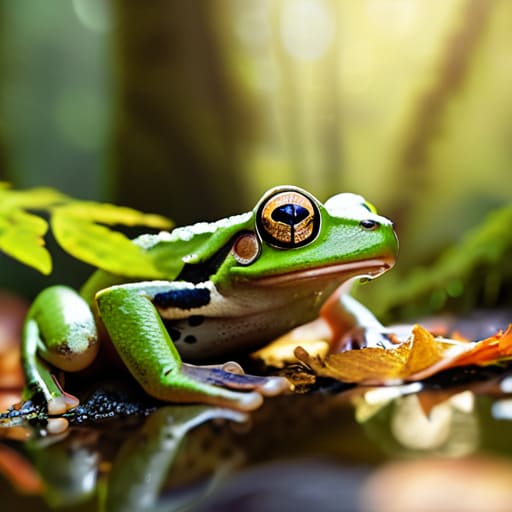
I spent three hours last Tuesday crouched in a muddy ditch near a hedgerow, shivering in a waterproof jacket that had long since given up on being waterproof, all to confirm the presence of a single Bufo bufo—the common toad. It’s moments like those, when you’re knee-deep in silt and questioning your life choices, that you realize how much the mainstream media gets wrong about conservation. You see these glossy infographics suggesting you need to build a multi-thousand-pound bespoke “wildlife pond” with complex filtration systems to make a difference, but honestly? Most of that is just expensive performative ecology. If you are actually looking for how to help amphibians, you don’t need a massive budget or a landscape architect; you just need to understand how they actually move through a landscape.
I’m not here to give you a list of products to buy or to feed you the usual doom-and-gloom headlines that make you want to give up entirely. Instead, I want to talk about the small, messy realities of habitat connectivity. I’ll show you which specific, low-cost changes to your garden or local patch actually move the needle, and I’ll be the first to tell you when the evidence for a particular “hack” is thin. This is about practical, evidence-led steps that work in the real world, not in a textbook.
Table of Contents
The Truth About Amphibian Population Decline Causes
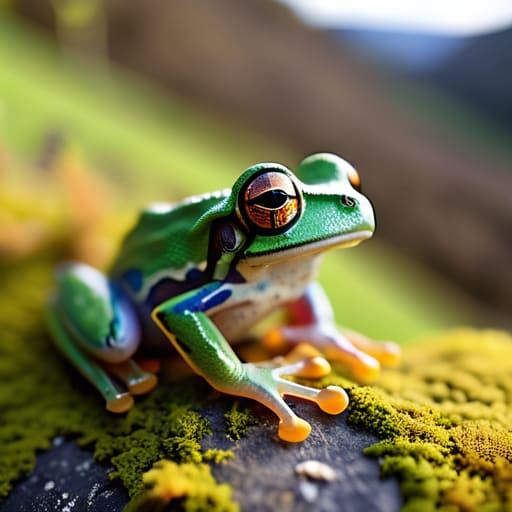
When you read a headline about amphibian population decline causes, it usually points to one massive, terrifying culprit like climate change or a specific fungus. While those are absolutely real, they are often too big for a single person to “fix,” which makes the science feel useless to someone standing in their own garden. In my experience with field surveys, the real story is much more granular. It’s rarely one catastrophe; it’s the death by a thousand cuts caused by habitat fragmentation.
We see it constantly: a population might be doing fine in one pond, but they are trapped there. They can’t move to find mates or better breeding grounds because there’s a busy road or a manicured lawn in the way. This is why wildlife corridors for amphibians are so much more critical than just having a single “perfect” pond. If we don’t address how these animals move through a landscape, we aren’t actually solving the problem; we’re just watching isolated groups slowly fade away. It isn’t about one big miracle fix; it’s about connecting the dots across the landscape.
Creating Backyard Wildlife Ponds That Actually Function
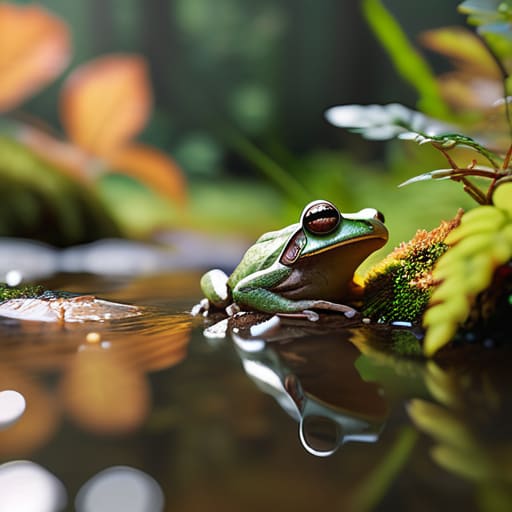
If you’re serious about creating backyard wildlife ponds, you have to stop thinking about them as decorative water features and start thinking about them as biological infrastructure. A pristine, chemically treated garden pond is essentially a beautiful death trap for most local species. To make a pond actually function, you need to ditch the idea of “clean” and embrace the mess. This means building in sloping margins—gentle, shallow edges that allow a creature to crawl in and out without hitting a vertical plastic wall they can’t climb. Without these transition zones, you aren’t providing habitat; you’re just building a bowl.
Real amphibian habitat restoration also requires a bit of strategic neglect. You need submerged vegetation to provide cover from predators and a way for eggs to cling to, but you also need a “buffer zone” of unmanaged, damp vegetation around the perimeter. This creates a vital connection between the water and the terrestrial environment. If your pond is an isolated island of water in a sea of manicured lawn, it won’t support a stable population. You are essentially trying to build wildlife corridors for amphibians right in your own garden, linking the water to the leaf litter where they spend most of their lives.
Beyond the Pond: Small Changes That Actually Matter
- Stop tidying up the edges. If you have a pond, the most important thing you can do is leave a “buffer zone” of messy, un-mown vegetation around it. Amphibians don’t live in the water; they live in the damp, decaying leaf litter and tall grass right next to it. If you clear-cut the bank to make it look “neat,” you’ve essentially evicted the very creatures you’re trying to host.
- Prioritize connectivity over isolation. A single perfect pond in the middle of a manicured lawn is a biological island. To actually support a population, you need “wildlife corridors”—think strips of uncut grass, hedgerows, or even just a series of connected garden beds. An amphibian needs to be able to move through your garden without having to cross a scorching, dry expanse of concrete or chemically treated turf.
- Watch your runoff. When it rains, everything from your garden shed or driveway washes straight into the nearest low point. If you’re using synthetic fertilizers or slug pellets, you aren’t just killing a few pests; you are fundamentally altering the chemistry of the water your local newts or frogs rely on. I’ve seen how quickly a localized population can tank because the water quality shifted just slightly too far.
- Create “refugee” habitats. Not every amphibian is a pond-dweller, and not every garden has space for a permanent water feature. If you can’t do a pond, do a “toad abode”—a simple, damp, dark pile of logs, stones, and old bricks in a shaded corner. It’s not a replacement for a breeding site, but it provides the essential moisture-retention they need to survive a dry spell.
- Be skeptical of “instant” solutions. You’ll see products sold online promising to “revitalize” local biodiversity overnight, but ecology doesn’t work on a retail timeline. Real conservation is about slow, incremental shifts in how we manage land. Focus on increasing the complexity of your garden’s structure—more layers of plants, more varying levels of shade, and more decaying organic matter—rather than looking for a quick fix.
What to actually do when the survey data hits the fan
Stop chasing the “perfect” sterile pond aesthetic; if your garden looks too tidy, you’ve probably accidentally removed the exact damp, messy micro-habitats that amphibians need to move between water sources.
Focus on connectivity rather than just a single isolated feature, because a pond is just a beautiful trap if there isn’t a continuous corridor of vegetation or unploughed margins to help them reach it safely.
Be skeptical of single-season “success” stories, as amphibian populations are notoriously fickle and highly dependent on specific weather patterns; real conservation is about building long-term stability, not just one good spring.
Beyond the Pond Edge
To wrap this up, helping amphibians isn’t about performing some grand, heroic act of environmental salvation; it’s about the granular, unglamorous work of connectivity. We’ve looked at why the “doom” headlines often miss the nuance of habitat fragmentation and why a pristine, chemically-treated garden is often a desert for a common toad. If you focus on building functional ponds—meaning they have actual structural diversity and aren’t just plastic basins—and then connect those ponds to damp, messy corridors of vegetation, you are doing the heavy lifting. It is about moving away from the aesthetic of a “tidy” garden and moving toward a working ecosystem that provides the specific, messy niches these species require to survive.
I know it can feel small. When I’m out in the field, staring at a transect of nothing but dry, monoculture wheat, the scale of what we’ve lost feels overwhelming. But conservation isn’t just about the massive, state-funded nature reserves; it’s built on the millions of tiny, damp patches people decide to leave alone. If you can provide even one small, safe haven in your own patch of earth, you aren’t just observing a decline—you are actively interrupting it. Every bit of unmanicured soil and every puddle counts toward a future where these species are a permanent fixture of our landscape, rather than just a memory in a textbook.
