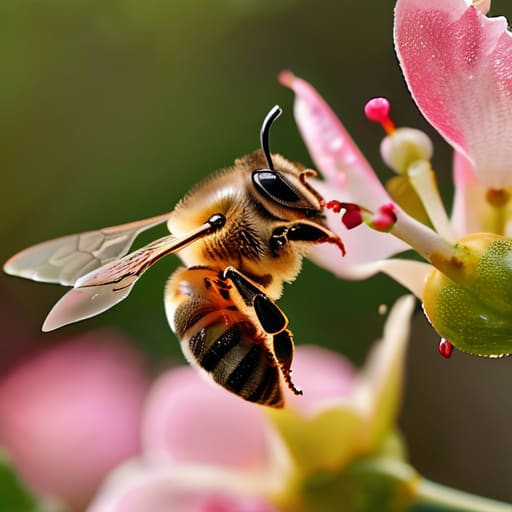
I once spent six hours crouched in a damp field margin in mid-October, trying to distinguish a single Bombus terrestris from a pile of wet leaves, all because a popular science magazine had simplified a complex study into a catchy headline. People love to talk about how insects pollinate crops as if it’s this grand, magical, uniform process happening in every field at once. In reality, it’s a messy, highly specific, and often incredibly inefficient scramble for survival. It isn’t just “bees flying around”; it’s a delicate timing game between specific floral architectures and the very particular mouthparts of certain insects, and when that timing slips, the whole system stutters.
I’m not here to give you the “save the bees” platitudes that you see on every supermarket cereal box. Instead, I want to look at what the survey data actually shows us about the mechanics of these interactions. I’ll be breaking down the actual biological drivers behind how insects pollinate crops, separating the settled science from the speculative hype, and explaining why a single species of hoverfly might be more important to your local food security than the “charismatic megafauna” of the insect world.
Table of Contents
The Real Mechanics of Complex Cross Pollination Mechanisms
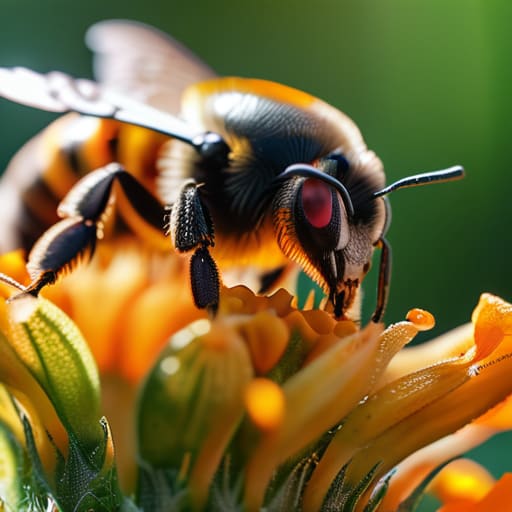
When we talk about pollination, we often default to the image of a honeybee landing on a flower, grabbing some dust, and moving to the next. It’s a neat mental shortcut, but the actual insect-plant interactions are far more chaotic and specialized. It isn’t just a transfer of pollen; it is a highly specific biological handshake. Some plants have evolved “trip” mechanisms where the weight of a specific beetle or bee triggers a sudden release of pollen, while others require the precise vibration of a bee’s wing muscles—what we call buzz pollination—to shake the grains loose.
This level of precision is why pollinator species diversity matters so much more than just having “a lot of bugs” in a field. If you only have one type of bee, but the crop requires a specific vibration frequency to release its pollen, your yields will suffer regardless of how many insects are buzzing around. We have to move past the idea of pollination as a monolith and start looking at these niche mechanical requirements, because a mismatch between a plant’s structure and an insect’s morphology is a massive, often invisible, bottleneck for food production.
Why Insect Plant Interactions Matter More Than One Species
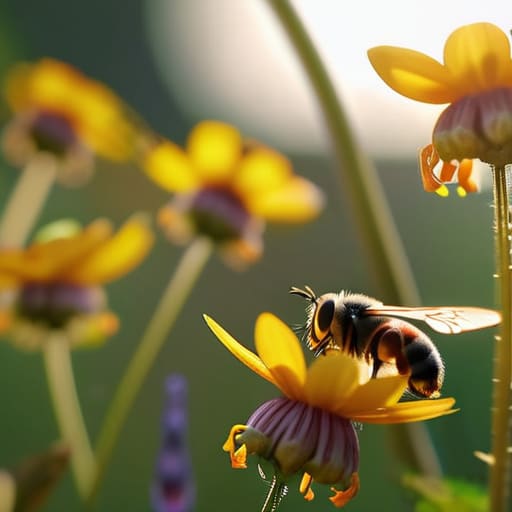
If you look at most conservation posters, they feature a single, lonely honeybee on a bright sunflower. It’s a nice image, but it’s biologically misleading. In my field surveys, I rarely see a monoculture of one insect doing all the heavy lifting. Real-world pollinator species diversity is what actually holds a landscape together. Different insects have different body shapes, tongue lengths, and foraging rhythms; a solitary bee might be a specialist for one type of wildflower, while a hoverfly handles another. If we only protect the “celebrity” species, we risk a catastrophic mismatch where the plants bloom but the specific insects required to trigger their reproductive cycle are nowhere to be found.
This isn’t just about being “pro-nature”; it’s about the stability of our food systems. When we talk about the impact of pollinators on food security, we have to move past the idea of a single “super-pollinator.” A diverse community of insects provides a buffer. If a disease hits one specific bee population, a robust web of other insect-plant interactions ensures that the ecosystem—and the crops—don’t immediately collapse. It’s about functional redundancy, not just counting heads.
Beyond the Buzz: Five Ways to Actually Support Pollination Services
- Stop obsessing over honeybees. While Apis mellifera—the common honeybee—is great for industrial-scale pollination, they are often managed like livestock. If you want resilient crop pollination, you need to support the wild, solitary bees that actually show up when the weather is temperamental.
- Prioritize “floral phenology” over just “more flowers.” This is a fancy way of saying you need a continuous buffet. If your garden or field margin blooms all at once in June and then goes silent, the insects that emerge in August are essentially starving, regardless of how many roses you planted.
- Embrace the “messy” margin. We tend to want field edges to look like manicured lawns, but a tidy hedge is a biological desert. Leaving some bare ground and diverse, even “weedy,” vegetation provides the nesting sites that many pollinating insects need to actually complete their life cycles.
- Reduce the chemical cocktail. I know, “pesticides are bad” is a cliché, but the data on sub-lethal effects—where a bug doesn’t die instantly but loses its ability to navigate back to a nest—is genuinely concerning. If you’re managing land, look at the specific impact on non-target pollinators before reaching for the sprayer.
- Diversify your plant architecture. Not every insect has the same mouthparts or body shape. A monoculture of deep, tubular flowers might look pretty, but it excludes the entire suite of short-tongued bees and flies that are working the surrounding crops. You need a mix of shapes to capture the full spectrum of insect visitors.
What to Actually Look For in Your Own Patch
Stop focusing on “more bees” as a single metric; biodiversity matters because different species—like Bombus terrestris (the buff-tailed bumblebee) versus solitary bees—operate on different schedules and visit different flower shapes.
Hedgerow margins and “messy” edges aren’t just aesthetic choices; they are functional corridors that provide the specific nesting sites and floral continuity required to prevent local population collapses.
Evidence on specific crop-yield boosts is often messy and context-dependent, so we need to move away from broad generalizations and start supporting local, varied habitats that provide stability when one specific species has a bad year.
Moving Beyond the Buzzwords
When we strip away the simplified “bee vs. plant” narratives, we’re left with a messy, beautiful, and incredibly fragile web of specific interactions. We’ve seen that pollination isn’t a monolith; it’s a collection of distinct mechanical processes—from the specialized way a long-tongued bee accesses a flower to the chaotic, effective way a hoverfly moves through a field margin. It isn’t just about having “more bugs”; it is about having the right diversity of functional traits at the right time in the season. If we lose the specific specialists that match certain crop architectures, the generalists might not be able to pick up the slack, no matter how many wildflowers we plant.
Ultimately, the data tells us that conservation isn’t a game of guesswork, but a matter of precision ecology. We don’t need to solve the entire global biodiversity crisis by Tuesday, but we do need to stop treating insect decline as an abstract, looming shadow and start seeing it as a measurable loss of service. Whether it’s leaving a patch of “messy” hedgerow for nesting sites or advocating for varied floral resources in local planning, these small, evidence-based shifts matter. We can’t fix what we don’t accurately measure, so let’s start counting what actually counts.
