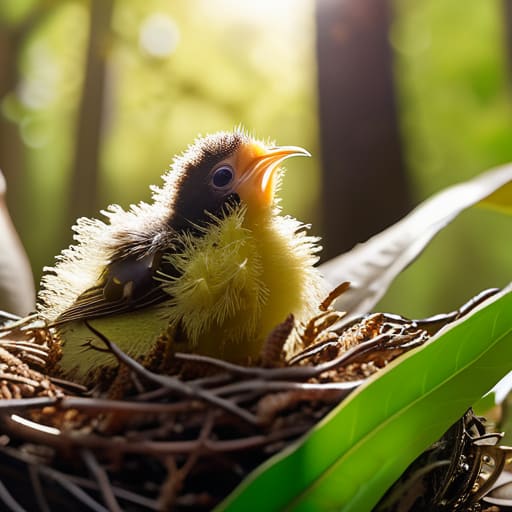
I was standing in a damp field in mid-April, staring at a patch of Primula veris—common primrose—that was absolutely exploding with blooms, only to find the local pollinators were nowhere to be seen. It wasn’t because the bees were lazy; it was because the temperature cues that trigger their emergence had shifted, leaving them stuck underground while the nectar was already being wasted. This is the messy, unglamorous reality of how phenological mismatch happens. We don’t need more sweeping metaphors about “nature out of sync”; we need to look at the specific, broken links in the biological chain where a few degrees of warming turn a perfect life cycle into a dead end.
I’m not here to give you a lecture filled with impenetrable jargon or to scare you with apocalyptic headlines that don’t actually explain the mechanics. Instead, I want to walk you through the actual data on these timing errors. I’ll show you where the evidence is rock-solid and where we’re still just guessing, so you can understand the real drivers behind these shifts. My goal is to move past the buzzwords and look at what is actually happening in the hedgerows and gardens we are trying so hard to save.
Table of Contents
Temperature Driven Phenology Changes and the False Promise of Spring
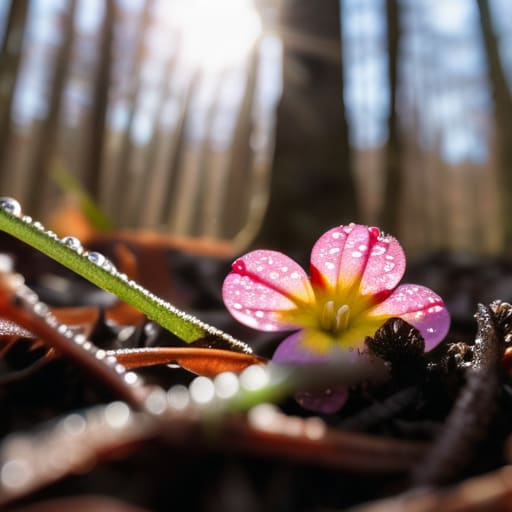
The problem with “early springs” is that they aren’t uniform. When I’m out on a transect in March, I see it constantly: the soil temperature hits a certain threshold, and suddenly the Primula vulgaris (primrose) is pushing through. It looks like a win for biodiversity, but it’s actually a massive gamble. Plants respond to thermal cues—basically, the ground warming up—but the insects that rely on them might still be waiting for a different signal, like day length. This is the core of temperature-driven phenology changes; the thermometer is moving faster than the biological clock.
If the flowers bloom two weeks early because of a warm spell, but the pollinators are still dormant, we aren’t just looking at a quiet garden—we’re looking at trophic asynchrony in ecosystems. The plant spends its energy producing nectar that no one collects, and the insect wakes up to a buffet that’s already empty. It’s not a vague “shift in the season”; it is a mechanical failure of timing that can starve a population before the summer even begins.
When Seasonal Shifts in Species Interaction Lead to Empty Nests
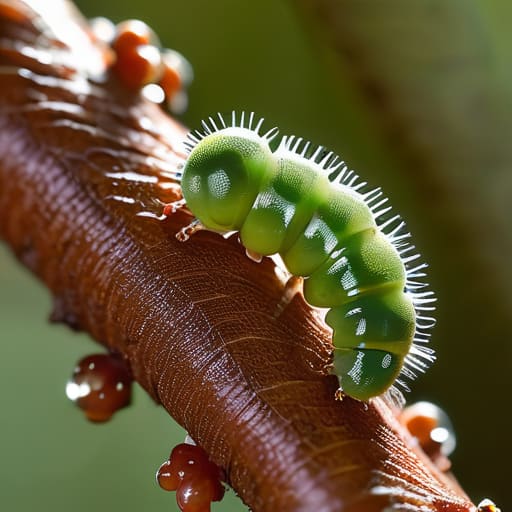
This is where the theoretical math of a warming planet meets the messy, physical reality of a hungry organism. We often talk about trophic asynchrony in ecosystems as if it’s a glitch in a computer program, but in the field, it looks much more desperate. It’s the gap between a caterpillar hatching and the specific leaf it needs to survive being too tough, or too late, to eat. When the timing of a predator and its prey drifts apart, the entire energy transfer of a habitat stalls. It isn’t just a minor inconvenience; it is a fundamental breakdown in how life supports itself.
I see this most clearly when looking at the ecological consequences of timing shifts in nesting birds. If a species relies on a massive, synchronized emergence of insects to feed a single brood of chicks, and that emergence has already peaked and crashed by the time the eggs hatch, the result is a silent failure. You end up with empty nests or, worse, half-starved fledglings. We can’t just assume species will “adapt” on the fly; biological evolution rarely moves as fast as a shifting thermometer.
Beyond the Buzzwords: 5 Ways to Actually Spot the Mismatch
- Watch the cues, not just the calendar. Many species rely on photoperiod—the length of the day—to trigger emergence, while others respond to soil temperature. When one responds to a warm February and the other is waiting for a specific day length in April, you get a mismatch that no amount of “early spring” can fix.
- Look for the specialist’s struggle. Generalists, like certain hoverflies that can eat a variety of nectar sources, tend to weather these shifts better. It’s the specialists—the ones tied to a single host plant or a specific bloom window—that show the first signs of population collapse when the timing drifts.
- Track the “peak-to-peak” gap. In my surveys, I don’t just look at whether a species is present; I look at whether the peak abundance of a pollinator aligns with the peak flowering of its primary food source. If the flower peaks in week 12 and the bee peaks in week 15, that three-week gap is a nutritional desert.
- Question the “climate resilience” narrative. We often hear that species will just “shift their range” or “adapt,” but adaptation takes generations of selective pressure. A single decade of rapid warming can outpace the evolutionary ability of a long-lived insect to recalibrate its entire life cycle.
- Monitor the microclimates. A garden with heavy mulch or a field with dense hedgerow cover might hold heat differently than an open meadow. These small thermal buffers can either act as a lifeline or create a localized trap where species emerge too early relative to the wider landscape.
What This Actually Means for the Field
Phenological mismatch isn’t a single catastrophic event; it’s a series of small, staggered timing errors where one species moves its schedule while its partner stays put, creating a gap that data shows can be fatal for local populations.
We have to stop assuming every species will react to a warming climate at the same speed, because “thermal plasticity”—how much a species can actually adjust its internal clock—varies wildly between a specialist bee and a generalist moth.
Effective conservation requires more than just “planting more flowers”; it requires planting a diverse range of species that bloom at different intervals to provide a buffer against the unpredictability of shifting seasons.
Beyond the Mismatch
To wrap this up, we have to acknowledge that phenological mismatch isn’t a single, catastrophic event, but a series of widening gaps in the biological calendar. We’ve looked at how rising temperatures trick early-emerging insects into thinking spring has arrived, only for them to find their floral resources haven’t bloomed yet, and how the delicate synchrony between predators and their prey is fraying at the edges. It is a complex, messy decoupling of cues that have functioned in tandem for millennia. While the data shows that some generalist species can pivot, the specialists—the ones that rely on a specific flower or a specific hatch date—are the ones currently paying the highest price.
So, where does that leave us? It’s easy to look at these shifting timelines and feel like we’re just documenting a slow-motion train wreck, but that isn’t helpful for conservation. Instead of panicking over headlines, we need to focus on building ecological resilience. This means creating “buffer zones” in our landscapes—planting a diverse range of native species that bloom at different intervals to ensure there is always a fallback option when one link in the chain fails. We can’t force the seasons back into their old slots, but we can make sure that when the timing fails, the biological safety net is actually there to catch them.
