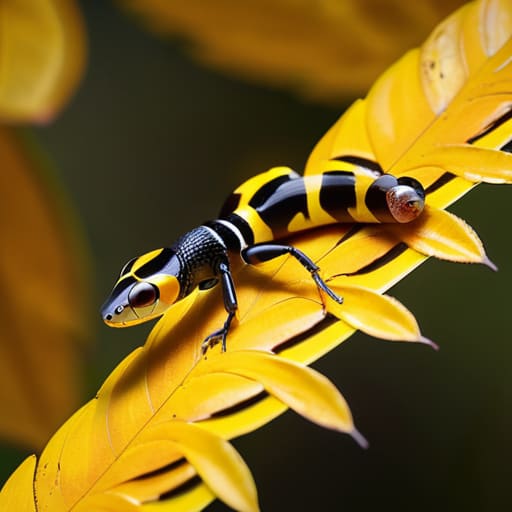
I was standing in a damp hedgerow last Tuesday, staring at a Biston betularia—the peppered moth—clinging to a lichen-covered trunk, when I realized how much the popular narrative about its adaptation has been flattened. We’ve all seen the textbook version of how camouflage and mimicry evolved, usually presented as this clean, inevitable march toward “perfection” driven by industrial soot. It’s a tidy story, but it’s also a bit of a lie. Evolution isn’t a guided tour toward a better outfit; it is a messy, stochastic process of survival and near-misses that rarely looks as neat as a high school biology diagram suggests.
I’m not here to give you another sweeping, oversimplified lecture on “survival of the fittest.” Instead, I want to look at what the actual selection pressures do to a population over time. I’ll be digging into the probabilistic reality of how these traits actually take hold, distinguishing between the settled evolutionary mechanics and the areas where our data is still frustratingly thin. My goal is to move past the headlines and explain the actual biological friction that shapes these incredible, tiny disguises.
Table of Contents
- Selection Pressures on Phenotype It Is Not Magic It Is Math
- The Evolutionary Advantages of Cryptic Coloration in Real Fields
- Moving Beyond the 'Master of Disguise' Trope: 5 Reality Checks on Evolutionary Adaptation
- The Reality Check: What to Carry Away From the Data
- Moving Beyond the "Master of Disguise" Trope
Selection Pressures on Phenotype It Is Not Magic It Is Math
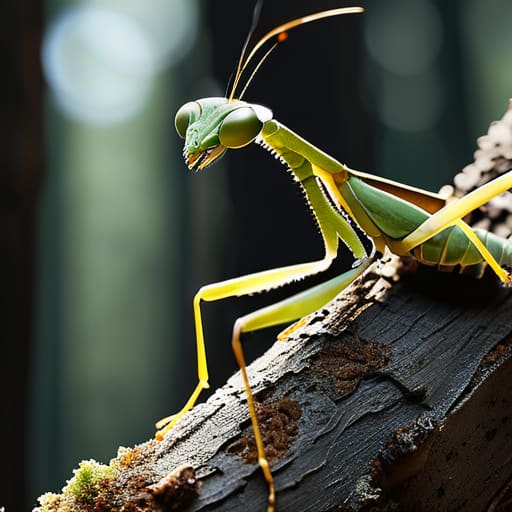
When we talk about how an insect ends up looking like a piece of lichen or a dried leaf, there is a tendency to treat it like a deliberate design choice. It feels like there should be a blueprint, but biology doesn’t work via intention; it works via attrition. What we are actually looking at are selection pressures on phenotype. It isn’t a magical transformation; it is a brutal, statistical process where the individuals that happen to deviate slightly from the “obvious” pattern are the ones that don’t get eaten before they can reproduce.
In my field surveys, I see this play out in the tiny margins of error. If a moth population has a slight variation in wing pattern, the ones that stand out against the bark are removed from the gene pool almost immediately. This creates a relentless predator-prey evolutionary arms race. It isn’t that the species “learned” to hide; it’s that the ones that didn’t hide were essentially deleted from the data set. We call it adaptive coloration, but in reality, it’s just the mathematical result of who survived long enough to pass on their traits.
The Evolutionary Advantages of Cryptic Coloration in Real Fields
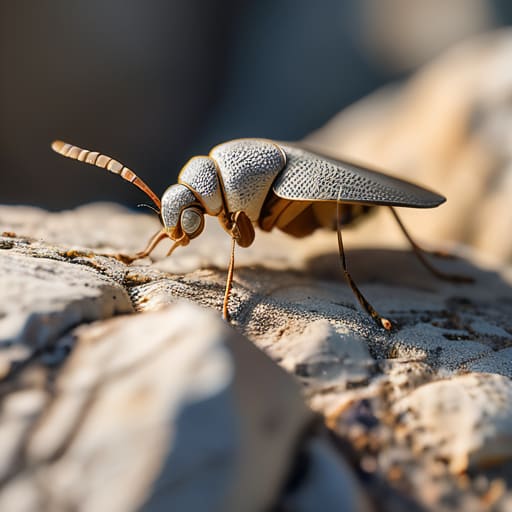
When I’m out on a transect, looking at a patch of dried bracken, I’m not looking for a “master of disguise.” I’m looking for a specific set of visual failures. We talk about the evolutionary advantages of cryptic coloration as if it’s a deliberate design choice, but in the field, it looks more like a statistical lottery. An insect that happens to match the specific grit of a limestone outcrop survives long enough to lay eggs; the one that doesn’t, gets eaten. It’s not a grand strategy; it’s just the residue of who didn’t get caught.
This is where the predator-prey evolutionary arms race gets messy. It isn’t just about a moth looking like a piece of bark. It’s about the sensory limits of the bird trying to eat it. If a predator’s visual processing can’t distinguish a specific shade of mottled brown from the substrate, that’s a win for the insect. But we have to be careful with the data here—one study might show a species is “perfectly” camouflaged, but that often just means the researchers didn’t look hard enough or use the right light.
Moving Beyond the 'Master of Disguise' Trope: 5 Reality Checks on Evolutionary Adaptation
- Stop viewing mimicry as a ‘goal.’ Evolution doesn’t have a blueprint for the perfect look; it’s just a series of statistical accidents where the individuals who looked slightly more like a leaf or a wasp survived long enough to pass on those specific, messy genes.
- Recognize that ‘perfect’ camouflage is a myth. If a pattern were truly perfect, there would be zero selection pressure to maintain it. The fact that predators still occasionally catch well-camouflaged prey is exactly what keeps the evolutionary engine running.
- Distinguish between Batesian and Müllerian mimicry. In Batesian mimicry, a harmless species is essentially ‘faking it’ by looking like something dangerous—it’s a high-stakes gamble that relies on the predator’s memory. Müllerian mimicry is different; it’s when two actually dangerous species evolve to look alike to share the ‘cost’ of teaching predators a lesson.
- Account for the ‘cost of being conspicuous.’ Developing complex, specialized patterns often comes with metabolic or reproductive trade-offs. A moth might have the perfect disruptive coloration for a lichen-covered trunk, but if that pattern makes it highly visible during its mating flight, the survival math gets complicated.
- Look for the evidence of ‘imperfect mimicry.’ In my field surveys, I often see individuals that don’t quite match the model species perfectly. Rather than dismissing them as ‘failures,’ we should view them as snapshots of evolution in progress—showing us that the resemblance is often ‘good enough’ to work, even if it isn’t flawless.
The Reality Check: What to Carry Away From the Data
Mimicry isn’t a “design” or a goal; it is the statistical result of survival filters. We need to stop thinking of evolution as an artist trying to create a perfect copy and start seeing it as a messy, ongoing math problem where the “winners” are simply the ones who didn’t get eaten yesterday.
Cryptic coloration (camouflage) is rarely a perfect match for a single background. Instead, it is often a compromise that works “well enough” across a range of shifting environments—which is why a single change in land management or a loss of hedgerow diversity can suddenly make a previously successful phenotype look like a neon sign to a predator.
Avoid the “all-or-nothing” trap in conservation talk. While we often hear that a species has “mastered” its disguise, the data shows that evolutionary advantages are always relative and highly sensitive to local ecological shifts; there is no such thing as a perfectly evolved organism, only one that is currently managing to stay under the radar.
Moving Beyond the "Master of Disguise" Trope
When we strip away the romanticized idea of the “perfectly evolved” predator or prey, we are left with something much more interesting: a messy, ongoing statistical negotiation. We’ve looked at how selection pressures act on phenotype not through some grand design, but through the relentless, granular math of survival and reproduction. It isn’t about a species “deciding” to blend in; it is about the individuals whose slight variations in color or pattern happen to avoid a predator’s gaze just long enough to pass on their genes. Whether we are talking about the subtle disruptive patterning on a moth’s wing or the complex mimicry of a hoverfly, we are seeing the visible residue of millions of years of probabilistic survival.
Understanding this complexity doesn’t make the natural world any less incredible; if anything, it makes it more vital. If we view camouflage as a static “achievement,” we miss the reality that these adaptations are constantly being recalibrated by a changing environment. As we lose the hedgerows and the specific micro-habitats that these species rely on, we aren’t just losing individual insects; we are breaking the evolutionary feedback loops that have been fine-tuning these incredible survival strategies for millennia. If we want to save the biodiversity we see in our gardens, we have to protect the unpredictable complexity of the ecosystems that allow these tiny, living miracles to keep happening.
