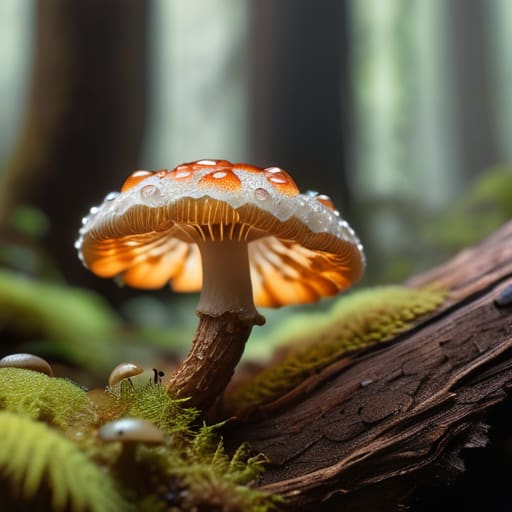
I spent three hours last Tuesday knee-deep in a damp hedgerow, squinting through a hand lens at a patch of Mycena galericulata—the common whetling—just to prove a point to a graduate student who thought mushrooms were just “nature’s recyclers.” Most people approach the idea of a complete guide to fungi by looking for a glossy coffee table book filled with vibrant photos of Amanitas, or worse, a survivalist manual that treats every spore like a meal. But if you actually look at the way mycelium weaves through the soil, you realize we aren’t just looking at “mushrooms”; we are looking at the underground architecture of the entire planet.
I’m not here to give you a curated list of what looks pretty in a forest clearing or to sell you on some mystical, sentient forest network theory that hasn’t passed a peer review. Instead, I want to walk you through what the biology actually tells us. This is a complete guide to fungi built on fieldwork and data, moving from the microscopic mechanics of decomposition to how these organisms actually dictate what grows in your own backyard. I’ll tell you when we’re certain about a species’ role and when we’re still just guessing based on thin evidence.
Table of Contents
Mycology Basics for Beginners What the Data Actually Shows
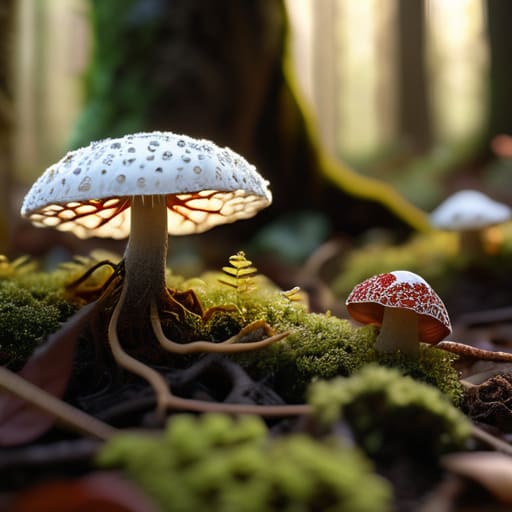
If you look up mycology basics for beginners, you’ll usually get hit with a list of Latin names or a lecture on how fungi aren’t technically plants. While that’s technically true—they belong to their own distinct kingdom with unique cellular structures—the real magic isn’t in the taxonomy. It’s in the mycelium network explained through the lens of what it actually does for the soil. Most people think of a mushroom as the “thing,” but that’s just the fruit. The actual organism is the vast, underground web of hyphae that acts as the planet’s primary communication and nutrient distribution system.
When we look at the data from soil core samples, we see that these networks are the backbone of symbiotic relationships in nature. They don’t just sit there; they actively trade phosphorus and nitrogen for carbon from plant roots. It’s a high-stakes biological market. Understanding this isn’t just for academics; it changes how you view a “messy” garden. That layer of leaf litter isn’t waste—it’s the essential infrastructure keeping your local ecosystem from collapsing into a nutrient desert.
Fungal Kingdom Characteristics That Headlines Often Overlook
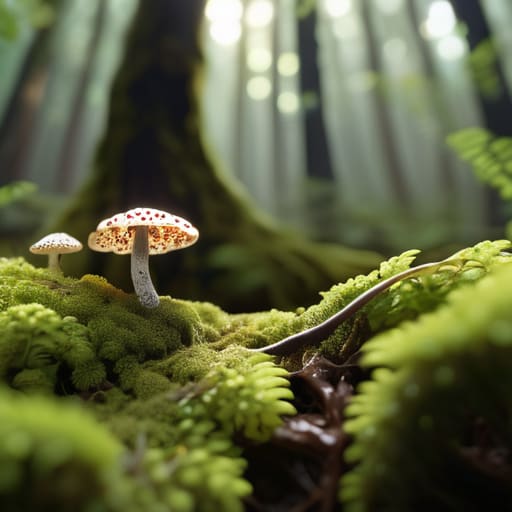
When you see a headline screaming about a “fungal takeover,” it’s usually ignoring the actual biological reality of how these organisms function. Most people focus on the fruiting body—the part that looks like a little umbrella in the grass—but that is just the reproductive tip of the iceberg. The real heavy lifting happens underground through the mycelium network, a sprawling, microscopic web of threads that acts more like a biological internet than a simple root system. This isn’t just a passive structure; it is a highly active, living architecture that facilitates complex symbiotic relationships in nature, connecting plants and even other fungi in ways that we are still struggling to map accurately in the field.
We also tend to overlook how specialized their survival strategies are. While news cycles obsess over the “scary” side of the kingdom, they miss the nuance of how these organisms actually move through an ecosystem. For instance, their spore dispersal mechanisms are marvels of evolutionary engineering, designed to exploit everything from wind currents to the specific movements of passing insects. Understanding these fungal kingdom characteristics is vital because it shifts the conversation from “fungi are weird” to “fungi are the essential engineers of our soil health.”
Beyond the Mushroom Cap: How to Actually Engage with Fungal Ecology
- Stop looking for the “pretty” ones first. If you want to understand a local ecosystem, you have to look at the mycelium—the underground network—rather than just the fruiting bodies. The mushroom is just the reproductive event; the actual organism is the massive, invisible web doing the work in the soil.
- Learn to distinguish between saprotrophic and mycorrhizal species. One group acts as the forest’s recycling crew, breaking down dead matter, while the other forms critical, symbiotic partnerships with plant roots. Knowing which is which tells you whether a patch of ground is actively building soil or just cleaning it up.
- Don’t mistake “presence” for “abundance.” Just because you see a cluster of Agaricus bisporus in a field doesn’t mean the fungal population is thriving; it might just mean the specific moisture and temperature conditions for fruiting were met that week. Real ecological health is measured in the stability of the underground network over seasons, not just a single afternoon of foraging.
- Avoid the “all or nothing” mindset regarding fungal diseases. While a headline might scream about a fungal blight wiping out a crop, fungi are also the primary regulators of plant populations in the wild. They prevent any single species from dominating a habitat, which is actually a key driver of biodiversity.
- Document the context, not just the species. If you’re out in the field, don’t just note the name of the fungus; note the host tree, the soil moisture, and the surrounding light levels. Fungi are hyper-specific, and their presence is often a more accurate indicator of micro-climate health than almost any other biological metric.
Beyond the Mushroom: What Actually Matters for Conservation
Stop looking for mushrooms as the only indicator of fungal health; the real work is happening in the mycelial networks underground, which are far more sensitive to soil compaction and chemical runoff than the fruiting bodies we actually see.
Most headlines treat fungi as a monolith, but from a biodiversity standpoint, we need to distinguish between the decomposers that recycle nutrients and the mycorrhizal partners that facilitate plant communication, as they respond differently to land management.
Avoid the “more is better” trap when gardening; introducing a single species of fungus won’t fix a broken ecosystem, but protecting existing fungal-plant relationships through less intensive soil disturbance is where the actual data shows we get a return on investment.
Beyond the Mushroom Cap
If you take anything away from this, let it be that fungi aren’t just the “accidental” side characters of the natural world; they are the literal infrastructure. We’ve moved past the idea that they are just decomposers or something you find on a damp log after a storm. The data shows they are active, complex players in nutrient cycling and soil stability that dictate whether a hedgerow thrives or becomes a biological desert. While the headlines love to jump straight to the “scary” side of fungal pathogens, the reality is far more nuanced. Understanding the distinction between a beneficial mycorrhizal network and a parasitic outbreak is the difference between managing an ecosystem and simply reacting to a crisis.
It is easy to feel small when you look at the sheer scale of these subterranean networks, especially when the news is constantly telling us that biodiversity is in freefall. But conservation doesn’t always require a massive, sweeping policy shift to start making an impact. Sometimes, it is as simple as leaving the leaf litter alone or resisting the urge to “tidy” your garden into submission. When we stop treating the soil like a sterile substrate and start seeing it as a living, fungal-driven engine, we change how we interact with the earth. We don’t need to solve everything by Tuesday, but we do need to start looking down at the things that actually hold the world together.
