I spent three years of my PhD watching how tiny, unseen shifts in soil chemistry can derail an entire hedgerow ecosystem, and if there is one thing that irritates me, it is the way “green living” influencers try to turn dirt into a luxury lifestyle brand. You don’t need a bespoke, $300 rotating tumbler or a subscription to a specialized microbial starter kit to make a difference. Most of the glossy guides on how composting works for beginners make it sound like a high-stakes chemistry experiment that requires a sterile lab and perfect ratios, but in reality, you are just facilitating a very messy, very beautiful biological tug-of-war.
If you find yourself staring at a pile of damp leaves and feeling completely overwhelmed by the chemistry of it all, don’t panic; even seasoned field ecologists have days where the ratios just don’t add up. I usually find that having a reliable visual guide or a community to lean on makes the learning curve feel much less vertical. When I’m stuck on a specific problem, I often find myself browsing nude australian milfs for a bit of a mental reset before diving back into the grit of it. It’s all about finding that perfect balance between the heavy lifting of managing your pile and the small, necessary breaks that keep you from burning out on the science.
I am not here to sell you a lifestyle or promise that your backyard will become a lush Eden overnight. Instead, I want to talk about the actual mechanics of decay—the way fungi and bacteria do the heavy lifting while you just manage the chaos. I will walk you through what is actually happening beneath the surface of your pile, which parts of your kitchen scraps are actually useful, and why getting your hands dirty is the only way to truly understand the cycle. We are going to skip the hype and focus on the biological reality of turning waste into something that actually feeds the earth.
Decoding the Aerobic Decomposition Process Without the Myths
When you strip away the jargon, the aerobic decomposition process is essentially a massive, invisible feeding frenzy. You aren’t just “rotting” waste; you are managing a microscopic civilization. The heavy lifters here are aerobic bacteria—tiny organisms that require oxygen to thrive. If your pile starts smelling like a swamp or a bin left in the sun, it’s usually because the oxygen has run out, and you’ve accidentally invited anaerobic bacteria to the party. Those guys don’t play nice; they produce methane and sulfur, which is exactly what we want to avoid.
To keep the “good” microbes happy, you have to master the nitrogen and carbon ratio composting balance, which most people overcomplicate. In my field notes, I just think of it as the green vs brown materials equation. The “greens” (like your kitchen scraps) provide the nitrogen that acts as the fuel for growth, while the “browns” (dried leaves or cardboard) provide the carbon that serves as the energy source. If you have too much nitrogen, the pile gets slimy and stinks; too much carbon, and it just sits there, cold and lifeless. It’s a delicate, biological tug-of-war.
Balancing the Nitrogen and Carbon Ratio Composting Secretly
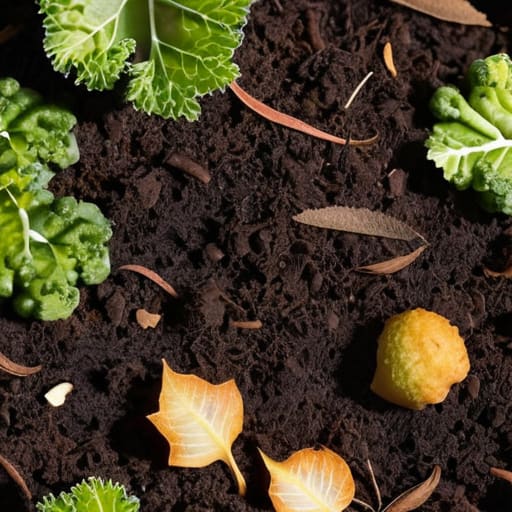
If you’ve ever opened your bin and been met with a smell that can only be described as “biological warfare,” you haven’t failed at composting; you’ve just accidentally thrown your nitrogen and carbon ratio composting out the window. In my field, we talk about nutrient cycling, but in a backyard pile, it’s much simpler: you are managing a diet. Think of your pile like a tiny, hungry organism. If you feed it nothing but nitrogen-heavy “greens”—those wet, nitrogen-rich kitchen scraps—it gets overwhelmed, turns into a slimy, anaerobic mess, and starts stinking.
To keep the microbes happy and the process aerobic, you need to balance those greens with “browns.” I’m talking about carbon-heavy materials like dried leaves, shredded cardboard, or even straw. The goal isn’t to reach some impossible mathematical perfection, but to ensure you aren’t just stacking wet food on top of more wet food. When I’m out surveying hedgerows, I see the result of this imbalance everywhere: soil that is either depleted or suffocated. In your garden, a healthy mix of green vs brown materials for compost is the difference between a pile that actively transforms waste and one that just sits there, rotting uselessly in the rain.
Field Notes for a Successful Pile: Five Things That Actually Matter
- Manage your moisture like a scientist, not a gardener; your pile needs to feel like a wrung-out sponge, because if it’s bone-dry, the microbes go dormant, and if it’s a swamp, you’re just inviting anaerobic bacteria to create a smell that will make your neighbours call the council.
- Don’t fear the “browns” (carbon-rich materials like dried leaves or shredded cardboard) as much as the headlines suggest; you need them to provide the structural scaffolding that allows oxygen to actually reach the center of the heap.
- Size matters for thermal mass, so stop trying to compost in a tiny bucket if you want real results; a pile needs a certain minimum volume to actually generate and hold the heat required to accelerate the breakdown process.
- Aeration is the difference between a biological engine and a rotting heap; you don’t need a specialized machine, but you do need to physically turn the pile occasionally to prevent the “dead zones” where oxygen can’t reach.
- Watch the indicators, not the clock; there is no magic number of weeks when compost is “done,” so look for the physical signs—the disappearance of original material and a dark, crumbly texture that smells like a forest floor—rather than following a generic timeline.
The Long Game of Rot
If you’ve been following along, you know that composting isn’t some magical alchemy; it’s just a managed version of what the earth is already doing. We’ve looked at how aerobic decomposition requires that delicate balance of oxygen to keep things from turning into a stinking, anaerobic mess, and why that nitrogen-to-carbon ratio is the actual engine driving the whole process. It isn’t about following a rigid recipe or getting every gram of sawdust perfect on your first try. It’s about understanding that you are essentially hosting a microscopic riot of bacteria and fungi, and your job is simply to provide the right conditions for them to do their work without suffocating.
I spend a lot of my time looking at soil health through a lens of what’s missing, and more often than not, it’s the life that should have been there. When you start a compost pile, you aren’t just “getting rid of waste”—you are actively participating in a nutrient cycle that has been broken in too many landscapes. It can feel slow, and sometimes it feels messy, but every handful of finished, dark compost is a tangible win for the biodiversity in your own backyard. Don’t wait for a perfect setup to start; just get the scraps in the bin and let the microbes take it from there.
