
I was standing knee-deep in a sodden, overgrown field margin last Tuesday, trying to distinguish a particularly nondescript Bombus terrestris from a smudge of mud, when I realized just how much the “land sparing vs. land sharing” debate has been stripped of its actual meaning. Everywhere you look, you see these high-level, academic arguments that treat the two concepts like they are some sort of abstract philosophical puzzle. But when you’re actually out here trying to figure out how land sparing and sharing differ in a way that actually stops a population from crashing, the nuance matters immensely. We have been conditioned to think it’s a simple binary—either we wall off nature or we weave it into our farms—but that’s a massive oversimplification that ignores how messy real ecosystems are.
I’m not here to give you a lecture filled with impenetrable jargon or to sell you on a single “silver bullet” solution. Instead, I want to look at what the survey data is actually telling us about where biodiversity survives and where it just… lingers. I’m going to break down the mechanics of both approaches, tell you exactly where the evidence is currently thin, and explain which strategy actually moves the needle for the species we are losing.
Table of Contents
- Beyond the Headlines Assessing Conservation Biology Land Use Strategies
- Land Use Efficiency vs Habitat Preservation What the Data Shows
- How to actually apply these strategies without losing your mind (or the bees)
- The Bottom Line: What This Actually Means for the Ground Beneath Our Feet
- So, Where Do We Actually Put the Bees?
Beyond the Headlines Assessing Conservation Biology Land Use Strategies
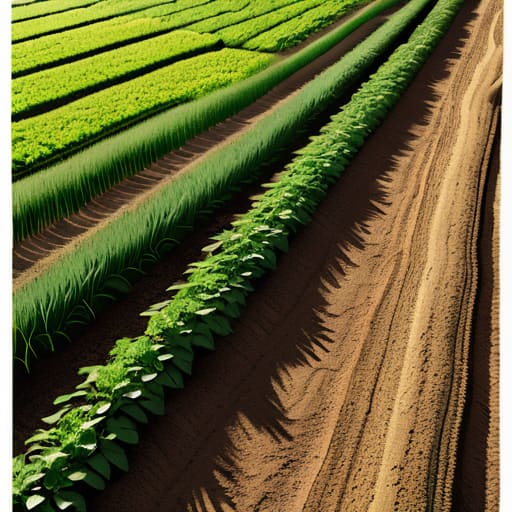
When you look at the actual papers, the debate between land sparing and land sharing isn’t just a theoretical tug-of-war; it’s a messy collision of agricultural intensification vs extensification. On one side, you have the sparing argument: let’s pack the calories into high-yield, high-tech zones so we can leave the rest of the world alone. It sounds clean. But in my field surveys, I see how “leaving land alone” isn’t a magic wand if that land is fragmented into tiny, disconnected islands that can’t support a viable population of anything larger than a ladybird.
Then there is the sharing side, which leans heavily into agroecology vs intensive agriculture. This is the idea that we weave nature into the production cycle itself. While it sounds lovely to imagine a patchwork of wildflower strips and hedgerows, the data on whether this actually stops the decline of specialist species is still incredibly thin. We talk a lot about the impact of farming on ecosystem services, but we often skip over the uncomfortable truth: sometimes, trying to do both results in doing neither well. We need to move past the slogans and start looking at where the biodiversity is actually sticking around.
Land Use Efficiency vs Habitat Preservation What the Data Shows
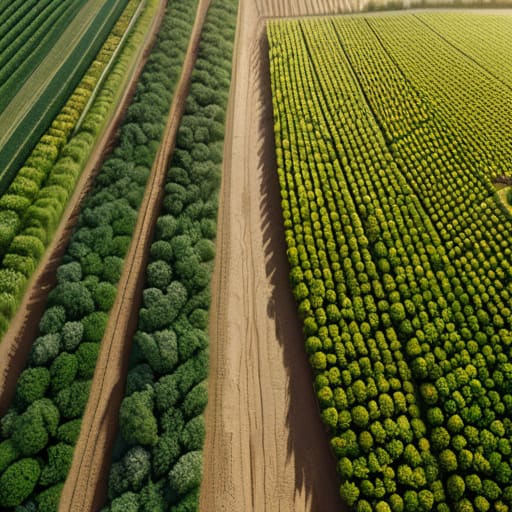
When we talk about land use efficiency versus habitat preservation, we’re essentially arguing over whether it’s better to pack all our food production into a tight, high-tech box or spread it out across the landscape. The data on this is messy, which is exactly why the headlines get it wrong. If we lean too hard into sustainable intensification for biodiversity, we might hit a ceiling where we can’t grow enough to feed everyone without encroaching on the very wild spaces we’re trying to protect. But if we go the other way, we risk a massive fragmentation of the landscape that leaves pollinators stranded in tiny, isolated islands of green.
The tension between agricultural intensification vs extensification isn’t just a theoretical debate for my thesis; it’s the difference between a connected ecosystem and a series of disconnected patches. Some studies suggest that high-yield, intensive plots actually allow us to leave more room for “true” wilderness elsewhere. Others argue that those high-yield zones become biological deserts that offer nothing to the surrounding landscape. We need to stop looking for a single “winner” and start looking at how these different management styles actually influence the movement of species through a corridor.
How to actually apply these strategies without losing your mind (or the bees)
- Stop treating “land sharing” like a magic wand for biodiversity. Just because you’re growing organic carrots in a wildflower meadow doesn’t mean you’ve solved the problem; if the yield per hectare drops too low, we end up needing more land overall, which is a net loss for the insects I spend my summers counting.
- Look for the “edge effects” in your data. Land sparing creates huge, contiguous blocks of habitat which are goldmines for specialist species that hate being disturbed, whereas land sharing creates a patchwork that’s great for generalists but can leave more sensitive pollinators stranded in tiny, disconnected islands.
- Prioritize “connectivity” over just “more green.” Whether you’re pushing for a massive nature reserve (sparing) or a network of garden hedgerows (sharing), the data shows that if a species can’t move between patches, those patches are just beautiful, isolated museums.
- Check the scale of the claim. When a study says land sparing is “better,” ask if they are talking about protecting a single rare beetle or managing an entire landscape. A strategy that works for a single specialist species might fail miserably when you’re trying to support a whole ecosystem.
- Don’t ignore the human element. Land sharing is often easier to sell to farmers and local communities because it integrates with their work, but we have to be honest about the trade-offs: we are essentially asking them to manage more complex, less “efficient” landscapes, and that requires more than just a good intention.
The Bottom Line: What This Actually Means for the Ground Beneath Our Feet
Stop looking for a single “correct” strategy; the data suggests we need a messy, high-resolution mix of both, rather than picking one side of the debate to win.
Land sparing works for specialists that need deep, undisturbed core habitats, but land sharing is what keeps the broader, more resilient matrix of the landscape from becoming a biological desert.
Conservation success isn’t just about how much land we set aside, but about the quality of the edges—the hedgerows, the margins, and the small patches where the actual movement of species happens.
So, Where Do We Actually Put the Bees?
At the end of the day, we have to stop treating the land sparing and land sharing debate like a binary choice where one side is “right” and the other is “wrong.” The data shows us that it isn’t a zero-sum game; it’s about scale and specific ecological needs. If we are trying to protect a specialist species that requires a massive, undisturbed core of ancient woodland, we need the high-intensity efficiency of sparing. But if we are looking at the fragmented, messy reality of our hedgerows and garden margins—the very places where I spend my rainy Tuesday mornings—then sharing that land through agroecology and diverse planting is what keeps the connectivity alive. We can’t afford to ignore the nuance of where specific species actually persist.
I know it’s easy to feel paralyzed by the sheer scale of the biodiversity crisis, but the solution isn’t found in a single, perfect policy. It’s found in the messy, complicated overlap of how we use every square meter of this planet. Whether you are a farmer managing a massive estate or someone just trying to decide between a manicured lawn and a patch of wildflowers, you are participating in this tug-of-war. We don’t need more simplified headlines; we need informed, local action that respects the complexity of the landscape. The insects aren’t waiting for a perfect consensus—they’re just waiting for a bit of space to exist.
