
I spent three hours last Tuesday knee-deep in a damp, muddy ditch in a Shropshire hedgerow, staring at a plastic pitfall trap that contained nothing but a single, very confused slug. It’s moments like those that make me realize how much the public discourse gets wrong about how ground beetles are studied. You see these sweeping headlines claiming “beetle populations are plummeting,” but they rarely mention the sheer, messy difficulty of actually getting a reliable count in a field that’s half-flooded or too dry to move. We aren’t just looking at spreadsheets; we are wrestling with unpredictable weather and the reality that a beetle might be right under your boot and still completely invisible to the data.
I’m not here to give you a sanitized, textbook version of ecology that ignores the grit. Instead, I want to pull back the curtain on the actual mechanics of fieldwork—from the specific way we set up traps to the reason why a single rainy week can completely skew a month’s worth of research. I’ll tell you what the surveys actually measure, where the methodology often falls short, and why the truth about these predators is usually found in the mud, not the headlines.
Table of Contents
Why Pitfall Trapping Isnt the Whole Story
If you ask a student what the standard way to monitor ground beetles is, they’ll almost certainly point to the pitfall trap—those little plastic cups buried flush with the soil. And they aren’t wrong; they are a staple of carabid beetle biodiversity monitoring. But if I spent my entire PhD relying solely on pitfall traps, my data would be a lie. The problem is that these traps are essentially “passive” collectors. They rely on a beetle wandering into a hole, which means we are only ever sampling the individuals that are actively moving through the top layer of the substrate at that specific moment.
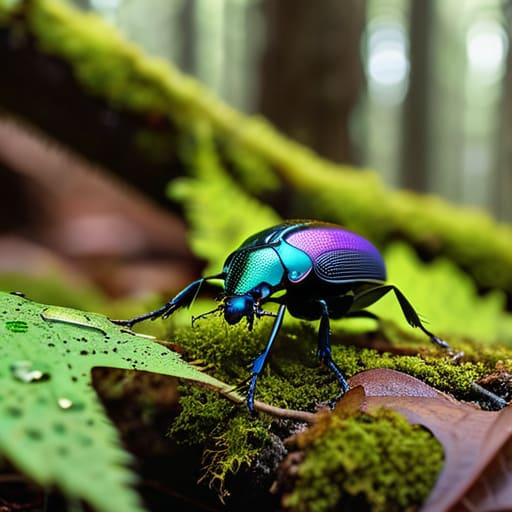
We also have to account for the fact that pitfall traps are notoriously biased toward certain life stages and species. A trap might catch a heavy-bodied, wandering Carabus violaceus with ease, but it’s going to completely miss the smaller, more secretive species that prefer to stay tucked under leaf litter or deep within the soil profile. If we don’t supplement our work with other entomological sampling techniques, we aren’t actually seeing the community; we’re just seeing the most visible members of it. It’s a distinction that matters immensely when we try to assess whether a specific management change is actually helping or if we’re just seeing a temporary spike in movement.
The Nuance of Carabid Beetle Biodiversity Monitoring
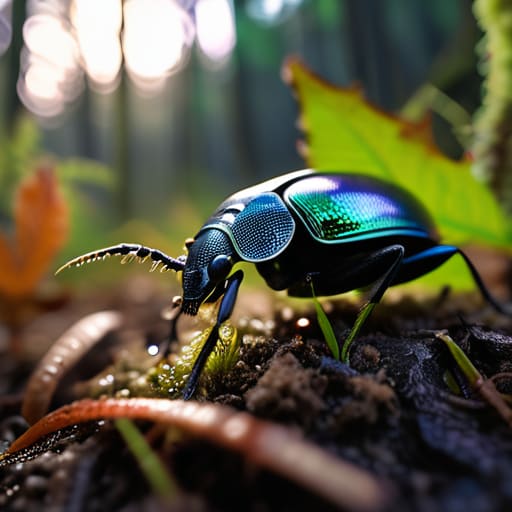
When we talk about carabid beetle biodiversity monitoring, the temptation is to look for a single “magic number” that tells us if a habitat is healthy. But a single sweep of a pitfall trap or a night of collection doesn’t give you a census; it gives you a snapshot, often a blurry one. If I’m surveying a hedgerow, I’m not just looking for the presence of a species, I’m trying to understand the predatory insect population dynamics at play. Is a sudden spike in a specific species a sign of a thriving ecosystem, or is it a response to a recent disturbance that has wiped out their competitors?
This is where the nuance gets messy. You have to account for things like micro-climates and even the timing of your sampling. For instance, if you’re using certain nocturnal insect collection methods during a particularly dry spell, you might conclude a site is “empty” when, in reality, the beetles are simply deeper in the soil to avoid desiccation. We aren’t just counting bugs; we are trying to interpret a complex, moving target where the data is only as good as our understanding of the context.
What to actually look for when you’re out in the field
- Check the weather, not just the calendar. You can set a perfect row of pitfall traps, but if it’s been a week of scorching heat or a month of sodden soil, you aren’t measuring population trends; you’re just measuring how much the beetles are hiding from the elements.
- Look for the Carabus violaceus (Violet Ground Beetle) and its relatives, but don’t ignore the tiny stuff. If you only record the big, shiny ones that are easy to spot, your data is skewed toward the “celebrities” of the beetle world and ignores the functional backbone of the ecosystem.
- Map the micro-habitats, not just the field. A single patch of bare earth versus a patch of dense leaf litter can change your catch by an order of magnitude, so you have to record the texture of the ground as carefully as the beetle itself.
- Understand that “zero” is still a data point. In many surveys, the most important thing you’ll find is an empty trap, because it tells you something critical about the soil moisture or the lack of prey, even if it feels like a wasted afternoon.
- Stop treating every sighting like a definitive trend. One season of high numbers in a specific hedgerow margin might look like a recovery, but until you’ve seen it hold up over three or four years, it’s just a snapshot of a single moment in time.
What to actually remember about carabid monitoring
Pitfall traps are a standard tool, but they aren’t a magic bullet; they tell us who is moving through a specific spot, not necessarily the full story of a population’s health or its ability to fly between habitats.
Biodiversity isn’t just a high number of species; it’s about the right kind of species, which is why we have to look closely at functional groups rather than just counting heads.
Good conservation relies on long-term, consistent data rather than one-off snapshots, because a single season of bad weather can make a thriving population look like it’s crashing.
Beyond the Data Sheets
When we look at the methodology, it is easy to get lost in the technicalities of pitfall trap diameters or the statistical weight of a single transect. But the reality is that studying Carabidae—ground beetles, for those of us not currently elbow-deep in soil—is a constant negotiation between what we can measure and what we can actually see. We have seen that relying on a single trapping method gives us a skewed, almost caricatured version of the truth. To really understand if a population is thriving or just hiding from a dry spell, we need a toolkit that combines physical trapping with more nuanced, long-term monitoring. It is about recognizing that a single data point is rarely a trend.
Ultimately, the reason we obsess over these tiny, often overlooked hunters is that they are the pulse of the soil. They are the first to react when a field margin becomes too manicured or a hedgerow loses its structural integrity. If we want to move past the doom-scrolling headlines and actually do something meaningful, we have to start by valuing the accuracy of the small things. Whether you are a PhD student mapping biodiversity or someone just deciding not to mow your lawn this weekend, remember that conservation isn’t just about grand gestures; it is about protecting the complexity that happens right beneath our feet.
