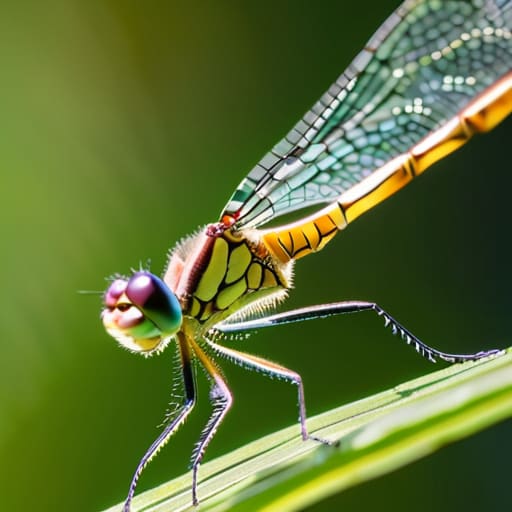
I was halfway through a particularly miserable transect last July, soaked to the bone and shivering in a damp hedgerow, when a Bombus terrestris—the common buff-tailed bumblebee—decided to hover right in front of my face. I sat there, staring at those wings, realizing that every “revolutionary” pop-science article I’d read that month had completely glossed over the actual physics of what I was seeing. Most people think understanding how insect flight works is just about flapping harder or faster, but the reality is a chaotic, beautiful mess of fluid dynamics that most headlines simplify until they’re basically useless.
I’m not here to give you a lecture filled with impenetrable jargon or to pretend that we have every single variable of wing-beat frequency mapped out perfectly. Instead, I want to walk you through the actual mechanics—the way these tiny bodies manipulate air to stay airborne without looking like they should be able to. We’re going to look at what the research actually tells us about lift and drag, and I’ll be honest about where the science is still a bit thin. No hype, just the evidence-led reality of how these creatures defy gravity every single day.
Table of Contents
The Aerodynamics of Insect Wings vs Sensationalist Headlines
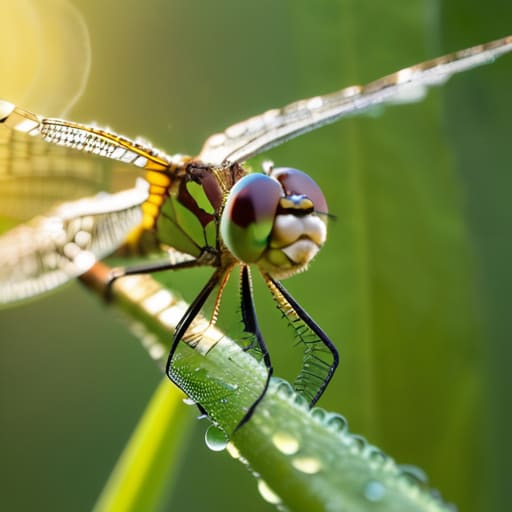
Every time a new paper drops about how insects “defy physics,” the headlines act like we’ve just discovered magic. They love to frame it as a total mystery, but the reality is actually much more interesting—and much more grounded in mechanics. When we talk about the aerodynamics of insect wings, we aren’t looking at a miniature version of a Boeing 747. Instead, we’re looking at how tiny organisms manipulate air at a scale where air feels more like a thick syrup than a gas.
The media often skips over the actual biological engine driving this. It isn’t just “magic flapping”; it’s the result of incredibly precise thoracic muscle contraction. In many species, specifically those with asynchronous flight muscles, the muscles don’t even need a direct nerve impulse for every single stroke. They respond to the stretching of the thorax itself, allowing for a much higher wing beat frequency than a standard nervous system could coordinate. It’s not a miracle; it’s a highly efficient, specialized piece of biological engineering that we are only just beginning to model accurately.
Why Airfoil Shape in Insects Is More Than Just Geometry
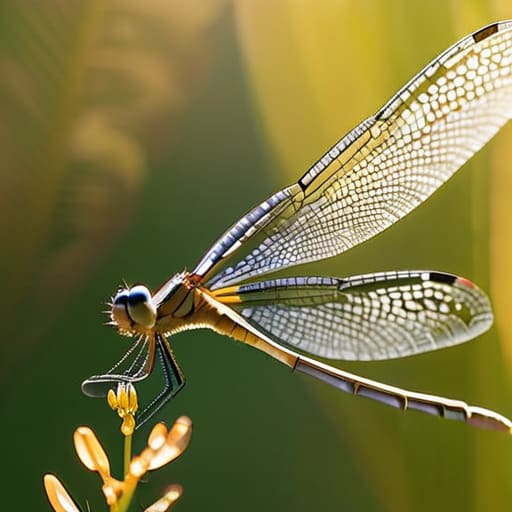
When we look at a dragonfly or a hoverfly, it’s easy to get distracted by the symmetry and assume the airfoil shape in insects is just a pretty, streamlined design. But in my field work, when I’m trying to track how certain species navigate patchy hedgerow margins, I’m reminded that geometry is only half the story. It isn’t just about the curve of the wing; it’s about how that shape interacts with the chaotic, turbulent air of a garden or a meadow.
The real magic happens because of the link between that shape and the internal mechanics of the insect. For many of the more agile fliers I study, the movement isn’t a simple flap-flap-flap. It involves incredibly complex asynchronous flight muscles that allow for a much higher wing beat frequency than a human-designed drone could ever mimic. This allows them to manipulate the air around the wing edge, creating tiny vortices that provide lift even when they are hovering in a light breeze. It’s a highly specialized, high-energy way of living that makes their survival incredibly dependent on the specific microclimates we are currently losing.
Beyond the Buzz: 5 Things to Actually Look For When You're Watching Them Fly
- Hymenoptera (the bees and wasps) don’t just flap; they use a “clap-and-fling” mechanism. They actually slam their wings together at the top of the stroke to create tiny vortices that suck them upward. If you’re watching a bumblebee, you aren’t just seeing wing movement; you’re seeing a masterclass in high-frequency fluid dynamics that most textbooks oversimplify.
- Stop looking for “gliding” in small insects. Most of the species I survey in hedgerow margins are essentially powered-flight machines that spend almost zero time coasting. Because they operate at such a low Reynolds number—which is just a fancy way of saying the air feels as thick as syrup to them—they have to work constantly to overcome the drag that would be negligible for a bird.
- The role of the halteres in Diptera (true flies) is often ignored in general nature writing. These are tiny, knob-like structures that act as gyroscopes. They don’t provide lift, but they tell the fly exactly where “up” is in real-time. Without that sensory feedback, their ability to navigate through dense, messy vegetation would be non-existent.
- Wing loading is a better metric for understanding survival than just “wing size.” It’s the ratio of body mass to wing area. I see this constantly when comparing different pollinators; a heavy-bodied bee has a completely different energetic cost for flight than a lightweight moth, which dictates exactly which flowers they can actually reach and how long they can forage before they’re exhausted.
- We need to talk about the “unsteady” nature of their aerodynamics. Most of our intuition about flight comes from steady-state aerodynamics (like a plane wing), but insect flight is almost entirely “unsteady.” They rely on the turbulence they create in the millisecond before the next stroke. It’s chaotic, it’s messy, and it’s much more impressive than a headline about “efficient flight” would ever suggest.
The Reality Check: What We Actually Know About Insect Flight
We need to stop treating “insect flight” as a single, monolithic thing; the way a Bombus terrestris (buff-tailed bumblebee) maneuvers through a dense hedgerow is fundamentally different from how a dragonfly holds position in open air, and our conservation strategies need to reflect that mechanical diversity.
While headlines love to claim we’ve “unlocked the secret” to insect movement, the truth is that most of our understanding comes from high-speed imaging of a few specific species, meaning we are still very much guessing when it comes to the flight mechanics of the smaller, less-studied pollinators that actually hold our ecosystems together.
Understanding the physics of how a wing creates lift isn’t just an academic exercise—it’s the only way we can move past vague “habitat creation” and start designing specific floral architectures that account for the actual energy costs of flight for different insect groups.
Beyond the Physics
When we strip away the hyperbolic headlines, we’re left with something much more impressive than a “miraculous” discovery: we are left with highly refined, evolutionary engineering. We’ve looked at how the leading-edge vortex allows a tiny Hymenoptera—that’s your bees and wasps—to generate lift that defies standard fixed-wing aerodynamics, and how the specific geometry of a wing isn’t just a shape, but a dynamic tool. Understanding these mechanics matters because it moves the conversation from “insects are magic” to “insects are functional components of a physical system.” If we want to protect them, we have to stop treating their movement as a mystery and start respecting it as a precision-engineered necessity for their survival.
Ultimately, knowing how they fly doesn’t change the fact that we are losing the very creatures that master the air. Whether it is a hoverfly navigating a garden or a moth finding a light trap in a hedgerow, their ability to move through our changing landscapes is being squeezed by habitat fragmentation and climate shifts. I don’t want to just write about the physics of a wingbeat; I want us to care about the living organism that uses it. We don’t need more sensationalism to justify conservation; we just need to look a little closer at the incredible, complex reality of the small things that keep our world in motion.
