I once spent four hours in a muddy field in Gloucestershire, knee-deep in a drainage ditch, trying to explain to a well-meaning volunteer that we couldn’t just “count the worms” and call it a day. There is this pervasive, almost comforting myth that knowing how soil biodiversity is measured is as simple as digging a hole and seeing what wiggles. People want a single, tidy number—a “biodiversity score” they can pin to a garden plan—but the reality is a messy, microscopic chaotic sprawl that doesn’t care about our desire for simplicity. When you move past the headlines, you realize that how soil biodiversity is measured is actually a fight against scale, from DNA sequencing in a sterile lab to the brute-force physical sorting of fungal hyphae and microarthropods.
I’m not here to sell you on a magic metric or a high-tech gadget that promises to solve everything. Instead, I want to pull back the curtain on the actual methodological grit required to understand what’s happening under our boots. I’ll walk you through the difference between seeing a species and understanding a system, and I’ll be honest about where our current tools fall short of the truth.
Table of Contents
The Messy Reality of Soil Fauna Community Composition

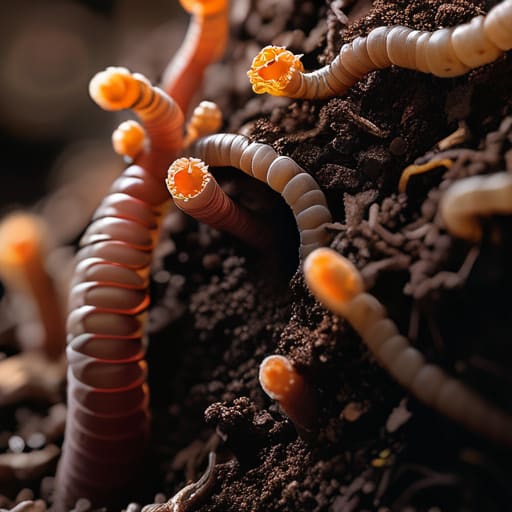
The problem with looking at soil biodiversity as a single number is that it ignores the actual chaos happening under our boots. We often talk about “soil health” as if it’s a monolithic thing, but soil fauna community composition is less like a steady choir and more like a frantic, shifting crowd in a subway station. You might have a massive population of Collembola (springtails) providing excellent fragmentation services, but if your nematode ratios are skewed because of a recent nitrogen spike, the whole system is functionally different. You can’t just average them out and call it a day.
This is where the tech gets exciting, but also where the “headline science” tends to overpromise. We’re seeing a massive shift toward DNA metabarcoding soil organisms, which allows us to see the tiny players we used to miss entirely. It’s brilliant for identifying who is actually there, but a sequence on a screen isn’t the same as a living, breathing ecosystem. Knowing a specific mite species exists in a sample is one thing; understanding if it’s actually performing its role in the nutrient cycle is a much more complicated, messy question.
Why Soil Respiration Rates Measurement Tells Only Half the Story
We often see papers touting soil respiration rates measurement as a silver bullet for gauging ecosystem vitality. The logic is straightforward: more CO2 coming out of the ground usually means more metabolic activity, which we equate to “health.” But if you’ve ever spent a week in a damp field, you know biology isn’t that linear. High respiration can just as easily indicate a massive, temporary spike in decomposition from a sudden influx of organic matter, or even the stress response of a community struggling to survive a drought. It tells you the engine is running, but it doesn’t tell you if the car is actually going anywhere.
To get a real sense of what’s happening beneath our boots, we have to look past the gas exchange and move toward more granular data. Relying solely on breath counts ignores the actual players in the game. This is why I find myself leaning more on metagenomic sequencing soil health protocols or even simple DNA metabarcoding to see who is actually present. You can have high respiration in a system that is functionally hollow, lacking the complex interactions that actually drive long-term nutrient cycling.
Five Things to Look For When the Data Gets Complicated
- Stop looking for a single “biodiversity score.” If a study says soil health is up, ask if they mean they found more of the same three species, or if they actually saw a shift in functional groups. A high count of one dominant nematode isn’t a win; it’s just a census of a monoculture.
- Check the sample depth. If someone tells you the soil is “rich” based on a surface scrape, they’re ignoring the entire vertical architecture of the ecosystem. You can’t understand the community if you aren’t looking at what’s happening ten, twenty, or thirty centimetres down.
- Demand to see the extraction method. Are they using Berlese funnels to shake the bugs out, or are they just doing DNA metabarcoding? DNA is incredible for seeing what could be there, but it doesn’t tell you if those organisms are actually active, feeding, or just drifting bits of genetic code in the dirt.
- Watch out for the “seasonal snapshot” trap. I’ve seen papers claim a plot is “depauperate” because they sampled it in a dry July. Soil communities fluctuate wildly with moisture and temperature; one afternoon of sampling isn’t a longitudinal study, it’s just a weather report.
- Look for functional traits, not just names. It’s much more useful to know if you have a balanced mix of decomposers, predators, and engineers (like earthworms) than to have a list of twenty species names that nobody can pronounce. The names are for the journals; the functions are what actually keep the field margin alive.
What to actually remember when the headlines start shouting
Measuring soil health isn’t a single “score”; you can’t just look at respiration rates and assume the ecosystem is thriving, because a spike in CO2 might just mean a few microbes are working overtime while the rest of the community is collapsing.
Community composition matters more than raw numbers, meaning we need to stop looking for “more life” in general and start looking for the specific, functional groups of organisms that actually keep the nutrient cycles turning.
Beware the “silver bullet” study; because soil is incredibly heterogeneous, a finding in one patch of woodland tells you very little about a field margin, so we have to treat localized data with a healthy dose of caution.
Beyond the Lab Report
We have to stop treating soil biodiversity like a single, static number we can just plug into a spreadsheet. As we’ve seen, looking at respiration rates alone is like trying to understand a city by only measuring how much electricity it uses; you get a sense of the scale, but you miss the actual people living in the houses. Whether we are analyzing microbial counts or the complex community composition of macrofauna, the truth is that measurement is a spectrum. We need to move away from the urge to find one “silver bullet” metric and instead embrace a more holistic, multi-layered approach that acknowledges the inherent messiness of the underground world.
I know that sounds complicated, and maybe a little bit exhausting, but that is exactly why we can’t settle for the easy headlines. If we want to actually protect these systems, we have to respect the nuance of the data, even when the evidence feels thin or the methodologies feel imperfect. Conservation isn’t built on certainty; it is built on accurate observation. When we stop looking for easy answers and start looking at the actual, granular reality of the dirt, we finally start making decisions that actually work for the organisms living beneath our feet.
