I was standing in a tiny, neglected patch of brambles behind a row of council flats last Tuesday, trying to record a sighting of Agrotis exclamationis—the Heart and Dart moth—while a bus roared past and sprayed grit onto my notebook. Most people look at a city lot like that and see a “biological desert,” a broken landscape that’s failed. But if you actually bother to look at the data, you realize that’s a massive oversimplification. Understanding how urban ecology differs from the pristine hedgerows I study for my doctorate isn’t about finding “untouched” nature; it’s about recognizing that cities are high-stakes, high-speed experiments where the rules of survival are being rewritten in real-time.
I’m not here to give you the polished, academic version of this story, nor am I going to spout the usual alarmist nonsense that everything is dying. Instead, I want to show you what the surveys are actually telling us about these fragmented habitats. I promise to break down the messy reality of how heat islands and artificial light change the game, and more importantly, which small, specific interventions in your own backyard actually move the needle for local populations.
Table of Contents
Decoding Urban Biodiversity Patterns Amidst Anthropogenic Environmental Cha
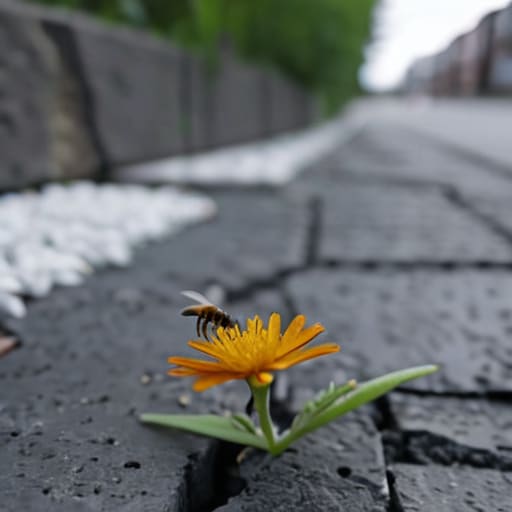
When we talk about urban biodiversity patterns, the conversation usually defaults to a binary: the city is a concrete desert, or the city is a green oasis. The reality is much messier. What I see when I’m out surveying is that we aren’t just dealing with a lack of space, but with the intense fragmentation of urban landscapes. It’s not just that a park is separated from a woodland by a dual carriageway; it’s that the “islands” of habitat in between are often too small or too chemically hostile to support a viable breeding population. You might see a single species of solitary bee in a backyard, but if there isn’t a connected corridor of nectar-rich margins, that individual is effectively on a biological dead end.
We also have to account for the way human-driven ecological shifts alter the very physics of a site. I’m constantly looking at how urban microclimates and wildlife interact; a city isn’t just a collection of buildings, it’s a heat engine. That extra few degrees of warmth in a brick-lined alleyway can trick an insect into emerging from pupation weeks too early, before its food source has even bloomed. It’s these subtle, cascading mismatches that actually define urban life.
Why Fragmentation of Urban Landscapes Isnt Always a Death Sentence

We’ve all seen the diagrams: a massive, healthy green blob being sliced into tiny, isolated squares by roads and housing estates. In most textbooks, the fragmentation of urban landscapes is presented as a straight line toward local extinction. And look, if we’re talking about large mammals or flightless beetles, that’s often a fair assessment. But if you spend enough time watching a Polyommatus icarus—the Common Blue butterfly—navigate a suburban garden, you realize the story is much more nuanced.
Urban environments aren’t just “broken” versions of the countryside; they are complex mosaics. While a motorway is a genuine barrier, a well-placed row of lavender or even a neglected patch of clover in a roundabout can act as a vital stepping stone. These small pockets allow species to move through the grey, turning a series of disconnected islands into a functional network. It’s not about having one giant forest; it’s about how well the micro-habitats connect to facilitate movement. When we focus solely on the gaps, we miss the way certain resilient species actually leverage these human-driven ecological shifts to find new niches.
Five Ways to Stop Treating Cities Like Ecological Deserts
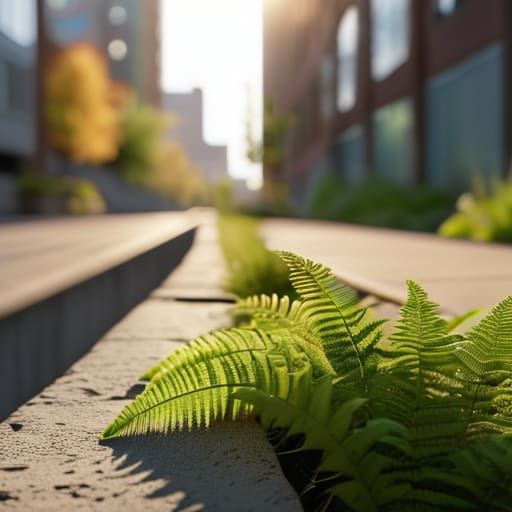
- Stop looking for “pristine” habitats. In my fieldwork, I’ve learned that a manicured park is often less useful to a specialist than a neglected, slightly messy railway embankment. Urban ecology isn’t about finding untouched nature; it’s about identifying the “accidental” habitats—the cracks in the pavement and the overgrown alleyways—that actually hold the most functional biodiversity.
- Watch the heat, not just the green. We talk a lot about “green space,” but in a city, the Urban Heat Island effect is a massive driver of species distribution. You might see a specific beetle species thriving in a downtown courtyard not because the plants are better, but because the concrete is holding onto warmth long after the sun goes down. Temperature, not just vegetation, dictates who lives where.
- Accept the “Generalist Takeover.” If you go into a city expecting to see the same rare specialists you find in a deep woodland, you’re going to be disappointed. Urban environments heavily favor generalists—species that can handle a wide range of food sources and temperature swings. It’s not a “loss” of life so much as a massive shift in the type of life, and we need to get better at measuring that shift rather than just mourning the specialists.
- Recognize the “Connectivity Paradox.” We often assume a continuous hedge is better than a series of disconnected gardens, but in a city, a single well-placed “stepping stone” garden can be more vital than a long, narrow strip of grass that gets cut every Tuesday. For a pollinator, a patch of lavender on a third-floor balcony is a legitimate waypoint in a fragmented landscape.
- Measure what actually happens, not what the map says. A GIS map might show a large green space in the center of a city, but if that space is surrounded by high-intensity light pollution or heavy pesticide use in the surrounding residential plots, its ecological value drops significantly. To understand urban ecology, you have to look at the invisible barriers—light, noise, and chemicals—that a satellite can’t see.
What to actually look for when you're stepping outside
Stop treating “nature” and “city” as a binary. An urban garden isn’t just a broken version of a meadow; it’s a unique ecosystem where a single, well-placed patch of nectar-rich weeds can act as a vital stepping stone for a pollinator that would otherwise be stuck in a concrete dead-end.
Biodiversity isn’t just about the number of species you see, but how they move through the space. We need to stop measuring success by how many “charismatic” bugs show up and start looking at whether the landscape actually allows for movement and genetic exchange between isolated green pockets.
Be skeptical of the “green desert” narrative. While massive concrete expanses are obviously bad, even small-scale human interventions—like leaving a patch of brambles unclipped or letting the clover grow in the lawn—can create micro-habitats that provide measurable, real-world support for local insect populations.
Moving Beyond the Concrete Divide
We have to stop treating cities as biological voids and start seeing them as high-stakes, high-complexity experiments. As we’ve looked at, urban ecology isn’t just a “diluted” version of the countryside; it is a distinct system governed by heat islands, fragmented corridors, and human-mediated resource pulses. While fragmentation can certainly isolate populations, the way species adapt to these patches—sometimes finding refuge in a single, well-placed community garden—shows that resilience is rarely a monolith. The data suggests that while we can’t expect a city to mirror a primary forest, we can certainly expect it to host a dynamic, albeit different, ecological reality if we stop viewing every paved surface as a total loss.
If there is one thing I have learned from years of counting pollinators in the gaps between development, it is that conservation doesn’t always require a massive national park to be meaningful. It requires us to stop waiting for perfect, pristine habitats and start working with the messy, interconnected reality we actually have. When you plant a nectar-rich patch or leave a corner of your garden to go to seed, you aren’t just making a small gesture; you are participating in a crucial, urban-scale network. We don’t need to wait for the concrete to disappear to make room for life; we just need to design the gaps better.
