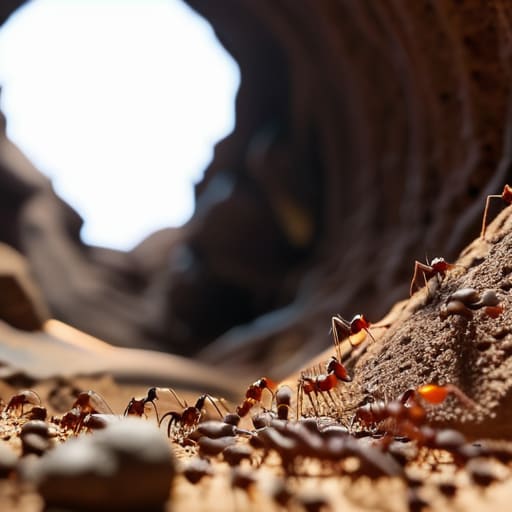
I was knee-deep in a damp patch of woodland last August, trying to map a Lasius niger mound without losing my footing in the mud, when I realized how much we get wrong about social insects. We love to use words like “intelligence” and “command” when discussing how ants organise colonies, as if there’s some tiny, uniformed general standing in the middle of the mound shouting orders through a megaphone. It’s a seductive metaphor, but it’s biologically lazy. When you actually sit in the dirt and watch the chemical trails being laid, you see that there is no central plan; there is only a messy, decentralized chaos that somehow results in perfect efficiency.
I’m not here to give you a lecture on “superorganism theory” that reads like a textbook written in a basement. Instead, I want to show you what the actual field data suggests about how these tiny systems function without a boss. We are going to look at the difference between perceived order and actual biological feedback loops, and I’ll be honest about where the science is solid and where we’re mostly just making educated guesses.
Table of Contents
The Nuanced Reality of the Queen Ant Reproductive Role
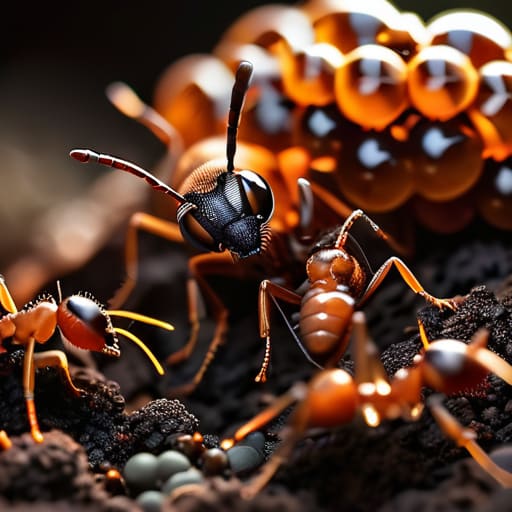
We tend to picture the queen as some kind of absolute monarch, sitting on a throne while issuing decrees to her subjects. It makes for a great metaphor, but if you’ve ever spent an afternoon observing a colony through a clear formicarium, you know that isn’t how it works. The queen ant reproductive role isn’t about leadership in the political sense; it’s more about biological output and chemical signaling. She doesn’t “command” the workers to clean the nursery or forage for nectar. Instead, she is the physiological engine of the nest, and her presence is maintained through complex ant pheromone communication that tells the rest of the colony that the reproductive core is healthy and active.
The real “management” happens through a decentralized, almost chaotic feedback loop. The division of labor in ant nests is driven by the workers themselves, responding to immediate environmental cues and the specific needs of the larvae. If a worker encounters a high-quality food source, she doesn’t wait for a royal permit to exploit it; she reacts to the chemical signals of her peers. It’s less a top-down hierarchy and more of a highly responsive, distributed network where the queen provides the continuity, but the workers provide the intelligence.
Deciphering Complex Ant Colony Social Structure Through Data
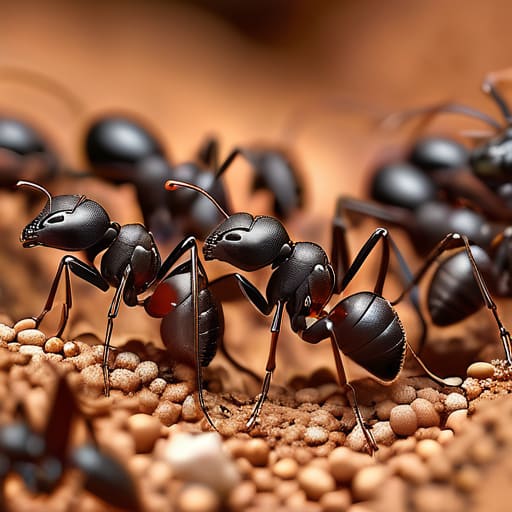
When we look at the data coming out of modern lab studies, the idea of a rigid, top-down command structure starts to fall apart. In many ways, we’ve been taught to look for a “boss,” but the actual division of labor in ant nests is far more decentralized than that. Instead of following orders, individuals respond to local chemical cues and the immediate needs of the nest. It’s less like a military operation and more like a massive, uncoordinated group chat where everyone is reacting to the same notifications at once.
This is where ant pheromone communication becomes the real driver of the system. We often try to map out a strict social insect hierarchy, but the data suggests that most roles are fluid. A worker might transition from foraging to brood care not because she was told to, but because the specific chemical concentration in her immediate vicinity shifted. It’s a messy, reactive feedback loop. When I’m out in the field, I’m always reminded that what looks like a coordinated movement is often just a series of highly localized responses to a changing environment.
Beyond the Hive Mind: 5 Realities of Ant Social Dynamics
- Stop thinking of the queen as a micromanager. In Formica rufa or even the common garden ant, the queen is essentially a specialized reproductive unit, not a general. She doesn’t issue commands; she just provides the genetic engine that keeps the colony’s demographics stable.
- Decentralization is the actual secret to their success. Most ant colonies function through simple local rules—if an ant hits a certain chemical threshold of pheromone, she changes task. There is no “manager” ant overseeing the shift from foraging to nest maintenance; it is a messy, reactive feedback loop.
- Task switching is more fluid than most people realize. We often talk about “worker castes” as if they are permanent jobs, but depending on the nutritional state of the larvae or the temperature of the nest, an individual worker might shift from brood care to foraging in a single afternoon.
- Chemical signaling is not a perfect blueprint. While we often treat pheromone trails as “highways,” the data shows they are actually quite noisy and prone to error. A colony survives not because the signals are perfect, but because the collective response to those errors is robust enough to correct itself.
- Environmental noise dictates social flexibility. A colony’s organizational structure isn’t a static blueprint; it’s a constant negotiation with the environment. If a sudden rainstorm disrupts foraging, the colony doesn’t follow a pre-set emergency protocol—it reallocates resources based on the immediate, chaotic sensory input available at the nest entrance.
What the Data Actually Tells Us
We need to stop viewing the queen as a “commander” in a military sense; the data shows she is more of a reproductive engine whose presence is vital, but she doesn’t actually issue orders or dictate the colony’s daily logistics.
Colony organization isn’t a top-down hierarchy but a decentralized, messy series of local interactions where individual workers respond to chemical and physical cues in real-time.
When we look at the numbers, “social structure” is often just a way for us to categorize what is actually a highly fluid, reactive system that shifts constantly based on food availability and environmental stress.
Beyond the Colony Architecture
When we step back from the simplified models of “queen vs. worker,” we see that ant organization isn’t a top-down command structure, but a massive, decentralized calculation. We’ve looked at how the reproductive role of the queen is more about biological continuity than dictating daily tasks, and how the data suggests that what looks like “orders” are actually just individual ants responding to chemical gradients and local cues. It is a system built on distributed intelligence, where the “organization” emerges from the messy, uncoordinated movements of thousands of individuals. Understanding this distinction is vital; if we treat them like a tiny, rigid army, we miss the fluidity that actually allows them to survive environmental shifts.
It is easy to look at a sidewalk crack and see a nuisance, but if you take a moment to observe the sheer complexity of their social logic, you realize you are looking at one of the most successful survival strategies on the planet. We don’t need to solve the mystery of every pheromone trail to appreciate the scale of what is happening under our feet. Instead, I think we should focus on protecting the unbroken soil and the messy margins where these complex systems actually function. If we can learn to value the subtle, invisible work of these tiny architects, we might stand a better chance of preserving the ecological stability they provide for all of us.
