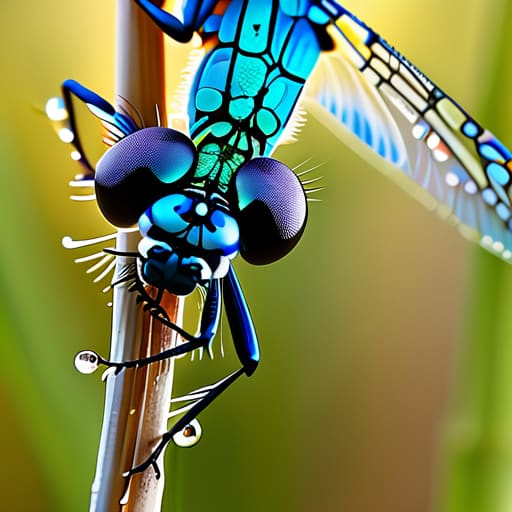
I spent three hours last Tuesday standing hip-deep in a stagnant drainage ditch, swatting away midges and trying to keep my data sheets from turning into papier-mâché in the drizzle. It wasn’t exactly the “majestic aerial dance” you see in nature documentaries, but it’s where the real work happens. People tend to romanticize Odonata as these shimmering, high-speed symbols of purity, but when we actually talk about the role of dragonflies in natural ecosystems, we need to move past the pretty pictures. They aren’t just garden ornaments; they are aggressive, highly specialized predators that function as a crucial biological check on smaller insect populations.
I’m not here to give you a lecture filled with impenetrable jargon or to tell you that seeing one dragonfly means your pond is a perfect paradise. Instead, I want to look at what the survey data actually shows us about how these insects move through a landscape. We are going to strip away the hype and look at the messy reality of their life cycles—from the predatory larvae lurking in the silt to the adults patrolling the margins—so you can understand what they actually contribute to the patch of wildness you call a garden.
Decoding the Food Web Dynamics of Odonata
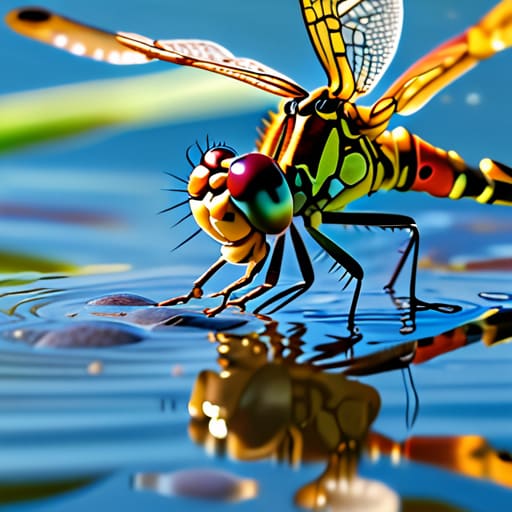
To understand the food web dynamics of Odonata, you have to stop looking at them as just “pretty flies” and start seeing them as high-performance interceptors. They occupy a unique dual-role niche because their life cycle spans two entirely different worlds. As larvae—or nymphs—they are aggressive, sit-and-wait predators lurking in the benthos, while the adults are aerial specialists. This means they aren’t just participating in a food web; they are actively reconfiguring it. They exert significant top-down pressure on smaller invertebrates, acting as one of the most efficient forms of insect predators in aquatic ecosystems.
When we look at the data, the most immediate way they influence human environments is through their impact on mosquito populations. It is tempting to frame this as a simple “good vs. bad” binary, but the reality is more nuanced. They aren’t a silver bullet for pest management, but they do provide measurable natural pest control benefits by keeping certain dipteran numbers in check. However, for this mechanism to work, the habitat has to be stable. If the water quality drops, the nymphs go first, and the entire regulatory loop breaks down.
Why They Are Reliable Bioindicators of Water Quality
When people talk about using dragonflies as bioindicators of water quality, they often treat it like a magic trick—as if seeing a single Anisoptera means the pond is pristine. It’s more nuanced than that. Because of the specific way the dragonfly life cycle and habitat are linked, these insects are essentially living sensors. They spend the vast majority of their lives as aquatic larvae, or nymphs, breathing through gills and sitting in the benthos. If the dissolved oxygen levels drop or heavy metal concentrations spike, they don’t just “move elsewhere”; they die.
This makes them incredibly useful for long-term monitoring, but we have to be careful with how we interpret the data. A sudden absence of certain species doesn’t always mean the water is toxic; it might mean the macrophyte density—the underwater plants they hide in—has shifted. However, when we see a stable, diverse community of these predators, it tells us the entire chemical and structural foundation of that aquatic ecosystem is holding steady. They aren’t just pretty faces on a summer afternoon; they are the biological proof of a functional, oxygenated environment.
Beyond the Pretty Wings: How to Actually Support Odonata
- Stop focusing solely on the adult dragonflies you see darting around your garden; the real work happens underwater. If your pond lacks submerged vegetation—the structural “furniture” for larvae to hide in—you aren’t providing a habitat, you’re just providing a temporary pit stop.
- Prioritize native riparian planting over manicured edges. Libellulidae (skimmers) and other dragonfly families need specific emergence sites, usually undisturbed muddy banks or reed beds, to climb out of the water and shed their larval skins. If you’ve paved the pond edge with stone, you’ve broken the life cycle.
- Manage your water quality with data, not just “natural” intuition. Because Odonata are sensitive to dissolved oxygen and chemical runoff, a “clean-looking” pond can still be a biological desert if nitrogen levels from lawn fertilizers are spiking.
- Create “stepping stone” habitats. I see people build incredible, isolated ponds that act like islands in a sea of concrete. To support movement and genetic diversity, you need to encourage a network of smaller, wetter patches in the landscape so they can actually migrate between larger water bodies.
- Resist the urge to “clean” your pond every spring. That layer of decaying organic matter and leaf litter is exactly where the prey lives. If you strip a pond to the bare liner, you’re effectively removing the pantry from the kitchen.
Moving Beyond the Glittering Wings
At this point, we have to move past the idea that dragonflies are just pretty, iridescent ornaments for our summer ponds. The data shows they are active, high-stakes players in their environments, acting as both specialized predators that keep insect populations in check and as living sensors for the chemical health of our waterways. When we see a decline in Odonata, it isn’t just a loss of aesthetic beauty; it is a signal that the complex web of energy transfer and water quality in that specific habitat is actively fracturing. We can’t afford to ignore the nuance of what their presence—or absence—actually tells us about the stability of the ecosystem.
If there is one thing I’ve learned from years of standing in muddy margins, it’s that conservation isn’t won through grand, sweeping gestures that look good in a press release. It is won in the small, unglamorous details: protecting a single patch of reeds, reducing runoff from a nearby field, or ensuring a pond doesn’t become a sterile concrete basin. We don’t need more alarmist headlines; we need a ground-level commitment to the messy, complicated reality of habitat management. If we can get the water right, the dragonflies will follow, and they will take a much larger, more resilient community of life with them.
If you’re looking to move beyond the theory and actually start identifying what’s flying over your own local ponds, I’ve found that the best way to learn is through structured observation. It’s one thing to read about Odonata in a textbook, but it’s another entirely to recognize the specific wing venation of a damselfly while you’re actually standing in the mud. For those of you interested in seeing how these ecological patterns manifest in specific regional contexts, checking out the resources at t4m perth can be a really practical starting point for understanding local biodiversity. It helps bridge that gap between knowing the science and actually knowing your own backyard.
