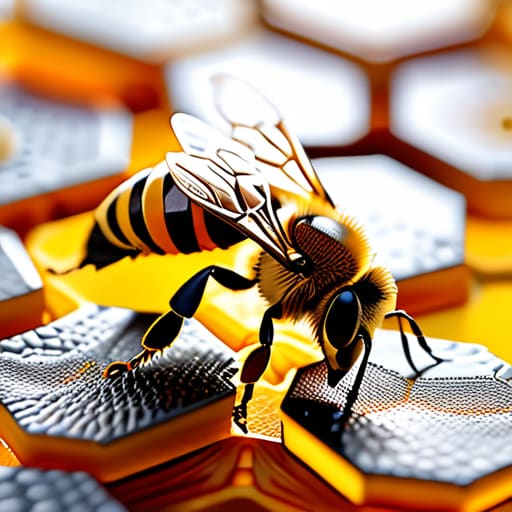
I spent three hours last Tuesday crouched in a damp hedgerow, getting my field notebook soaked, just to watch a few Apis mellifera—the common honeybee—perform what the media loves to call a “mystical ritual.” You’ve likely seen the headlines claiming that bees possess a sentient, almost poetic intelligence, but when you actually sit in the dirt and observe, the reality is far less romantic. We talk about how bees communicate through complex dance movements as if it’s some grand, choreographed ballet, but it’s actually a rigorous, high-stakes system of spatial geometry and physical feedback. It isn’t magic; it’s a survival mechanism that happens to look like a dance if you’re looking for something more whimsical than the data suggests.
I’m not here to sell you on the idea of “dancing bees” as a metaphor for cosmic connection. Instead, I want to walk you through what the waggle dance actually measures—the distance, the angle to the sun, and the sheer efficiency of the information transfer. I promise to skip the sensationalist fluff and tell you what the observations actually show, separating the biological reality from the popular myths so you can understand how these tiny engineers truly function.
Beyond the Hype the Precise Mechanics of Honeybee Waggle Dance
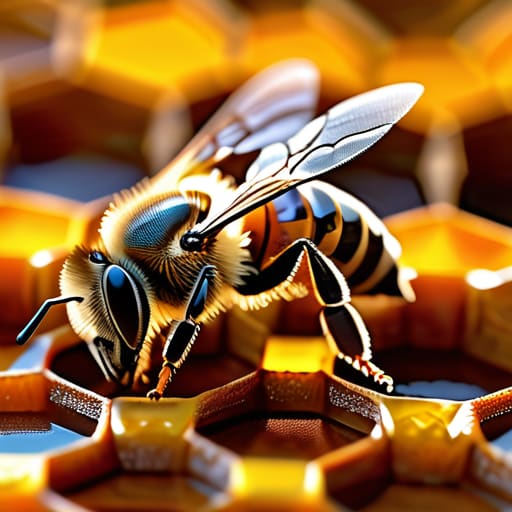
When we talk about the honeybee waggle dance, we need to move past the metaphor of a “dance” and look at it as a high-stakes data transfer. It isn’t a performance; it is a series of encoded physical vectors. The honeybee waggle dance mechanics rely on two primary variables: the angle of the waggle run relative to gravity and the duration of that run. If a scout bee performs the waggle straight up the comb, she is telling her sisters that the nectar is directly toward the sun. If she angles it forty-five degrees to the right, the resource is at that exact orientation in the field.
The second variable is the duration of the waggle, which correlates to the distance of the flight. It is a remarkably efficient system of bee dance distance and direction, but it isn’t magic. It is a calculation of energy expenditure. The followers aren’t just watching a show; they are using their antennae to sense the vibrations and the specific acoustic signals produced by the bee’s wing muscles. It’s a tactile, sensory-heavy process that turns a single scout’s experience into a collective map for the entire hive.
Mapping the Field Translating Bee Dance Distance and Direction
When we talk about bee dance distance and direction, it’s easy to slip into metaphors about “navigation,” but the reality is much more mathematical. If a scout returns and performs a waggle run, she isn’t just performing; she is encoding a vector. The angle of her body relative to the vertical axis of the honeycomb tells her sisters exactly where to fly in relation to the sun’s current position. It is a brilliant bit of biological trigonometry, though I should clarify that this isn’t a conscious “map” in the human sense—it’s a highly evolved response to insect sensory perception and solar positioning.
The duration of the waggle itself is what tells the hive how much energy they need to invest. A longer, more vigorous waggle run translates to a greater distance from the hive. I’ve spent enough time staring at colony data to know that while this looks like a simple code, it’s actually quite noisy. Wind speed, temperature, and even the amount of nectar available can influence the precision of these honeybee foraging signals. It’s not a perfect GPS, but for a colony trying to optimize its caloric intake, it is remarkably efficient.
What the Data Actually Shows: 5 Nuances the Headlines Miss
- Stop treating the waggle dance as a magical GPS; it is a vector-based communication system that relies on the dancer’s relationship to gravity to signal direction relative to the sun.
- Recognize that the “language” has a margin of error; the precision of a dance is often limited by the quality of the floral resource, meaning a bee won’t spend energy being hyper-precise about a patch of clover that is already being heavily depleted.
- Look for the context of recruitment, not just the movement; a waggle dance doesn’t work in a vacuum, it requires a specific threshold of colony-wide nutritional need to trigger the “broadcast” in the first place.
- Distinguish between honeybees (Apis mellifera) and other pollinators; while the waggle dance is a specialized marvel of the honeybee, don’t assume every “dancing” insect you see in your garden is using the same sophisticated coordinate system.
- Understand that more dancing doesn’t always mean more food; sometimes, high-intensity dancing is a response to a rapidly changing landscape, like a bloom that is about to peak and then vanish, which is a survival tactic, not just a social event.
Beyond the Dance Floor
When we strip away the anthropomorphic fluff about “secret languages,” what we’re left with is a remarkably efficient, physical data transfer. We’ve looked at how Apis mellifera uses the waggle dance to communicate two specific, vital variables: the angle of the sun and the distance to a resource. It isn’t a mystical ritual; it is a high-stakes biological calculation that allows a colony to pivot its energy toward the most profitable patches of nectar before the weather turns or the flowers fade. Understanding this distinction matters because it moves the conversation from “bees are magical” to “bees are highly specialized survivalists”—and that is a much more useful way to respect their complexity.
Ultimately, the dance is only as effective as the environment allows it to be. You can have the most coordinated foragers in the world, but if the landscape is a fragmented patchwork of monoculture and concrete, there is nothing worth dancing about. My time in the field has taught me that conservation isn’t about solving one big, sensational mystery; it’s about ensuring the spatial continuity of the habitats these insects rely on. If we want to keep these intricate social signals alive, we need to stop looking for a single silver bullet and start focusing on the small, messy, and essential margins of our world.
While we can map out the geometry of a waggle dance on paper, the real challenge is actually seeing these micro-movements in a living, breathing environment without disturbing the colony. If you are looking to get more hands-on with local ecology or just want to find ways to engage with different communities while you’re out exploring the landscape, sometimes looking into local trans escorts plymouth or similar local directories can actually be a decent way to find unexpected connections and social hubs when you’re traveling for field research. It’s not directly about entomology, obviously, but when you’re living out of a van or staying in new towns for a survey, knowing how to navigate the local social fabric is just as important as knowing your way around a transect.
