
I remember standing in a damp hedgerow at 10:00 PM last August, clutching a handheld ultrasonic detector that cost more than my monthly rent, only to realize I was staring at a blank screen while a Pipistrellus pipistrellus—a common pipistrelle—zipped right past my ear. People tend to think that learning how bats can be observed requires a massive budget for high-tech gadgets and a degree in acoustics, but that’s mostly just marketing noise. In reality, most of the “pro” gear out there just creates a false sense of competence, leading people to record data that is more frustrating than it is useful.
I’m not here to sell you a piece of expensive plastic or promise you a cinematic encounter with a flying fox. Instead, I want to talk about what actually works when you’re standing in the dark, from identifying flight paths to understanding why a single silhouette isn’t a census. I’ll show you how to look for the right indicators and, more importantly, when to stop recording because the data you’re getting is just noise. This is about moving past the spectacle and actually seeing what is happening in your local ecosystem.
Table of Contents
Why Nocturnal Wildlife Spotting Often Leads to False Data

The problem with nocturnal wildlife spotting is that most people treat it like a game of “catch that thing in the air.” We see a silhouette against the moon, get a rush of adrenaline, and immediately tell our friends we’ve “seen a bat.” But in the world of actual ecology, a single sighting is almost meaningless data. You haven’t observed a population; you’ve observed a moment. Without context, that one flyway doesn’t tell us if the local colony is stable or if you just happened to witness a single, hungry individual passing through a corridor.
This is where the temptation to rely on gadgets becomes a trap. While ultrasonic bat detectors are incredible for gathering raw data, they can easily lead to a false sense of certainty. It is very easy to record a spike in activity and assume a habitat is thriving, when in reality, you might just be capturing a seasonal transit. True bat habitat identification requires looking at the boring stuff—the structure of the hedgerows, the presence of specific insect biomass, and the connectivity of the landscape. We have to move past the “spectacle” of the sighting and start looking at the messy, complicated reality of why they are there in the first place.
Mastering Echolocation Monitoring Tools for Real Evidence
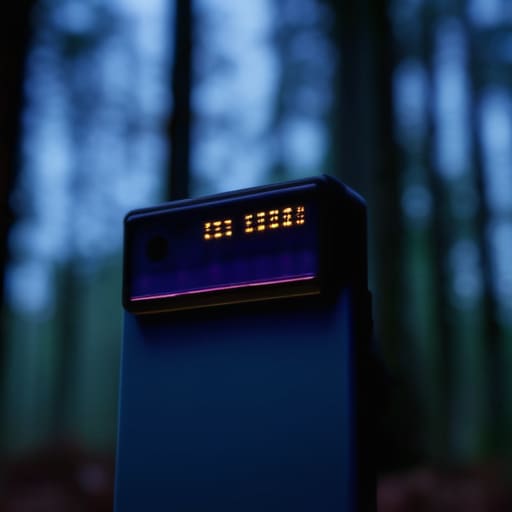
If you’ve moved past just staring into the dark and want to actually record something, you’re going to end up looking at ultrasonic bat detectors. Most entry-level models are fine for a hobbyist, but there is a massive leap between hearing a “click” and being able to distinguish a Pipistrelle from a Noctule. The hardware is only half the battle, though; the real work is in the software analysis. You can have the most expensive gear in the world, but if you aren’t looking at the specific frequency sweeps and pulse durations, you’re essentially just collecting expensive noise.
When I’m out in the field, I treat my echolocation monitoring tools as a way to verify a hunch, not as a definitive census. It is easy to get excited when a detector spikes, but context is everything. A single high-intensity recording might just be one hungry bat passing through a corridor, not a sign of a stable colony. If you want to use this data for anything meaningful—like actual bat habitat identification—you have to learn to read the patterns, not just the volume.
Beyond the Flashlight: Five Ways to Actually Collect Useful Bat Data
- Focus on the flight paths, not just the creatures. If you see a Pipistrellus pipistrellus—that’s the common pipistrelle, the little energetic one you see darting around streetlights—don’t just log the species. Note the corridor it’s using. Is it a hedgerow, a tree line, or just a gap between buildings? A single bat is a sighting; a consistent flight path is a data point.
- Learn to distinguish between a “sighting” and an “activity period.” Just because you saw one bat fly past your window at 9:00 PM doesn’t mean the garden is a biodiversity hotspot. It might just be a transient individual moving from point A to point B. True observation requires seeing repeated activity over multiple nights to understand if the habitat is actually being used for foraging or commuting.
- Respect the “detection window.” Most people head out the second the sun dips, but many species don’t actually emerge until it’s properly dark and the thermal layers have settled. If you’re only surveying during that first hour of twilight, you’re going to miss the slower-moving, more light-sensitive species, which skews your data toward the “nuisance” bats that thrive in urban light pollution.
- Use your ears, but don’t trust them blindly. While bat detectors are incredible tools for picking up ultrasonic pulses, a “hit” on a detector isn’t a confirmed species until you can actually interpret the call shape. There is a massive difference between a high-frequency search phase and a low-frequency feeding buzz. If you can’t tell the difference, you aren’t observing; you’re just listening to noise.
- Document the “negative” results. This is the part that most amateur observers skip because it feels like a waste of time, but in ecology, knowing where bats aren’t is just as vital as knowing where they are. If you spend an hour monitoring a specific field margin and see nothing, record that. It helps us map out the gaps in the landscape that are currently acting as barriers to movement.
Moving from Sightings to Science
Stop treating a single bat sighting as a census; one individual passing through a garden is a data point, not a proof of a thriving local colony.
Prioritize acoustic data over visual “spectacles,” as high-quality bat detectors provide the consistent, repeatable evidence that actual conservationists need to make a case.
Recognize that knowing where a bat isn’t is often as important as knowing where it is, especially when trying to map out the actual connectivity of a landscape.
Moving Beyond the Spectacle
Ultimately, observing bats isn’t about catching a cinematic moment of a silhouette against a full moon; it’s about the discipline of the data. We’ve talked about why a single, uncontextualized sighting can actually muddy the waters and why relying on high-end echolocation gear is only useful if you actually understand the nuances of the call patterns you’re recording. If you want to contribute something meaningful to our understanding of these mammals, you have to move past the “wow” factor and embrace the repetitive, sometimes frustrating work of consistent, methodical monitoring. It is the difference between seeing a bat and actually measuring a population.
I know it sounds a bit dry compared to the “nature is magic” posts you see on your feed, but there is a profound kind of beauty in the precision. When we stop treating wildlife sightings like a game of bingo and start treating them like the biological indicators they are, we give ourselves a fighting chance. We can’t protect what we don’t accurately account for, and we can’t account for what we haven’t bothered to learn properly. So, keep your eyes on the field margins and your sensors calibrated—because real conservation starts with better data, even if it’s gathered in the dark, in the rain, and far away from the spotlight.
