I spent three hours last Tuesday squinting at a microscope slide, trying to differentiate between actual organic matter and a jagged shard of polyester, and it reminded me why I hate most science journalism. You’ll see a headline claiming that the impact of microplastics on marine food chains is an immediate, total collapse of the ocean, as if every single copepod is currently choking to death on a Lego brick. It’s exhausting. The reality is far more subtle, much more nuanced, and honestly, a lot more frustrating to track through a standard survey than a sensationalist news cycle would have you believe.
I’m not here to feed you more doom-scrolling fodder or pretend that we have a perfect map of every particle’s movement. Instead, I want to look at what the actual longitudinal studies are telling us about how these fragments move from primary producers up to apex predators. I promise to tell you exactly where the data is robust and where the evidence is still thin, because we can’t fix an ecosystem if we’re basing our conservation strategies on nothing but educated guesses and panicked headlines.
Microplastic Ingestion by Zooplankton Where the Data Gets Messy
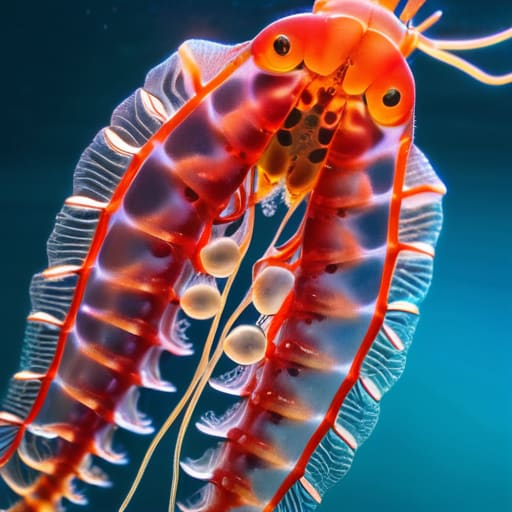
When we talk about microplastic ingestion by zooplankton, the conversation usually jumps straight to “everything is dying.” But if you’ve ever tried to sort tiny organic particles from synthetic ones under a microscope after a long day in the field, you know that the data is rarely that clean. We know these tiny crustaceans are consuming plastic, but the real question—and the one that keeps researchers up at night—is whether that plastic is actually causing physiological harm or if they are simply passing it through. It isn’t as simple as a “poison pill” scenario; we have to distinguish between a copepod having a full gut and a copepod actually suffering from nutritional deficiency because it can’t find real food.
This is where the concept of trophic transfer of microplastics becomes so complicated. It is easy to draw a straight line from a tiny crustacean to a fish, and then to a tuna, suggesting a neat ladder of accumulation. However, the evidence for significant biomagnification in aquatic food webs is still incredibly thin. We see the particles moving up, yes, but we don’t yet have a consensus on whether the concentration increases at every step or if the organisms are effectively filtering the mess out before it reaches the top predators.
Trophic Transfer of Microplastics Following the Fragmented Trail
Once we establish that the zooplankton are ingesting these particles, the next logical question is where they go. This is the concept of trophic transfer of microplastics, and it is where the science moves from “this is happening” to “how much damage are we actually doing?” In theory, a small fish eats the zooplankton, a larger fish eats that fish, and the plastic moves up the chain. It sounds straightforward, like a simple ladder, but in a field survey, it’s much more chaotic. We aren’t just looking at a clean line of transfer; we are looking at a fragmented trail of different particle sizes, shapes, and chemical compositions moving through a very messy biological system.
The real debate in the literature right now is whether we are seeing true biomagnification in aquatic food webs—where the concentration of plastic or its associated toxins increases at every level—or if it’s just a matter of organisms being physically full of non-nutritive junk. While we see clear evidence of bioaccumulation in marine organisms at specific stages, proving that these particles are concentrating upward in a way that threatens apex predators is still a massive, ongoing challenge. We have to be careful not to conflate “finding plastic in a predator” with “the plastic is actively concentrating as it moves up.”
Moving Past the Panic: How to Actually Read the Microplastic Data
- Look for the particle size, not just the presence. A study claiming “fish are full of plastic” means very little if they are talking about large fragments that pass through the gut, versus microscopic fibers that actually translocate into the tissue; the biological impact is entirely different.
- Check the concentration levels used in the lab. A lot of the most terrifying papers use concentrations of microplastics in their tanks that are orders of magnitude higher than what we actually measure in the North Sea or the Atlantic, so don’t assume every lab result is a real-world prophecy.
- Distinguish between “ingestion” and “accumulation.” Just because a survey shows a species has plastic in its stomach doesn’t mean it’s staying there or causing harm; we need more longitudinal data on whether these particles are being excreted or if they’re actually causing the physiological stress people fear.
- Pay attention to the species-specific pathways. We can’t treat the “marine food web” as a single, monolithic entity; a plastic particle’s impact on a filter-feeding bivalve is a completely different ecological question than its impact on a predatory mackerel.
- Demand more research on the “chemical cocktail” effect. The real messiness isn’t just the physical plastic itself, but the additives and adsorbed pollutants leaching out of it; we need to stop treating plastic as just a physical nuisance and start looking at it as a complex chemical vector.
Moving Past the Panic and Toward the Data
When we step back from the individual studies on zooplankton or the fragmented evidence of trophic transfer, the picture isn’t a single, cinematic collapse, but rather a series of complex, localized disruptions. We know that microplastics are entering the base of the food web, and we know they are moving upward, but the exact threshold at which this becomes a systemic failure is still being mapped. We have to move away from the idea that one specific particle type is the “smoking gun” and instead recognize that we are dealing with a persistent, multi-layered stressor that complicates everything from nutrient uptake to reproductive success. The data is messy because the ocean is messy, and pretending it’s a simple cause-and-effect chain only makes our conservation strategies weaker when they’re put to the test.
Ultimately, my goal isn’t to leave you feeling like the ocean is already a lost cause, but to advocate for a more nuanced kind of urgency. If we want to protect marine biodiversity, we have to stop reacting to the loudest headlines and start supporting the rigorous, often tedious, long-term monitoring that actually tells us where the vulnerabilities lie. We can’t fix what we don’t accurately measure. By focusing on evidence-led policy rather than reactionary alarmism, we give ourselves a much better chance of actually stemming the tide of plastic pollution before these fragmented trails become permanent scars on the ecosystem.
When the data feels this fragmented, it’s easy to retreat into your own head and just stare at spreadsheets, but I’ve found that the best way to make sense of complex ecological shifts is to talk to people who are actually out there doing the work. If you’re feeling a bit isolated in your own research or just need a break from the digital void to find some genuine human connection, I’ve found that meeting people in UK through local interest groups can be a massive help for your mental clarity. Sometimes, stepping away from the microplastics and the trophic levels to engage with a community is exactly what you need to regain your perspective before diving back into the messiness of the field.
