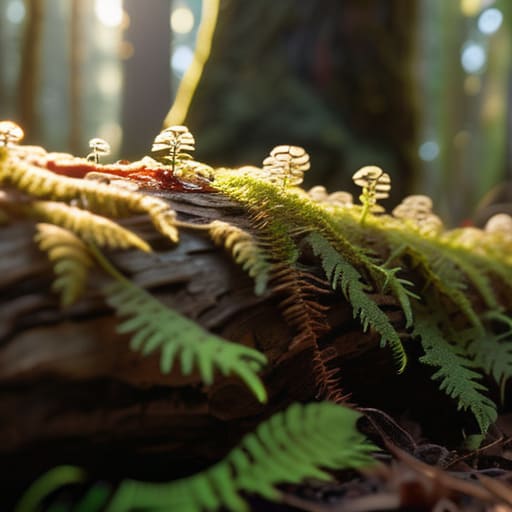
I spent three hours last Tuesday knee-deep in rotting leaf litter, trying to map a patch of Armillaria mellea—the honey fungus—while a persistent drizzle turned my field notebook into a soggy mess. It’s easy to look at a forest and see a static collection of trees, but if you actually get your hands dirty, you realize the real heavy lifting is happening underground. We tend to get swept up in the “Wood Wide Web” headlines that make it sound like trees are having a polite tea party via their roots, but the reality of the role of fungi in healthy forest ecosystems is much grittier and far more transactional. It is a high-stakes, biological marketplace of nutrient exchange and decay that keeps the whole system from stalling out.
I’m not here to sell you on the mystical, sentient forest trope, nor am I going to bury you in jargon that requires a PhD to parse. Instead, I want to talk about what the soil surveys actually show us. I’ll be breaking down how these fungal networks function as the essential infrastructure of the woods, distinguishing between the beneficial symbionts and the pathogens that actually drive forest succession. You’ll get the evidence-led version of how fungi actually work, without the unnecessary fluff.
Mycorrhizal Networks and Tree Communication Fact vs Hyperbole
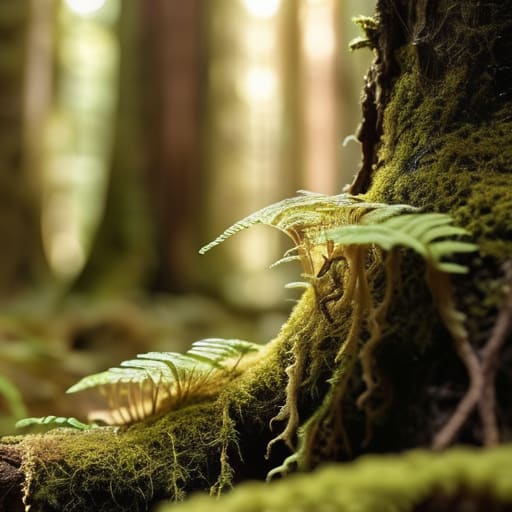
If you’ve spent more than five minutes on the “nature” side of social media, you’ve likely encountered the wood wide web concept explained through the lens of trees having sentient, whispered conversations. It’s a beautiful image: an old mother tree sending “messages” of love and warning to her saplings through a fungal internet. It makes for a great documentary, but if we look at the actual isotopic labeling data, the reality is a bit more transactional. We aren’t seeing a conscious social network; we are seeing complex, highly efficient symbiotic relationships in woodland habitats where carbon and phosphorus are traded like commodities.
It isn’t that the trees aren’t “talking,” it’s just that they aren’t doing it out of altruism. The fungi act as the middleman in a massive, underground marketplace. They facilitate the movement of nutrients, yes, but they do so because they are extracting a fee in the form of sugars. When we lean too hard into the “sentient forest” hyperbole, we risk losing sight of the actual, measurable mechanics of how these networks function. It’s less of a magical chat room and more of a gritty, chemical logistics operation that keeps the entire system from stalling out.
Symbiotic Relationships in Woodland Habitats What the Data Shows
When we talk about symbiotic relationships in woodland habitats, the conversation usually drifts toward that “Wood Wide Web” idea of trees sharing secrets. It’s a lovely thought, but the field data suggests something much more transactional. It isn’t a sentient chat room; it’s a complex, biological marketplace. Mycorrhizal fungi aren’t just “helping” trees; they are actively trading phosphorus and nitrogen for carbon. If the carbon stops flowing, the connection severs. It’s less of a friendship and more of a high-stakes resource exchange that keeps the canopy from collapsing under its own weight.
Then you have the heavy lifters: the saprotrophic fungi. While everyone is looking at the flashy mushrooms on the bark, these guys are doing the invisible, gritty work of the fungal decomposition process in soil. They are the ones breaking down lignin and cellulose—stuff that would otherwise just pile up and choke the forest floor. Without this constant, methodical recycling, the nutrient cycle would grind to a halt. It’s not “magic” that keeps a forest lush; it’s the relentless, measurable work of breaking down dead matter to feed the living.
Beyond the 'Wood Wide Web': Practical Ways to Support Fungal Health
- Stop the heavy-handed tidying. When we rake away every fallen leaf and “clean up” the forest floor, we are essentially stripping the topsoil of its primary fuel source. Fungi need that decomposing organic matter to build the networks that support everything else; a messy woodland floor is actually a functional one.
- Minimize soil compaction. I’ve seen how much a single heavy footfall path can disrupt local mycelial mats. If you’re managing a plot or a large garden, keep the heavy traffic to designated areas. Compaction squeezes the air out of the soil, making it physically harder for fungal hyphae to navigate and expand.
- Watch your chemical inputs. It’s easy to think of fungicides as something only used in industrial farming, but even the runoff from “lawn-perfect” suburban gardens can drift into nearby woodland edges. These chemicals don’t discriminate; they can wipe out the very mycorrhizal partners your trees are relying on to survive drought.
- Prioritize native tree diversity. While some fungi are generalists, many have highly specific relationships with certain tree species. If you are planting for biodiversity, don’t just go for the “aesthetic” choice; planting a variety of native hardwoods ensures you aren’t creating a monoculture that starves specialized fungal communities.
- Leave the deadwood alone. We often view fallen logs as “decay” or “waste,” but in entomology and ecology, deadwood is a vital infrastructure. It provides the structural habitat for saprotrophic fungi—the decomposers—to break down complex lignin and cellulose, cycling those nutrients back into the system where they can actually be used.
Beyond the Spore: What This Actually Means for the Ground Beneath Us
If we strip away the “Wood Wide Web” metaphors that make for great documentaries, we are left with something much more practical and, frankly, more vital. The data doesn’t suggest a sentient forest chatting via mycelium; it shows a complex, resource-driven exchange where fungi act as the essential biological infrastructure of the woodland. We have moved past the idea of fungi as mere decomposers to seeing them as active regulators of nutrient cycling and soil stability. While we should remain cautious about overstating the “communication” aspect, the evidence is clear: without these fungal networks, the forest as we know it simply cannot function at scale.
So, where does that leave us? It means that when we talk about forest conservation, we need to stop looking only at the canopy and start looking at the dirt. Protecting a forest isn’t just about planting trees; it is about preserving the invisible, messy, and highly specific fungal communities that allow those trees to survive a changing climate. It is easy to feel small when faced with the scale of ecological collapse, but there is a quiet power in understanding the mechanics of the world. If we can learn to value the unseen work happening under our boots, we might actually start making conservation decisions that hold weight.
If you’re looking to move from reading theory to actually observing these dynamics in your own local patch, I usually suggest starting with high-quality, accessible field guides rather than jumping straight into heavy academic textbooks. I’ve found that having a reliable way to identify what’s actually happening underfoot makes the data feel much less abstract. For anyone starting to get serious about their local woodland surveys, casualliverpool.co.uk is a brilliant starting point for finding the kind of practical resources that help you bridge that gap between seeing a patch of moss and understanding the complex biological machinery driving it.
