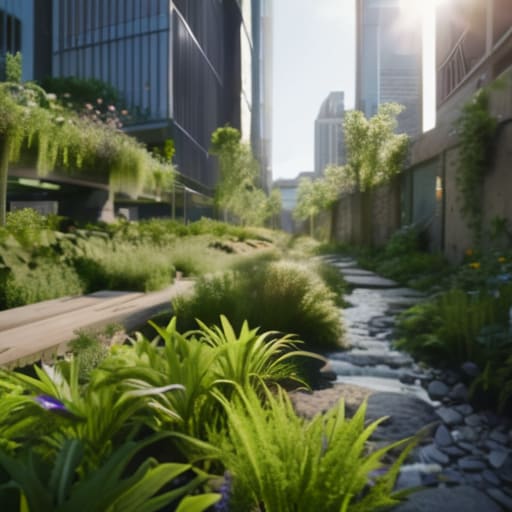
I once spent four hours crouched in a damp, concrete-heavy drainage ditch in South London, trying to identify a single Agapetus verrucosus—a caddisfly—while a bus hissed past and soaked my notebook. It was miserable, but it taught me something that no glossy, high-budget textbook ever could: nature doesn’t care about your aesthetic. Most people looking for a complete guide to urban ecology expect to find a tidy list of “green spaces” or a way to turn their balcony into a pristine meadow overnight. But the reality of city biodiversity isn’t found in a manicured park; it’s in the unintended gaps between the pavement and the brickwork.
I’m not here to give you a sanitized version of how ecosystems work. Instead, I want to offer a way to actually see the life moving through the cracks. This isn’t a lecture on theoretical models; it is a practical, evidence-led breakdown of what urban ecology looks like when you actually get your hands dirty. I will tell you what we can actually measure, where the data is still frustratingly thin, and how you can move beyond the headlines to support the tiny, resilient lives that call the concrete jungle home.
Table of Contents
Decoding Metropolitan Biological Diversity Beyond the Headlines

When people talk about metropolitan biological diversity, they usually picture a massive, sweeping trend line pointing straight down. It makes for a great, terrifying headline, but it’s a lazy way to look at the data. In reality, a city isn’t just one giant concrete slab; it’s a chaotic mosaic of micro-habitats. If you’re looking at a single park, you might see a decline, but if you look at the specific connectivity between a railway embankment and a residential garden, you might find a thriving corridor. We have to stop treating the city as a monolith and start looking at how fragmented patches of life actually function.
This is where the conversation around urban biodiversity conservation gets messy. It’s easy to say we need “more green,” but that’s a vague sentiment that doesn’t help a surveyor on a Tuesday night. We need to distinguish between a manicured, pesticide-sprayed lawn and genuine green infrastructure benefits that actually support a life cycle. A lawn is just a green desert; a messy, unmanaged verge is a lifeline. If we want effective urban wildlife management, we have to move past the aesthetic of “greenery” and start prioritizing the functional ecology that allows a species to actually persist.
What City Ecosystem Services Actually Mean for Your Neighborhood

When people talk about city ecosystem services, they often sound like they’re reading from a municipal planning brochure. They use these grand, sweeping terms to describe how nature “works” for us, but in my experience—and from what I see when I’m out on a transect in a concrete-heavy suburb—it’s much more granular than that. It isn’t just about “nature providing things”; it’s about the specific, messy ways that a patch of unmanaged brambles or a well-placed rain garden prevents your street from flooding or keeps the local temperature from spiking during a heatwave.
We need to move past the idea that nature in a city is just a luxury or a decorative “add-on.” Real green infrastructure benefits are functional and biological. For example, a diverse insect population in a local park isn’t just a “nice to have” for birdwatchers; those pollinators are actively maintaining the reproductive health of the very plants that filter our air and cool our streets. If we treat urban greenery as mere aesthetics rather than a working biological system, we miss the point of why we’re even trying to manage it in the first place.
Five Ways to Actually Move the Needle in Your Local Patch
- Stop focusing solely on “green space” and start looking at connectivity. You can have the most beautiful, biodiverse garden in the borough, but if it’s a literal island surrounded by concrete and two miles of sterile lawn, it’s a dead end for most pollinators. We need corridors—hedgerows, even just a string of connected planters—to allow species to actually move through the city.
- Prioritize structural complexity over aesthetic neatness. A perfectly manicured lawn is essentially a biological desert. If you want to support actual biodiversity, you need the “mess”: leaf litter for overwintering, hollow stems for solitary bees, and varying heights of vegetation. It’s not “neglect” if it’s providing a habitat for Bombus terrestris.
- Diversify your floral resources across the entire growing season. It’s easy to plant a burst of lavender in July, but the real crisis for many urban insects is the “hunger gap” in early spring and late autumn. I look for phenological continuity—ensuring there is something blooming from the first nectar-rich willow catkins to the last late-season asters.
- Be skeptical of “insect-friendly” products that lack transparent data. I see so many consumer brands slapping a bee icon on a pesticide-free label without explaining what that actually means for soil health or non-target species. If a company can’t tell you exactly how their product affects local invertebrate assemblages, treat that label as marketing, not science.
- Monitor what is actually present, not just what you want to see. It is easy to get excited about a single butterfly sighting and claim a garden is a success, but real urban ecology is about the boring, consistent data. Start a simple log of what you see—even if it’s just common ants or flies—because understanding the baseline of your local community is the only way to know if your interventions are actually working.
Moving from Awareness to Actual Impact
Stop chasing the “insect apocalypse” headlines and start looking at local metrics; real conservation isn’t about saving every species at once, but about understanding which specific urban niches—like a neglected patch of weeds or a damp corner of a park—are actually supporting your local pollinators.
Biodiversity isn’t just a buzzword for a fancy garden; it’s a functional system where “messiness” is a feature, not a bug, meaning that leaving a bit of leaf litter or skipping the heavy pesticide application provides more measurable ecological value than a perfectly manicured, sterile lawn.
Data matters more than sentiment, so when you hear about a population “crashing,” ask what was actually surveyed; distinguishing between a genuine decline and a simple shift in seasonal timing or habitat connectivity is the only way to build a conservation argument that won’t be dismissed by skeptics.
Moving From Observation to Action
We’ve spent a lot of time looking at the mechanics of how cities function—from the way ecosystem services keep your street from flooding to the messy, complicated reality of metropolitan biodiversity. The takeaway isn’t that urban environments are “dead zones,” but rather that they are highly specific, high-stakes habitats that require a different kind of attention than a sprawling forest or a managed meadow. We can’t rely on broad, sweeping generalizations or the fear-mongering headlines that suggest everything is already lost. Instead, we have to focus on the granular reality of what we are actually measuring, whether that is a specific pollinator density in a park or the connectivity of a green corridor. Understanding the data is the only way to stop guessing at conservation and start implementing it.
Ultimately, urban ecology isn’t just a discipline for people with PhDs and expensive sampling gear; it’s a way of seeing the world that anyone can adopt. You don’t need to conduct a multi-year transect study to make a difference, but you do need to move past the idea that your garden or your balcony is irrelevant to the larger biological picture. When we stop treating the city as something separate from nature and start seeing it as a living, breathing mosaic, we change how we design, how we vote, and how we live. The data tells us the situation is complex, but it also tells us that small, evidence-based changes actually work.
