I once spent four hours knee-deep in a peat bog in the middle of a Tuesday, trying to document dragonfly larvae, only to realize my “comprehensive” field guide had completely ignored the specific silt density of that particular basin. It’s frustrating because whenever you search for a complete guide to wetlands, you usually end up with one of two things: a dry, academic paper that reads like a legal contract, or a glossy brochure that treats a marsh like it’s some kind of magical, untouched wonderland. Both are wrong. Wetlands aren’t just pretty scenery; they are messy, fluctuating, and incredibly specific systems that don’t care about your simplified diagrams.
I’m not here to give you a sanitized version of ecology. Instead, I want to provide a guide that actually accounts for the unpredictable reality of these habitats, from the nitrogen cycles that drive them to the specific insect life that signals a healthy system. We’re going to skip the buzzwords and look at what the data actually shows about water retention, soil composition, and biodiversity. This is my attempt at a complete guide to wetlands that prioritizes actual evidence over aesthetic hype, so you can understand what is truly happening beneath the surface.
Table of Contents
Decoding Types of Wetland Habitats Without the Sensationalism
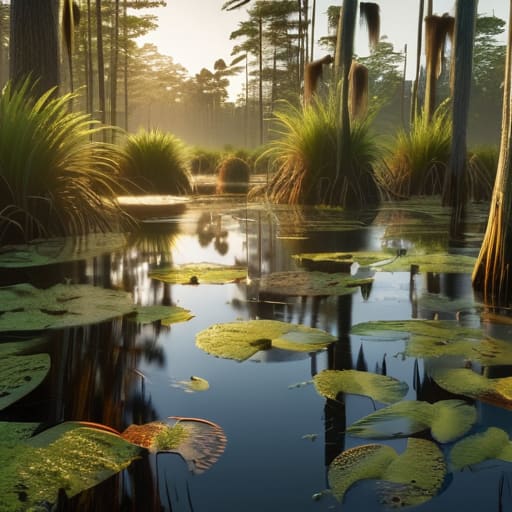
When you scroll through a nature documentary, “wetland” is often used as a catch-all term for anything that looks damp and slightly miserable. But if we’re going to talk about wetland biodiversity conservation, we have to stop treating these spaces like a monolith. A marsh isn’t a swamp, and a fen isn’t a bog, even if they both make your boots sink. The difference usually comes down to the chemistry of the water and how much it moves. Swamps are dominated by woody plants—think trees and shrubs—while marshes are defined by herbaceous plants like reeds. If you get the distinction wrong, you get the management wrong, and that’s how we end up with “restoration” projects that fail because they didn’t account for the actual soil chemistry.
Understanding the different types of wetland habitats is less about memorizing a textbook and more about observing the hydrological cycle and wetlands in real-time. Is the water stagnant or flowing? Is it mineral-rich or acidic? These aren’t just academic trivia; they dictate exactly which species can survive there. When we ignore these nuances, we miss the specific niches that keep an ecosystem functioning.
The Hydrological Cycle and Wetlands What the Data Actually Shows
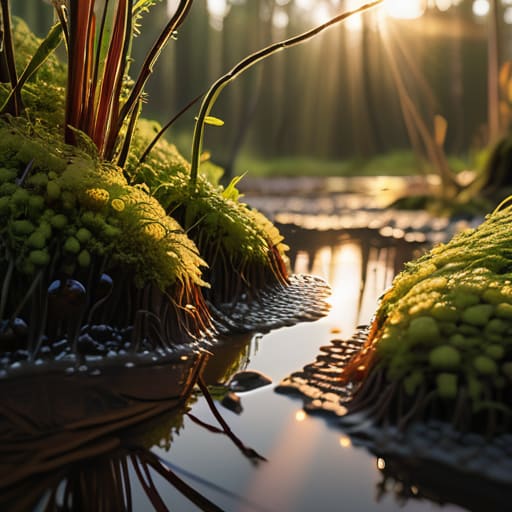
When people talk about the hydrological cycle and wetlands, they usually frame it as this grand, cinematic loop of evaporation and precipitation. It sounds poetic, but in the field, it’s much more about the messy, granular reality of how water actually sits on the land. A wetland isn’t just a “wet place”; it’s a functional buffer. I’ve spent enough time knee-deep in peat to know that these areas act like a biological sponge, slowing down the velocity of runoff and allowing water to seep into the groundwater rather than just racing off into a drainage ditch.
It’s not just about preventing floods, though. If you look at the data regarding the wetland water purification process, you see something much more interesting happening at a microscopic level. As water moves through different types of wetland habitats, the vegetation and the soil microbes work together to filter out sediments and excess nutrients like nitrogen. It’s essentially a massive, slow-motion kidney for the landscape. We often focus on the visible “charismatic” parts of nature, but the real heavy lifting is being done by these chemical and physical exchanges that happen right under the surface.
Moving Beyond the Buzzwords: 5 Ways to Actually Engage with Wetland Ecology
- Stop treating “wetland restoration” as a single checkbox. If you’re looking at a site, you need to differentiate between a peatland, which is a massive carbon sink, and a seasonal fen; they require completely different management approaches, and applying a “one size fits all” solution usually just ends up drowning the wrong species.
- Look at the edges, not just the center. In my field surveys, I’ve learned that the transition zone—the ecotone—between the open water and the terrestrial land is often where the most critical biodiversity happens. If you’re managing a space, don’t aim for a clean, manicured boundary; you want that messy, graduated slope of reeds and sedges.
- Prioritize hydrological connectivity over aesthetics. A beautiful pond is great for a garden, but for a functioning wetland ecosystem, the way water moves in and out of the system is everything. If the hydrology is interrupted by a culvert or a poorly placed levee, you aren’t maintaining a wetland; you’re maintaining a stagnant puddle.
- Get comfortable with “low-quality” data. We often wait for the perfect, peer-reviewed longitudinal study before making a conservation move, but in the real world, community science and local observations of water levels or insect emergence can be incredibly telling. It’s not a replacement for rigorous science, but it’s better than waiting for a decade of data while the habitat dries out.
- Watch the indicator species, but don’t rely solely on them. While seeing a specific dragonfly or a certain type of moss can tell you a lot about water quality, remember that a single sighting is a snapshot, not a trend. True wetland health is measured by the stability of the system over time, not just the presence of one “charismatic” insect.
What to actually take away from the data
Stop treating “wetland” as a single category; a peat bog and a salt marsh are performing completely different ecological jobs, and a conservation plan that treats them as interchangeable is destined to fail.
Hydrology isn’t just a background process—it is the primary driver of biodiversity, meaning if we don’t manage the actual water levels and soil saturation, the species we’re trying to save won’t have a habitat to live in.
Beware of “all or nothing” headlines; the data shows that even small, fragmented patches of wetland can act as vital stepping stones for movement, provided we focus on connectivity rather than just large, isolated reserves.
Beyond the Data: Why the Messy Reality Matters
We’ve moved past the idea that a wetland is just a “swampy bit of land” and looked at the actual mechanics—from the way peatlands sequester carbon to the specific hydrological rhythms that keep a fen from drying out. Understanding these distinctions isn’t just academic; it’s the difference between a conservation strategy that works and one that accidentally drains the very life it’s trying to protect. If we keep treating wetlands as a monolith, we’re going to miss the nuanced shifts in water tables and soil chemistry that signal a habitat is in trouble. The data tells us that these systems are incredibly efficient, but they are also notoriously fragile when the underlying hydrology is disrupted by human intervention or rapid climate shifts.
At the end of the day, I don’t want you to walk away feeling like wetlands are just another complex variable in a climate model. I want you to see them as the essential, working machinery of our landscape. We don’t need more sensationalist headlines about “disappearing worlds”; we need more people who understand that protecting a single drainage ditch or a patch of marshland is a measurable, scientific victory. It’s about moving from passive observation to informed stewardship. When we get the science right, we stop guessing and start actually helping these ecosystems do what they do best: sustain life.
