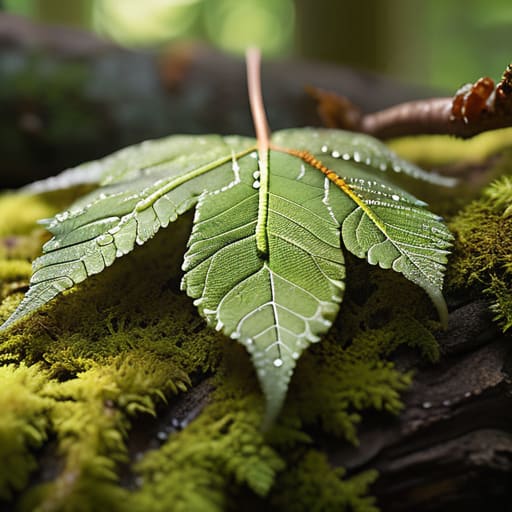
I spent three weeks of my first PhD summer staring at a single hedgerow in a downpour, trying to figure out if I was looking at Crataegus monogyna or just a very confused, stunted hawthorn. Most people think a complete guide to identifying trees is just a matter of buying a glossy field guide and matching a leaf shape to a drawing, but that is how you end up confidently misidentifying half your local woodland. The reality is much messier; you aren’t just looking at a static shape, you’re looking at how a tree responds to its specific patch of soil, the light it gets, and the way its bark matures over decades.
I’m not here to give you a simplified, textbook version of botany that falls apart the moment you step into a real forest. Instead, I want to offer a practical, evidence-based approach to seeing what is actually in front of you. We are going to move past the basic leaf-matching and look at the subtle indicators—bud arrangement, bark texture, and even sap characteristics—that actually matter. My goal is to give you the tools to identify species with genuine precision, even when the weather is rubbish and the trees aren’t cooperating.
Table of Contents
Mastering Tree Identification Characteristics and Leaf Arrangement
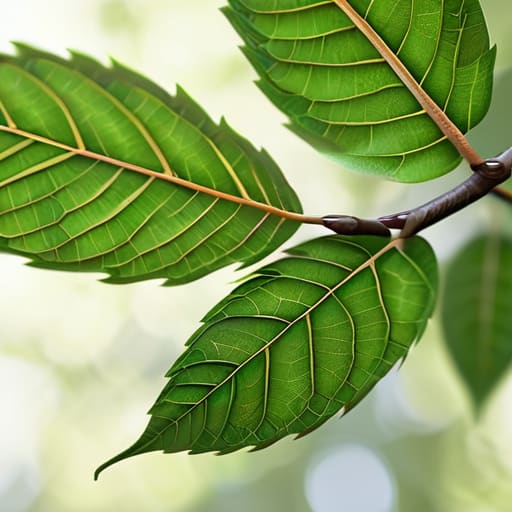
If you want to get serious about identifying trees by leaf arrangement, you have to stop looking at the leaf as a single object and start looking at how it sits on the stem. This is where most people trip up. You need to determine if the leaves are opposite—growing in pairs directly across from one another—or alternate, where they stagger up the branch in a zigzag pattern. It sounds like a pedantic distinction, but it is the single most effective way to narrow down your search. If you see opposite leaves, you’ve already mentally crossed off half the forest, including most of the oaks and birches that usually confuse beginners.
Once you’ve nailed the arrangement, move on to the margin and the venation. A leaf isn’t just a green shape; it’s a map of how the plant functions. Is the edge smooth (entire), or does it have those tiny teeth (serrated) that look like a saw blade? I’ve spent too many mornings squinting at Quercus robur—the English Oak—trying to distinguish its lobed edges from a similar-looking maple in poor light. Don’t rush the process; if you misread the margin, you’ll end up with the wrong species entirely.
Decoding Deciduous vs Evergreen Trees Beyond the Surface
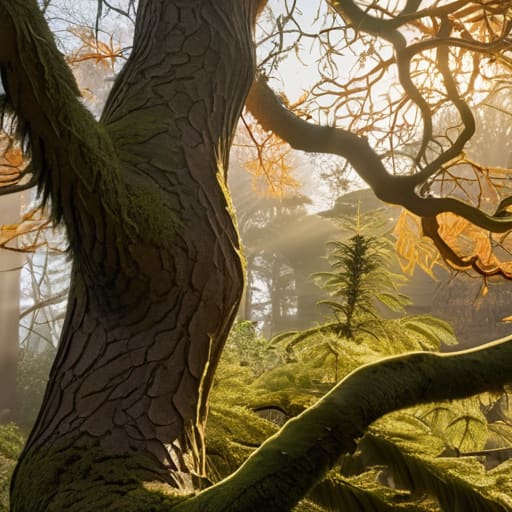
Most people think the distinction between deciduous and evergreen trees is a simple matter of “leaves fall off” versus “leaves stay on,” but if you’re out in the field in mid-July, that logic fails you completely. Many species, particularly certain conifers, might shed their needles annually, making them look temporarily deciduous. To get this right, you have to look past the immediate presence of foliage and focus on tree silhouette recognition. A deciduous tree often presents a more skeletal, branching architecture in winter, whereas an evergreen typically maintains a denser, more consistent structural volume year-round.
If you’re struggling with the visual clutter of a canopy, stop looking at the leaves for a second and look at the ground. One of the most reliable ways of identifying tree species by fruit or seed is by observing what they drop. An oak will leave you a carpet of acorns, while a beech leaves behind those hard, triangular nuts. This isn’t just a fun way to pass the time; it’s a way to bypass the confusion of seasonal changes. Don’t rely on a single snapshot in time; the best identification comes from seeing how a tree behaves across the entire year.
Beyond the Leaf: Five Ways to Stop Guessing and Start Identifying
- Check the bark, not just the foliage. If you’re looking at a tree in mid-winter when the leaves are gone, the bark is your primary diagnostic tool. Don’t just say it’s “rough”; look for specific patterns like the deep, vertical fissures of an Fraxinus excelsior (Common Ash) or the smooth, silver-grey skin of a Betula pendula (Silver Birch). Bark texture is much harder for a tree to fake than a seasonal leaf shape.
- Observe the branching pattern. This is where most people get tripped up. Some trees follow an alternate arrangement where the twigs zig-zag as they grow, while others use an opposite arrangement where twigs grow in pairs directly across from each other. If you can identify an opposite branching pattern, you’ve already narrowed your search down to a few key families like Maples or Ashes, which saves you a lot of unnecessary guesswork.
- Don’t ignore the “scent profile.” It sounds a bit woo-woo, but in field botany, it’s actually a legitimate morphological cue. If you’re unsure about a specimen, crush a small piece of a fallen leaf or a twig. The chemical compounds released can be a dead giveaway—think of the distinct, spicy aroma of a crushed pine needle versus the more subtle, resinous scent of a spruce.
- Look at the fruit and the “remnants.” Trees often leave behind more evidence than just leaves. Look for the presence of samaras (those little winged seeds you see spinning off Maples), acorns, or even the specific way old leaf scars are left on the twigs. These scars are essentially the tree’s fingerprints; they tell you exactly how the previous year’s growth was attached.
- Contextualize the habitat. While a tree can grow in many places, certain species are much more likely to dominate specific niches. If you’re in a damp, low-lying area, you’re much more likely to encounter Alnus glutinosa (Common Alder) than something that prefers well-drained, upland soils. Knowing the local ecology doesn’t replace identification, but it provides a much-needed reality check when you’re stuck between two similar-looking species.
The Three Golden Rules for Not Getting It Wrong
Stop obsessing over the leaf shape alone; if you want to actually distinguish between a species like Acer pseudoplatanus (Sycamore) and its cousins, you have to look at the bud arrangement and the way the petiole meets the stem, because relying on a single visual cue is how most amateur field guides get it wrong.
Learn to read the architecture of the tree, not just the foliage, because identifying the branching pattern and the texture of the bark is often the only way to get a reliable ID when the leaves are either missing or too damaged by insects to be useful.
Accept that certainty is a sliding scale; even for people like me who spend their lives looking at these things, there is a massive difference between a “confident identification” and a “highly probable guess,” so always look for multiple overlapping characteristics before you commit to a label.
Beyond the Identification Key
At this point, you’ve moved past just glancing at a canopy and started looking at the actual mechanics of the tree—the specific way leaves are arranged on a stem, the subtle texture of the bark, and the distinction between a needle and a scale. It’s easy to get frustrated when a specimen doesn’t perfectly match a diagram in a field guide, but remember that identification is a process of elimination, not a sudden moment of divine revelation. You aren’t just memorizing a list of names; you are learning to read the structural language of the landscape, from the way a deciduous tree prepares for winter to the specific silhouette of an evergreen.
Ultimately, knowing the name of a tree is less important than understanding its role in the wider, messy ecosystem. Once you can identify an Oak or a Hawthorn, you start to see the specialized pollinators, the specific fungi, and the insect populations that depend entirely on that single organism. I’ve spent far too many mornings in damp hedgerows staring at bark, and I can tell you that the more you notice, the more you care. Don’t just collect names like they’re trophies; use that knowledge to see the connections between the trees and the tiny, fluttering lives that call them home.
