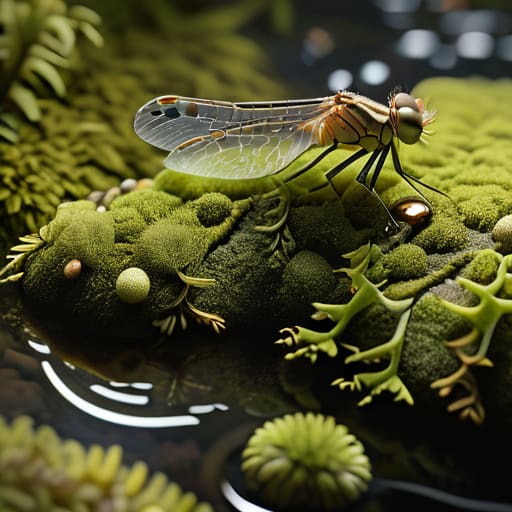
I once spent four hours knee-deep in a freezing drainage ditch in Shropshire, trying to explain to a local landowner why his “crystal clear” pond was actually a biological desert. He kept pointing to the lack of murky sediment as a sign of health, completely missing the fact that the absence of Ephemeroptera—mayfly larvae—meant his water chemistry was fundamentally broken. People love to look at a pond and see a postcard, but they rarely understand how aquatic insect larvae work as the actual, gritty machinery of the ecosystem. We tend to focus on the flashy adult butterflies or the dragonflies darting above the surface, but the real story of water quality is written in the mud by creatures that most people would rather not step on.
I’m not here to give you a sanitized, textbook definition of niche partitioning or trophic cascades. Instead, I want to show you what happens when you actually look at the sediment. I promise to break down the mechanics of these life stages without the academic fluff, focusing on what their presence—or absence—actually tells us about the environment. We’ll look at the real data behind larval density and why certain species are much better indicators of health than the headlines suggest.
Table of Contents
Decoding the Complexity of Aquatic Insect Life Cycles
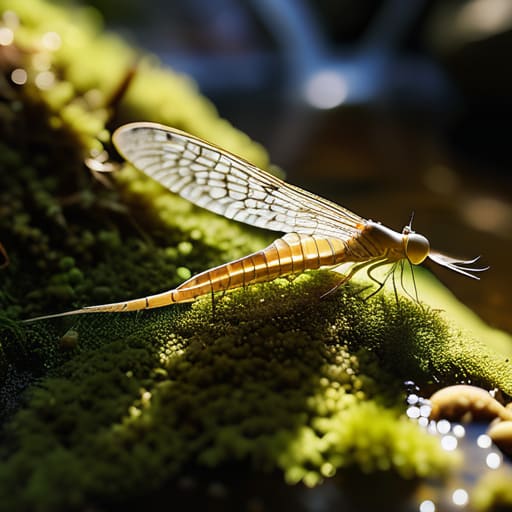
The thing about aquatic insect life cycles is that they aren’t just a neat little diagram in a textbook; they are a high-stakes game of timing and survival. Most of these insects undergo hemimetabolous development, meaning they don’t have a pupal stage like a moth, but instead transition through several nymphal instars. This is where the real work happens. Because these larvae spend months, sometimes years, anchored to the substrate, they become the ultimate freshwater ecosystem health indicators. If the water chemistry shifts or a heavy silt load settles during a critical molting window, that entire cohort is gone. You can’t just “repopulate” a stream overnight once a specific developmental stage has been wiped out.
When we conduct a biological water quality assessment, we aren’t just looking for “bugs”; we are looking for specific life history strategies. I’m interested in how different species manage their niche—some are shredders, some are scrapers, and others are predators. Their larval feeding mechanisms dictate how energy moves through the food web. If you only see the generalists that can survive a heavy runoff event, you’re missing the story of the specialists that actually maintain the balance.
Larval Feeding Mechanisms More Than Just Simple Consumption
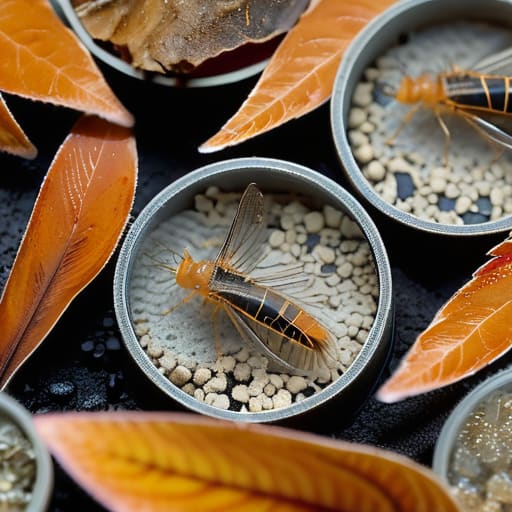
When you look at a handful of sediment from a stream bed, it’s easy to see a mess of tiny, wriggling things. But if you actually look closer—and I mean through a hand lens, not just a squint—you realize you’re looking at a highly specialized division of labor. We talk a lot about larval feeding mechanisms, but it’s not just “eating.” It’s a structural necessity. You have your shredders, like certain stonefly larvae, which physically break down fallen leaf litter into smaller pieces. Then you have the collectors and filterers, who are essentially living sieves, catching the organic particles drifting in the current.
This isn’t just academic trivia; it’s the backbone of biological water quality assessment. Because these different groups have very specific dietary requirements and physical niches, they react to environmental shifts in predictable ways. If a heavy runoff event smothers the gravel with silt, your delicate filterers are the first to vanish. By tracking which specific feeding guilds are present, we get a much more granular view of the site than a simple “is the water clean?” checkbox can ever provide.
What to actually look for when you're staring into a stream bed
- Don’t just count heads; look at the functional groups. If you see a lot of Ephemeroptera (mayflies) but zero Trichoptera (caddisflies), you aren’t just looking at a different species mix—you’re looking at a fundamental shift in how energy is moving through that specific stretch of water.
- Pay attention to the “architecture” of the larvae. Some species are built to cling to rocks in high-flow riffles, while others are designed to burrow into the silt. If the substrate changes—say, through sedimentation from nearby construction—the “specialists” are the first to vanish, regardless of how “clean” the water looks to the naked eye.
- Use the larvae as a long-term sensor, not a snapshot. An adult dragonfly might fly into a pond for an afternoon, but a cluster of Odonata larvae has been living in that specific microhabitat for months. They are the living record of what that water has actually been like, not just what it was like ten minutes ago.
- Stop assuming “more” is always “better.” In my surveys, I’ve seen massive spikes in certain tolerant species like Chironomidae (non-biting midges) following a pollution event. A high density of larvae doesn’t always mean a healthy ecosystem; sometimes it just means the sensitive species have been wiped out, leaving the opportunists to take over the room.
- Look for the “hidden” life in the margins. The most critical larval activity often happens in the interface between the water and the bank, or tucked under a single submerged leaf. If you’re only sampling the open water in the center of a channel, your data is going to be skewed toward the species that can handle the most turbulence, missing the real biodiversity hiding in the quiet spots.
What to actually look for in the water
Stop looking for “bugs” and start looking for functional groups; knowing whether a larva is a shredder or a predator tells you more about the health of the stream than a simple headcount ever will.
Life cycles aren’t just neat diagrams in a textbook—they are high-stakes survival games where a single unexpected temperature spike or a week of heavy silt can wipe out an entire cohort before they even reach adulthood.
Diversity isn’t just about having a lot of different species; it’s about having a balanced range of feeding mechanisms so the ecosystem doesn’t collapse if one specific group takes a hit.
Beyond the Microscope
When we step back from the individual feeding mechanisms or the specific timing of a metamorphosis, we see that aquatic larvae aren’t just “bugs in the mud.” They are the functional architecture of our waterways. We’ve looked at how their specialized mouthparts allow them to process organic matter and how their life cycles are intricately timed to the environment, but the real takeaway is that they are biological indicators of everything happening beneath the surface. If the larval density in the sediment drops, or if the diversity of feeding guilds shifts, it isn’t just a statistical quirk in a paper; it is a signal that the entire ecosystem is struggling to maintain its balance.
It is easy to feel overwhelmed by the scale of biodiversity loss, but I find a strange kind of hope in the complexity of these tiny lives. We don’t need to solve every ecological crisis by Tuesday, but we do need to start valuing the small, messy, and incredibly precise work these larvae do every single day. If we can protect the water quality and the physical structure of their habitats, we aren’t just saving a few species of stoneflies or midges—we are preserving the engine that keeps our natural world running. It starts with looking closer, and staying curious about what the data is actually trying to tell us.
